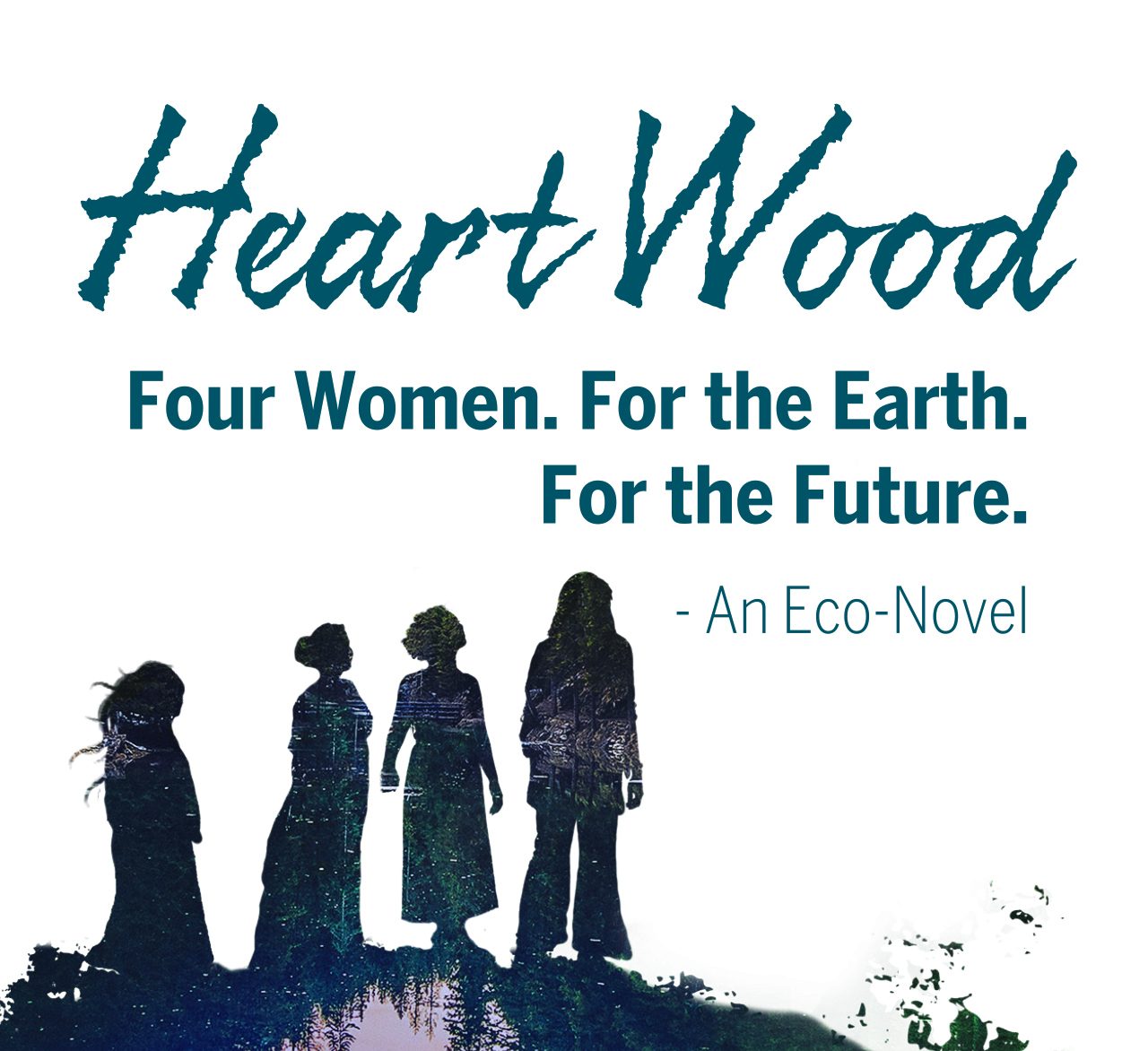
Heading Toward the Dystopic Future of Heart Wood

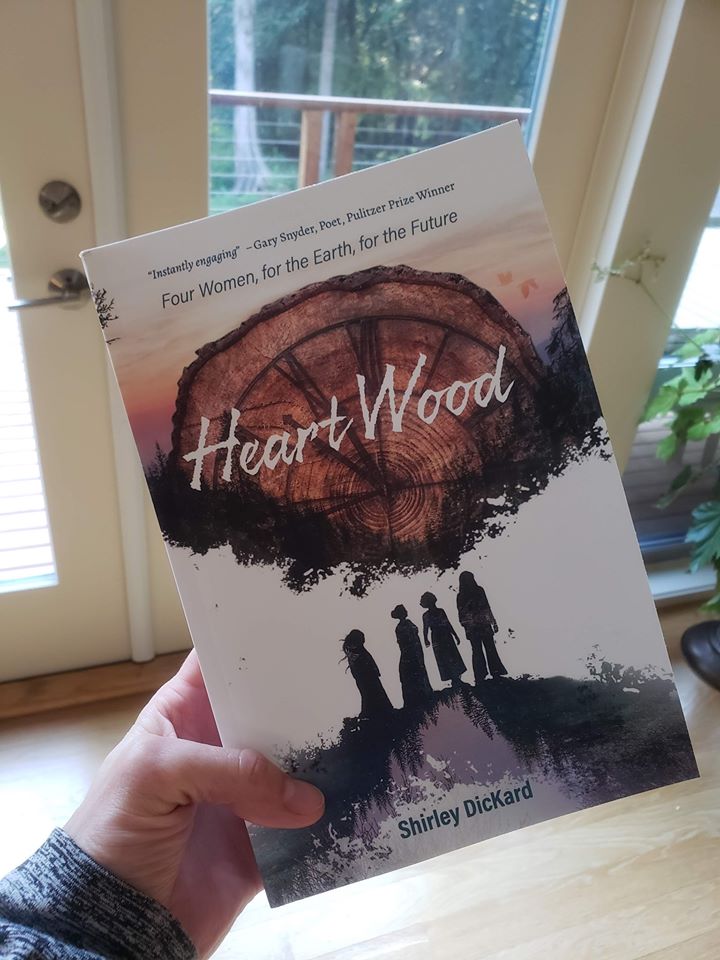
I take no pleasure in watching the future world unfolding – the future I described in my eco-novel Heart Wood. My aim was to show through storytelling that what we do and what we don’t do matters to the future. I described the actions and attitudes of my ancestors (1800s) and today’s generation (early 2020s), and how we are collectively creating a future world that my imaginary great-granddaughter Amisha must live in (2075-2090).

I’m often asked about the future parts, “How did you know? It’s so unsettling!” I can only say I picked out threads of what I saw today and projected them into the future…asking what would life be like if this continues?

Are you ready to explore with me? I’ve selected six main themes from Heart Wood and contrasted our present world with Amisha’s future in 2075-2090.

 Future: a miniscule bio-electronic Nib is implanted behind all baby’s ears at birth. These directly input information and directions into the brain, eventually overriding much of the person’s thinking. In addition to tracking a person’s location, Nibs also monitor their physical and emotional health, and when it detects an imbalance, automatically delivers “rebalancing” medications from the person’s “Medpak” implanted into their belly. Later in Heart Wood, Nibs subtly begin to deteriorate, giving erroneous information as if it were real.

Present: Where to start? Siri, Alexa? GPS directions? Smart watches? Fitness Trackers? These are part of our mainstream world now. AI wasn’t mainstream when I wrote Heart Wood in the early 2020s, but we’re getting closer to having an AI device implanted (for our benefit and convenience, of course).

Billionaire businessman Elon Musk has developed the NeuroLink in which fine electronic threads have been inserted into the brain of at least seven men with spinal cord injuries, enabling them to move a computer mouse with their minds. Yes! Check it out here.

In 2025, RFK Jr. – current US Secretary of Health and Human Services – is touting wearable electronics, such as watches, bands, rings, patches, and clothes, to monitor our vital health signs, with the data stored in the “cloud.” Current medical treatment includes inserting miniscule Nanobots into the body for diagnosis, treatment, drug delivery, and surgery. https://relevant.software/blog/nanobots-in-medicine/

While most of these health advances are originally designed for a specific medical benefit, they set up a prototype for a future widespread Nib-like implant.

2.  GARBAGE

Future: Garbage is illegal. There is no “away” for throwing things away. New items must be created from material that already exists, which is why there is a fight between the U.S. and China for ownership of the floating garbage island in the Pacific.
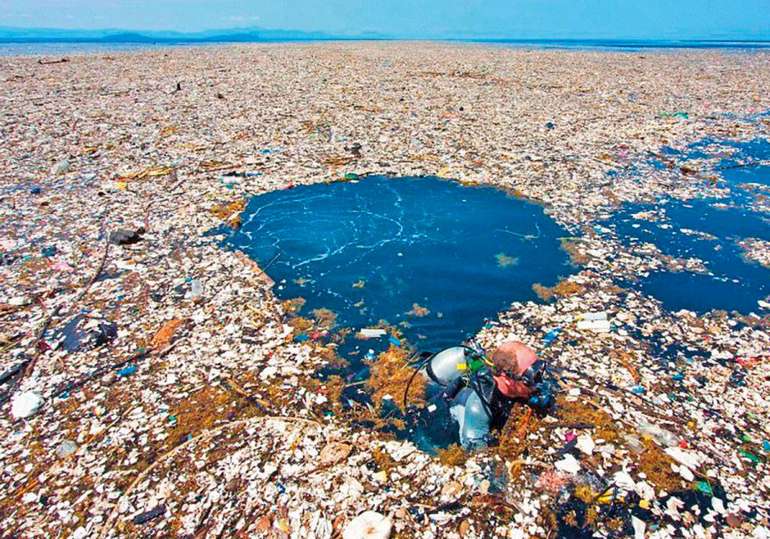
Diver in the Pacific Ocean Plastic Garbage Island

Present: How often have you tossed away single-use containers? I know I have, even knowing they’re filling up our landfills and oceans with garbage that’s mostly plastic. Currently, garbage must be separated and put into recycling bins, where some will actually be recycled. Organizations such as Californians Against Waste  are fighting for legislation that eliminates excess packaging, reduces food waste, promotes the right to repair small appliances/electronics, and promotes effective recycling systems.

3.  PLASTICS

Future: “Plastix” is made from recycled plastics and is used to formulate everything imaginable: shoes, furniture, cars, etc. But people also know how deadly plastic is, as in the scene when a young girl gives birth to a baby born with a reproductive system abnormality:

“But we did right” said the curly-headed grandmother, hugging her daughter tighter. “My daughter never touched plastic in her life!”

“You can’t avoid it,” Amisha said. “Plastic deteriorates so small it floats everywhere, from high in the stratosphere to miles deep on the ocean floor.”

Present: Research is finding plastic nanoparticles not only in the stratosphere and deep ocean, but in breast milk, human tissue  and baby poop . A new disease, “Plasticosis” is identified in seabirds that also impacts humans.  Plastic contains hormone-disrupters that confuses the body’s hormone regulation and reproduction systems. Researchers are investigating the connection between low level exposure to hormone disruptors and gender dysphorias.  

4.  FERTILITY

Future: It has become very difficult to conceive, and viable births are a rarity. Amisha’s group created a “Fertility Room.” When a female is ovulating, she allows multiple males to inseminate her in the hopes of increasing the odds that one of the few viable sperm will fertilize her one egg.

Present: Sperm count and human fertility are decreasing. IVF -In Vetro Fertilization centers have proliferated to help couples increase their odds of becoming pregnant. Of course, now, IVF has become politicized, making it more even difficult for couples to conceive.

5. FOOD INTOLERANCES

Future: Due to long term environmental contamination and genetic manipulation of food ingredients, human babies are increasingly unable to process food to support their growth. However, the Pharma industry has found an answer to the problems they originally created, with “PharmFood,” colorful packages designed for specific food intolerances. Food as we know it has become a rarity.
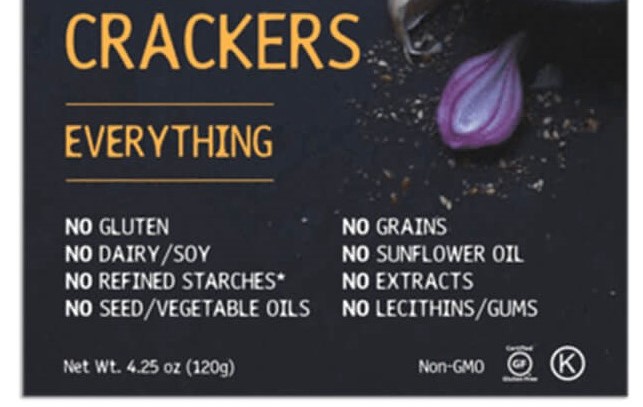
Present: I walk down the grocery aisles and notice large sections set aside for specific health and dietary issues, gluten-free being the most predominant. Package covers tout everything this food is not: “No gluten, no lactose/dairy, no GMOs, no animal products, no tree nuts, no pesticides, no BHT, no artificial colors or flavors, no high-fructose corn syrup, etc. Wow! I can imagine my great-grandmother wondering why in the world anyone would put those things into food in the first place?

6.  WEATHER

Future: California is mostly burned over from massive fires. Rivers hold meager amounts of water, but small pockets of green survive in the foothills. Sea level is rising into the first floors of San Francisco’s Financial District, and Golden Gate Park is now a refuge for Pacific Islanders who lost their islands to the rising sea.

In Heart Wood, Amisha has hitched a ride into the foothills with Charlie, a blind man with a mule and wagon, in search of her family’s old homestead.

Amisha held a small mouthful of water against her sticky dry gums before swallowing. She took another swig and returned the canister to its hiding place. “What's up there?” she asked, pointing to the hint of peaks in the distance.                                                                                          “You're asking ‘bout the hills? Not much,” Charlie replied.                                                           “People?”                                                                                                                                             “They've come and gone, mostly farther north.”                                                                        “Oregon?”                                                                                                                               “Farther. Canada’s still deciding its immigration policy.”                                                                        “They say fires took out most of the foothills. Anything survived?”                                                             “A structure here and there.”                                                                                                                “Trees? People?”                                                                                                                                      “Can't say,” Charlie climbed back into the wagon.                                                                                   “Why are you going up there?” Amisha asked                                                                                        “Can't say that either.”  

I was surprised when I re-read the part about Canada deciding its immigration policy toward US citizens. It seemed far-fetched when I wrote it. Little did I know it could become a political reality!

Present: Forest fires used to be a danger mainly for those living in a forest. Mountain folk learned to have “Go-Bags” ready for a quick evacuation. Now, even those who live in cities are concerned about major fire conflagrations. Fires are larger, fiercer, and create un-precedented destruction.

Homes along coastlines are literally losing ground, as the sea encroaches into lowland communities. Hurricanes and storm damage are more intense. Flash floods, landsides, ice storms all demonstrate water’s increasingly destructive power.

Insurance companies, strained by increasing claims from all the chaotic climate-induced fire, water, and wind disasters, are cancelling home insurance policies. And still, current conservative politicians who refuse to see these massive weather events related to man’s actions on the planet, cancel programs that would have given us hope for either halting or reversing climate-induced damage.

Is there hope?

I often hear two main comments from readers: “This is the most depressing book ever!” and “This is the most satisfying ending I’ve ever read in a dystopian book.”

Future: Yes, Amisha’s future world is depressing, but that’s the point. She is a victim of the world we are creating for her. She survives because she has created a small community that lives with what they have, eats less, and grows or forages for their drought-tolerant food. They learn to listen to and let the earth speak first. Eventually her group will connect with other small groups and share what works. Life is certainly not easy by our standards, but it will be possible for some to survive and, for even fewer, to procreate.

Present: I see the writing on the wall, often feeling helpless because it’s such a huge problem. I do the easy things, of course, like recycle, reuse containers, shop locally (including farmers), turn off lights, shop for previously-used things. On a larger scale, there are (still) so many groups working to educate the population and pressure politicians to “think and act green.” It’s harder than ever to make progress in today’s political climate, but do it anyway. Support these groups however you can. And talk about it!

Group Discussions: One of my favorite parts in talking with Book Clubs about Heart Wood are the thought-provoking discussions: “We see this coming, but what can we do?”  I don’t have answers, but we can collectively ask the right questions.

Heart Wood, Four Women, for the Earth, for the Future can be purchased at your local, independent bookstore (they can easily order it for you!) Or online. If you would like a signed copy directly from the author, contact me at heartwoodnovel@gmail.com.

From Yard Sale to Escape Room: the Journey Home of an Historic Farmhouse Photo

I received an intriguing email from a “Brian” in Michigan last August:


I have a 13 x 10 inch framed picture of the Charles Hoppin house that I purchased from a yard sale in Michigan. I did a Google search based on the photo and found your website. On the back of the photo it tells who is on the porch and in the yard.


The homestead photo just had a certain vibration about it that sparked curiosity and imagination; and that is one of the reasons that drew me to it and why I searched the Internet to identify it. I just thought I would let you know that I appreciated knowing where the house was located and stories behind it
.

This unknown homestead photo just had a certain vibration about it that sparked curiosity and imagination

I wrote him back:
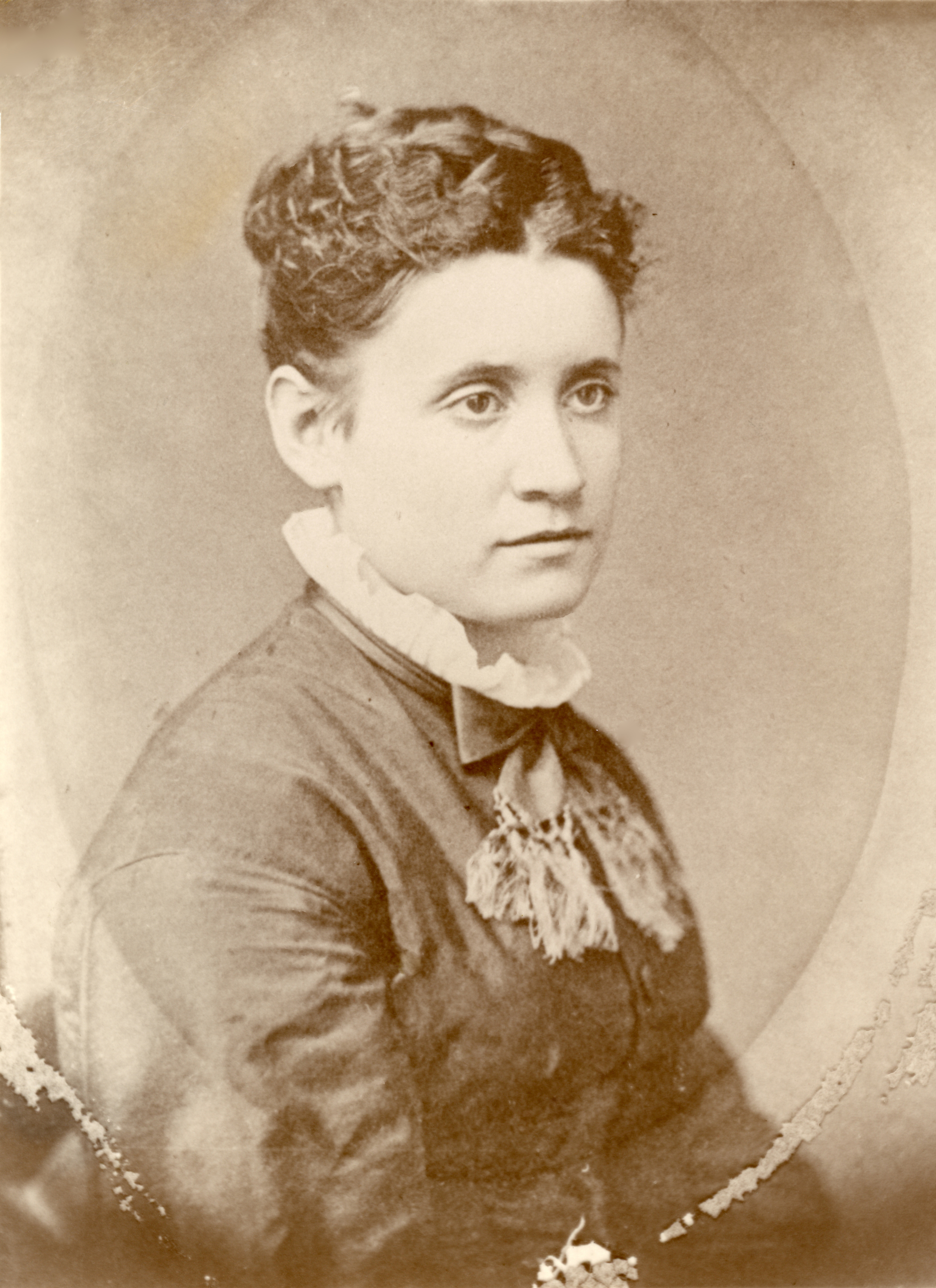
Hello Brian, What a surprise to hear that you found the family’s old California farmhouse at a Michigan yard sale! The Hoppin family was originally from Niles Michigan, and one great-granddaughter still lives in Muskegon, Michigan. You may have read on my website that this farmhouse plays a big part in my novel, “Heart Wood- Four Women, for the Earth, for the Future.” That was a fictional account inspired by family stories. Now I’m going back and writing the actual biography of my great-grandmother Emily Hoppin who was a successful farmer and women’s activist in Yolo in the Northern California Sacramento Valley in the late1800s. She is standing to the right in the photograph.

Nearly everyone in my family has a treasured copy of this historic photograph, thanks to my sister Emily and her then-husband Chris who made copies of the originals back in the late 1970s. But how in the world did this one end up in a yard sale across the country in Michigan? I wrote to my cousin Nancy who lives in Muskegon, figuring she would probably have an answer.

Nancy replied:

We have two framed photos of Emily and Charles Hoppin that my parents had hanging next to the framed photo of the Hoppin Farmhouse for years and years in California. When Mom moved to Michigan, she had them reframed and hung them together. Sometime during her many moves and downsizing, the photo of the farmhouse came up missing. We figure it must have mistakenly gotten in with the give-away stuff (many grandkids and friends trying to be helpful). I’m sure it’s the same framed photo because the label of the picture framing shop is on the back of all three framed photos .

Feeling just a tad possessive about our family’s farmhouse picture, and curious about what Brian planned to do with the photograph, I wrote him back.

His answer surprised me:

The reason that the photo came into my possession is that I bought it to use in my business. I own an Escape Room in Muskegon (Lakeshore Quest) and I purchase unique items that add a richness to my room’s design and story. This particular photo is the foundation to one of the themes I am working on.

Well, well, the old farmhouse photo is in an Escape Room – I hope it’s having fun!

Escape Rooms, for those who don’t know, are group experiences where you’re immersed in a themed room to search for and uncover hidden clues, codes, puzzles that will help you escape, usually within an hour. I could just envision Brian’s customers scouring the farmhouse picture for clues.

I asked Brian to tell me more.

The objects must fit the theme of the room and if it can be used as a puzzle, that’s even better. The best objects come from antique stores, auctions and estate sales. We especially love objects that have a history, tell a story, or just work well as “eye candy”. We want our guests to be as fully immersed in the background story of the room as possible.


The theme of this Escape Room called “Mortimer’s Mansion” was an old Victorian style house that was due to be torn down; it was rumored that the previous owner had a treasure hidden inside the house that no one had ever found. Therefore, the goal of the room is to find the treasure before the home is torn down.

“Mortimer’s Mansion” (Lakeshore Quest Escape Room)


The photo had a great deal of mystery behind it that made us both wonder who these folks were and what their lives were like; there was a little information on the back side of the photo but most of it was left to our imaginations. Over time that made me more curious, and I didn’t want to just toss it into a storage box; this mystery deserved a little more investigation.

Knowing that technology is so powerful, I took the chance that doing a Google photo search may turn up something. And Bingo, it did!! I found your website with the identical photo and a great deal more information. I contacted you and let you know that we found the Hoppin Farmhouse photo.

Hello again from California, I replied.

That farmhouse picture has been around! Nearly every family descendant has a copy; it’s posted on my website (shirleydickard.com), and included in the University of California Davis Archives and Special Collections. In fact, I’m just getting ready to post a blog about “Setting Foot on my Ancestor’s Soil” – about finding the original farmhouse property and walking it with the current almond farmer there.

I then suggested to Brian that if he’s ever finished using the photograph and would consider donating it the Yolo County Historical Archives, they would be very interested in having it.

Long story short, Brian recently contacted me that they were finished using the photo; my cousin Nancy picked it up at the Lakeshore Quest Escape Room in Muskegon Michigan, and mailed it back to its original home in Yolo County, California.

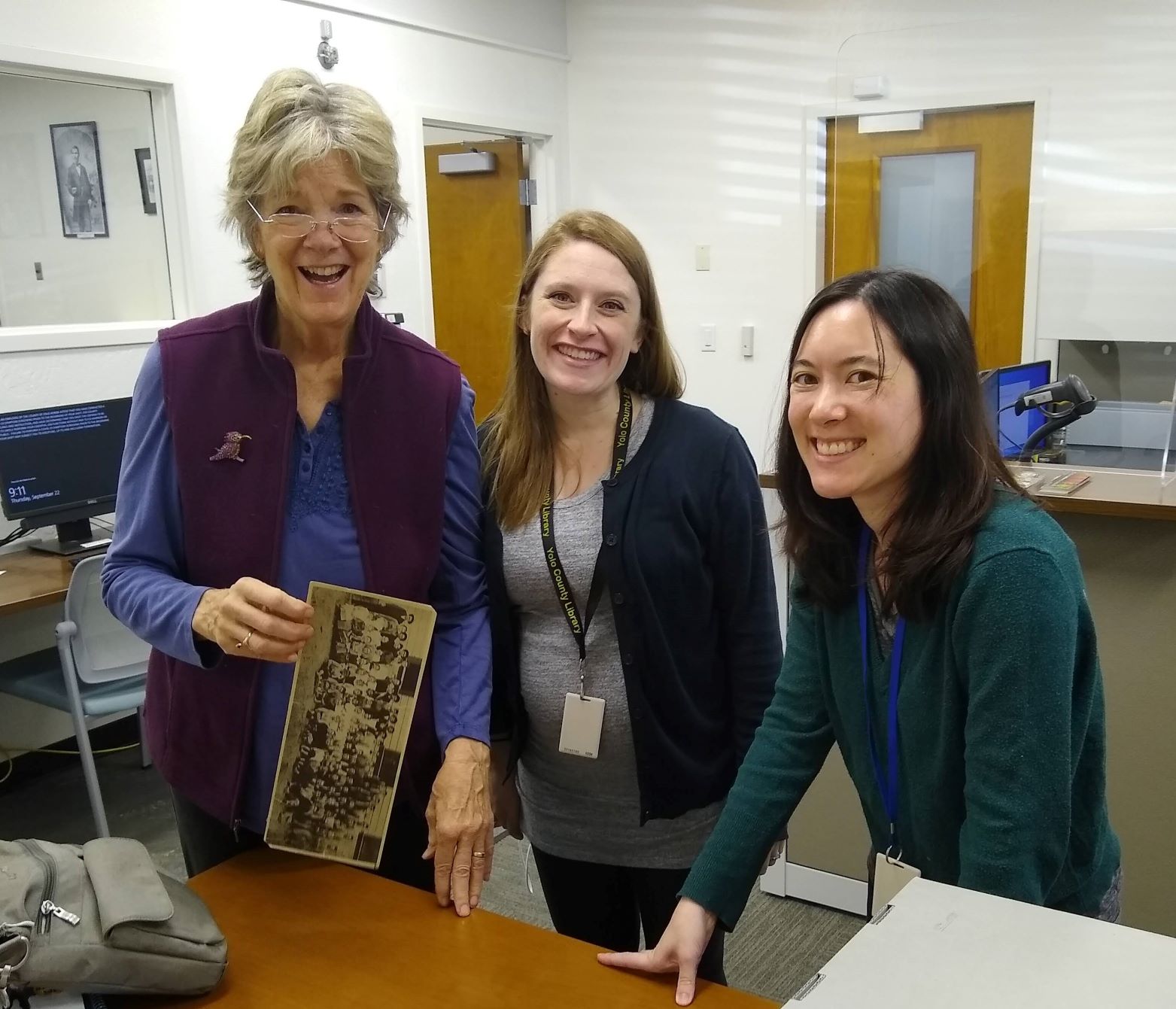
Heather Lanctot, Coordinator of the Yolo County Archives and Historical Collection now has it documented and safely stored in its vast collection of historical documents for family genealogists and future researchers to enjoy finding.

If you have family artifacts that the next generation isn’t interested in, consider donating them to an appropriate Historical Archives collection.

Heather Lanctot, Coordinator of the Yolo County Archives and Historical Collection with a photo of the historic Hoppin farmhouse, Yolo California 1885.


I am currently working on the Biography of Emily Hoppin, the Life and Times of a Yolo Pioneer and Women’s Activist (and also the inspiration for the fictional Eliza in Heart Wood). You’re welcome to sign up for my Blog and Newsletter to follow my progress on this and other topics I care about.

Heart Wood  – Four Women, for the Earth, for the Future can be purchased at your local bookstore and Online.

Setting Foot on Ancestor’s Soil

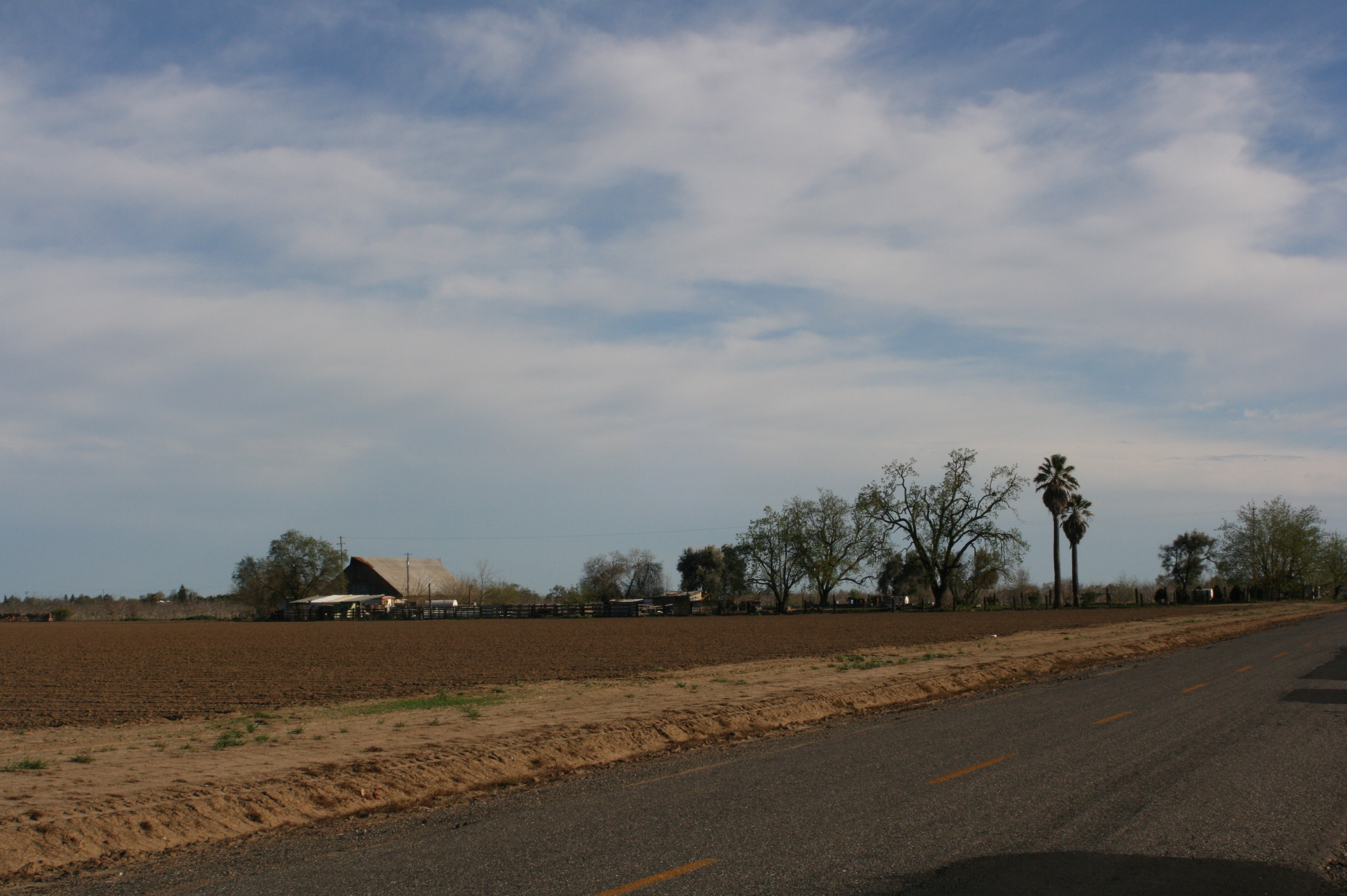
This summer I made another pilgrimage to the land where my great grandparents farmed in Yolo, California from the mid-1850s to early 1900s. In the past twenty years, I’d driven past the location several times, following the hand drawn “treasure map” my Uncle John Kergel drew for me from memory in 1980. “Look for the two tall palm trees in front of the original Hoppin house site,” he had told me. I always found the palm trees, but the house was gone. Built in 1881, the house was torn down in 1935, as I would find out later.

Each time I drove past the site in the past, I never felt comfortable entering it. Leaning out my car window, I photographed from a distance the ramshackle wooden barn, old fencing, and piles of rubble, along with the surrounding furrowed rows of bare, brown earth. Through the weedy rubble, I tried to imagine the stately two-story white Victorian house , Great-grandma Emily fanning herself on the front porch, children playing in the yard, and a herd of black and white Holstein cows in the back pasture. I wanted to touch the earth, feel for any sense of my ancestors still present.

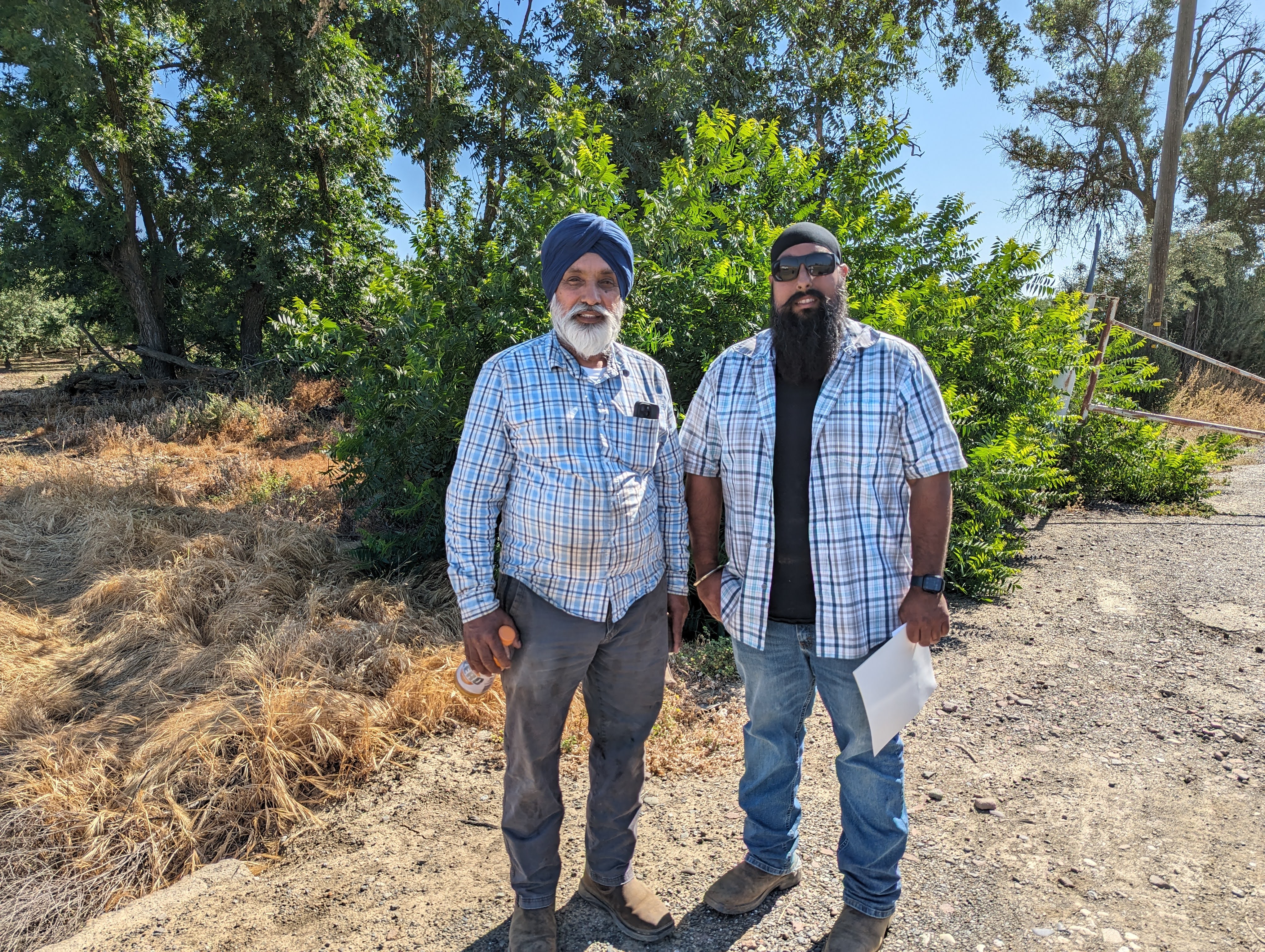
June 2024:  At last, I was going to walk the land with the current owner – Mr. Dhillon. With a folder of old photographs and maps tucked under my arm, I waited with excited anticipation along with my husband Richard. We were joined by Meg Sheldon from the town of Yolo’s small library, who had taken an interest in my story and did the research at the Yolo County Assessor’s Office to find the current property ownership records. I had written Mr. Dhillon a letter describing my desire to visit my ancestor’s property without trespassing. He had agreed to meet me when I was in Yolo doing research in June.

I watched as Mr. Dhillon’s white pick-up truck pulled up across the road. He and his father crossed over to greet us. His father was born in Punjab, India, and at age 17, left India for a better life to farm in America. 

They bought this parcel in 2020, with its two-year old almond orchard. All that remained today of the farmhouse was an old barn (most likely not the original), which they now rent out for storage. We talked about almond farming today, how difficult it is to grow organic, and the influx of rodents they experienced after switching from irrigation by flooding rows with water (which drowns out underground rodents), to drip irrigation which saves water and money, but gives rodents free run to dig underground burrows and damage their trees.

However, they didn’t have much to say about the original inhabitants. They may not have given any thought to the history of the land before they bought the almond orchard. I gave Mr. Dhillon the folder with photographs of my great-grandparent’s farmhouse, and for his wife, a description of Great-grandma Emily as the 1900s feminist activist who wrote speeches from her desk in the farmhouse.

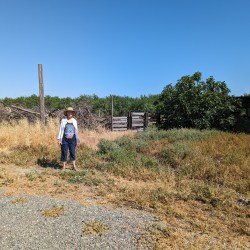
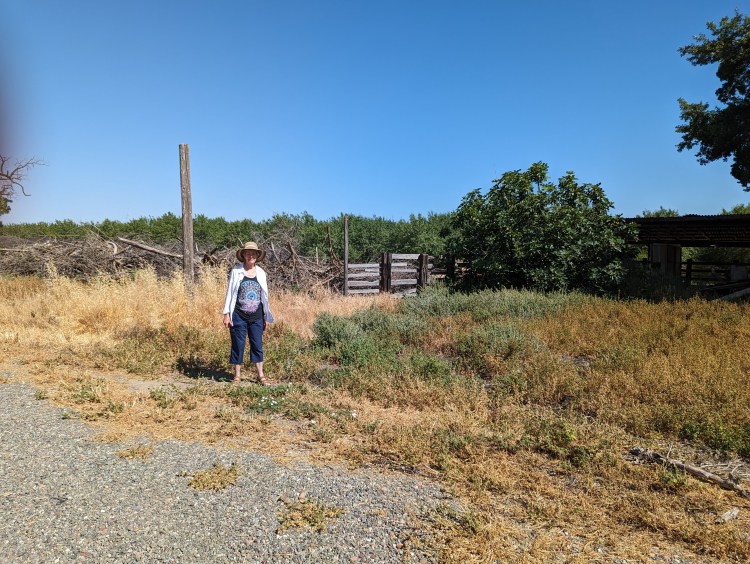
With their permission, we walked the land after they left. I tried but couldn’t figure out where the house was situated. The palm trees had been cut down. Empty cans of farming chemicals were stacked beneath a low branching tree. The barn was locked, but looking through the cracks, it was a scene of old boxes, barrels, dust and cobwebs, a reminder that time had moved on.

Shirley at possible house site

To the land, the current people are but another wave of inhabitants who walk and work its soil – from the Indigenous peoples, Spanish, Mexicans, Europeans, and now farmers with roots in India. With a sigh, I picked up a small stone from the dirt and slipped it in my pocket – my only memento of what might have been.

Hoppin Farm and Holsteins (unknown date)

Will They Remember?

Years ago, in my early days of searching for my ancestor’s land, I was moved to write these words of poetry. Although it is still a work in progress, it describes my realization that what we build will one day be a passing moment in time. As are we all.

Will They Remember?   


What will they say of us when they pass by here,
Centuries later, what will remain?
Will they remember the work of their ancestors
Whose dreams had sought roots they could water forever?

We stand on our homesteads and watch seasons pass,
Who are we now in the flow of time?
We built fences and floors, stoked flames for the future,
Will only our whispered shadows remain?

What will they say of us when they pass by here?
Will they still know of our place in the mountains
Where our pole beans climbed as high as our dreams
And children clambered in summer rivers and winter snow.

Do we remember who came here before us?
The Nisenan ground acorns to meal by these streams,
They built their shelters from gifts of the forest,
Feet danced out their stories, ‘til white man arrived.

The miners swarmed in with their pans and their shovels,
They cut down big oaks, and dammed up the streams
They scoped up the glitter, sent gold home in sacks
For families to know that the wild west was won.

The miners stayed on then to stake out possession,
Dividing the land, making tents into towns.
Did they remember the people before they
Took over their land and silenced their songs?

Where once stood a farmhouse, an old barn survives,
No trace of the farmer or furrowed golden wheat,
Or the farmwife’s fresh chickens, eggs and soft butter,
Only old photographs prove they were there.

We are but sojourners, we too shall pass away
Our streets will grow over and our fences will fall,
Deer and bear will come freely to eat of our apples,
Climbing over our steel, glass and cement walls.

What will they say of us? Will they remember?
What will remain after decades gone by?
When they walk past our place here in the mountains
What will they know of us? What will they say?

-Shirley DicKard

Shirley DicKard is currently working on the Biography of Emily Hoppin, the Life and Times of a Yolo Pioneer and Women’s Activist. Shirley’s great-grandmother Emily Hoppin, was the inspiration for the fictional Eliza in Heart Wood.

Heart Wood can be purchased at your local bookstore and Online.

What did he whisper in her ear?

I knew the story well – retold  hundreds of times in my family – that in 1874, my great-grandfather traveled from California back to his hometown in Niles, Michigan, to ask my great-grandmother to marry him and return to his ranch in Yolo, California.

Simple facts. That is, until I started to do research for her Biography to reconstruct what might have actually happened.  Writing fiction is fun. You can just make up events, people, and conversations to suit your story, as I did in Heart Wood, a fictionalized inspiration of my Great-grandmother’s life.

But writing an historical Biography is like writing with one hand tied behind your back. There’s so many constraints: everything must be documented and verified, with no conjecture, imagining, or creativity . . . Darn.

But I’m always up for learning new things, and now my brain synapses are tingling with this new challenge.

Here’s my dilemma.

The scene opens in 1874 with Emily Anna Bacon, age 20, now at the end of her first six months of teaching high school in Niles, Michigan. She’s worked hard to get here – especially as a female in the late-1800s when it was more common for a girl to go to finishing school after eighth grade to learn the home arts and attract a husband. But Emily grew up in a household that valued education – her four brothers were all attorneys and her father a district judge. So in 1869, she enrolled in the Michigan Female Seminary in Kalamazoo, 75 miles from home. From the course catalogue, I know that she graduated in 1873 with knowledge of Latin, Botany, Algebra, Essay Writing, Geography, the Bible, Physiology, History, Government, English Literature, Trigonometry, Chemistry, Art History, Astronomy, and more. Whew!

Missing are her grades and any personal letters or journal, so I can’t write how she felt about her education, but I do know by comparing dates, that her father died about her first week of starting school. That must have affected her deeply.

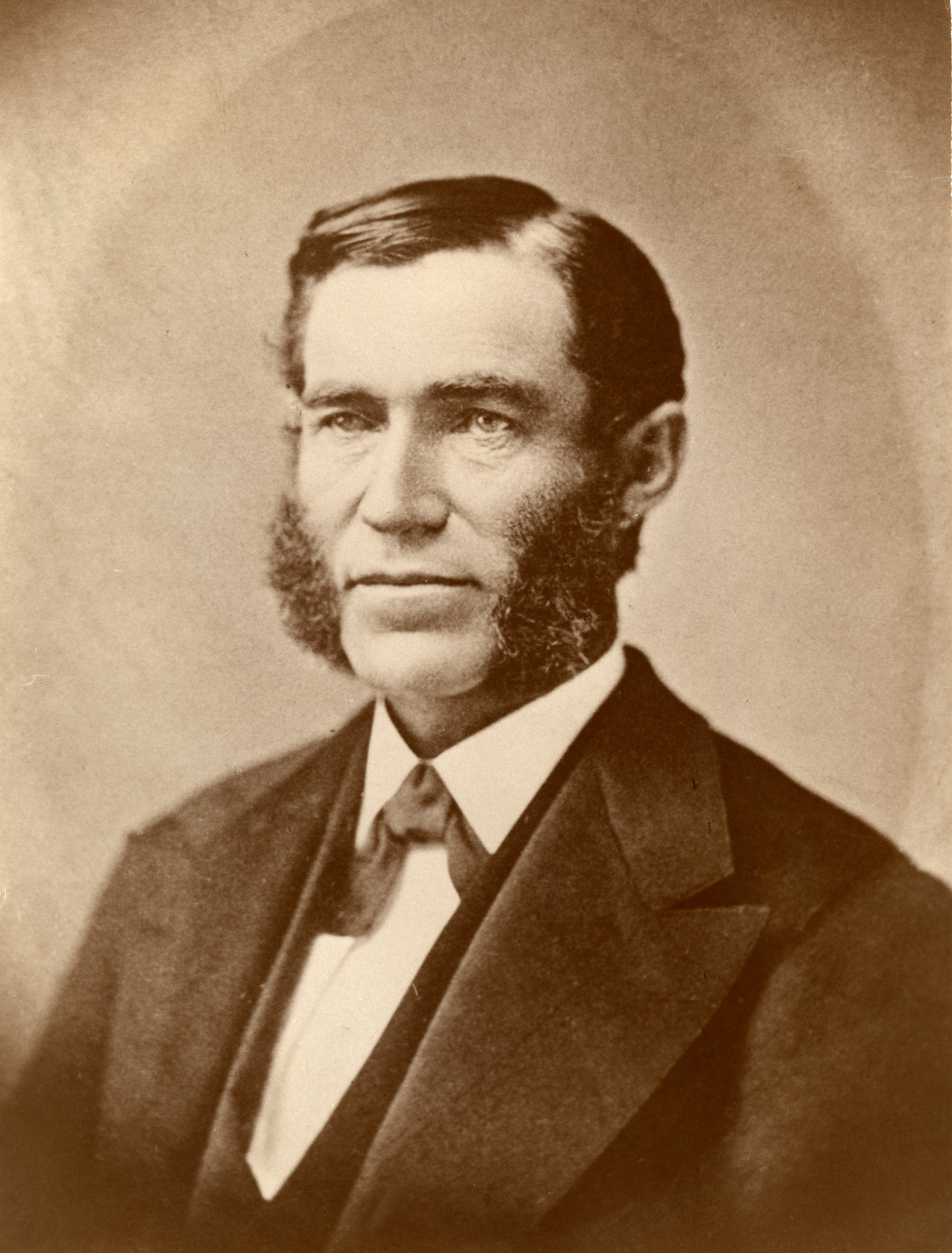
Enter Charles Rossiter Hoppin in 1874, an old family friend recently returned to Niles from the California farm he built during the Gold Rush. What did he say to convince her to marry a 47-year-old Scottish bachelor farmer and leave her teaching job, four years of education, widowed mother, brothers, sisters, and girlfriends – to travel to the unknown of California?

I envision Biographies as like Weavings – comprised of threads, colors, patterns, textures, and holes. The more I research, the more holes I encounter. I’m not an historian, but I’m learning how to work with these gaps in information. Sometimes with enough sleuthing, I can dig up some facts (thanks to the professional Archivists who’ve helped me). Sometimes I look around at what others in similar situations have done (such as examples from other similar women’s diaries). I can also work around the hole by not mentioning it at all. If the reader won’t notice, this is often the easiest.

Still, I do wonder what he whispered in her ear. . .


I am currently working on the Life and Times of Emily Hoppin – Yolo Pioneer and Activist who I first introduced as the inspiration for Eliza in my eco-novel, Heart Wood – Four Women, for the Earth, for the Future

Website: shirleydickard.com

Contact the author at: heartwoodnovel@gmail.com


Heart Wood can be purchased at your local book store and online at Amazon

Acknowledging Who Owns the Land?

I had an eye-opening moment recently while researching the history of my ancestor’s ranch for the book I’m currently writing. My original search was to find out the price my Great-grandfather Charles Hoppin paid in the 1850s for a quarter of the Rancho Rio de Jesus Maria land grant in Yolo, Northern California.

Curious, I decided to trace the land even further back – and – it’s not what I learned in school! What follows is the short version of what I found. The rest of the story will be included in “The Life and Times of Emily Hoppin,” the biography of my pioneer, activist, Great-grandmother.

If you start with the land, you’ll find that it existed without human inhabitants for unknown eons. It wasn’t until the Ice Age that humans crossed a bridge of land between Siberia and Alaska and continued down the continent. In their book Yolo History, A Land of Changing Patterns, Shipley Waters and Joann Larkey suggest that human activity was present in Yolo County at least by 2,000 B.C. The Wintun (includes Patwins) people arrived in the upper Sacramento Valley about 1,500 years ago. They were the first peoples in the Yolo area. They have never, ever, ceded this land to anyone!

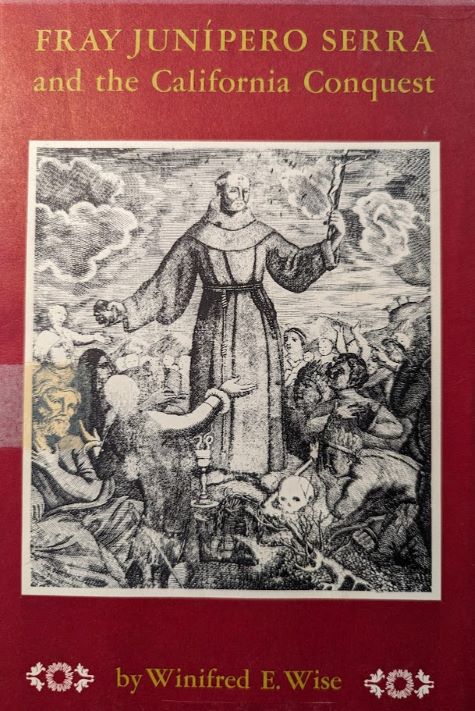
History books have traditionally overlooked this little detail. As a fourth grader studying California history back in the 1950s, I was so enamored by the flashy images of Spanish Conquistadores in the early 1800s and the virtuous Franciscan Father Junipero Serra who built a series of Missions from San Diego to San Francisco, each a day’s ride apart. Their plan was to protect Spain’s holdings in Alta California and to convert the savage heathens.

 It wasn’t until the 1970s that we started hearing the Indian’s version of this Missionization. Their reality was that missions were plantation-like estates with a workforce of enslaved Indians who had been ripped from their land, homelife, language, culture, and health, often beaten and tortured into submission. They are still struggling to recover to this day.

The Spanish government gave away massive tracts of their surrounding land to Spanish soldiers as favors for being stationed in such a remote outpost. By 1846, Spanish mission lands were owned by 800 private rancheros.

When Spain lost the war to Mexico in 1821, the Mexican governor Jose Figueroa determined that mission lands should rightfully return to the Indians rather than colonists. He died a year later (note: research this!) and conveniently, the land was distributed to private Mexican citizens. The era of Land Grant Ranchos began. We see the vestiges in today’s names such as Rancho Cordova and Rancho Murieta, although most names today have dropped the “Rancho” and are now La Brea, Santa Anita, etc.  Interestingly, many cities were conveniently founded on top of indigenous sites and still bear the footprint of the rancho land use.

Rancho Rio de Jesus Maria Land Grant
(From the Yolo County Archives and Historical Collection)

When my Great-grandfather bought a quarter (8,000 acres) of the Mexican Land Grant called The Rancho Rio de Jesus Maria near Cache Creek in Yolo in the early 1850s, it had been previously owned by a naturalized Mexican citizen, then a European settler.

And yet….

The Wintun nation never conceded this land to anyone. After struggling from near extinction by the Spanish, Mexican, and European settlers, the Yocha Dehe Wintun Nation is now reclaiming its heritage, culture, language and independence, and has created a Land Acknowledgement reminder that we are on their traditional land today.

Public Land Acknowledgements:  I had never heard of these until 2021 when I gave a webinar on Emily Hoppin for the Yolo County Library. Before my presentation, a statement was read acknowledging that we (in Yolo) are on the traditional lands of the Yocha Dehe Wintun Nation.

In 2019, the Yocha Dehe Tribal Council created this formal statement:

We should take a moment to acknowledge the land on which we are gathered. For thousands of years, this land has been the home of Patwin people. Today, there are three federally recognized Patwin tribes: Cachil DeHe Band of Wintun Indians of the Colusa Indian Community, Kletsel Dehe Band of Wintun Indians, and Yocha Dehe Wintun Nation. The Patwin people have remained committed to the stewardship of this land over many centuries. It has been cherished and protected, as elders have instructed the young through generations. We are honored and grateful to be here today on their traditional lands.

Land Acknowledgements are being replicated throughout the state. Closer to where I live in the northern Sierra Nevada, the Nevada City Rancheria Nisenan Tribe created their Land Acknowledgement.

Today, I may have legal ownership of my parcel of land, but these Land Acknowledgements remind me of the real history behind that ownership. In truth, it’s better to consider myself a caretaker rather than owner of the land.

Where’s Your Happy Place?

A well-seasoned Hospice nurse took me aside after the staff meeting where I had shared my grief and despair after one of my first patients died. I was a new volunteer Hospice nurse back in the 1980s and had wanted to contribute something meaningful to the world.

“Sadness and grief is always going to be part of this work,” she told me with dead certainty. “The best way to survive yourself is to have something in your life that balances the heaviness – something that brings you peace or joy. Otherwise, you’ll burn out.”

Back then, I found that dabbling with watercolors took me away to a place where I let go and just enjoyed the flow of colors and forms. That, and playing with my rambunctious dog.

Although I only lasted two years with Hospice, I’ve kept this lesson close to my heart for four decades now. It’s what I call my Happy Place. It has a lot to do with our brain hemispheres.

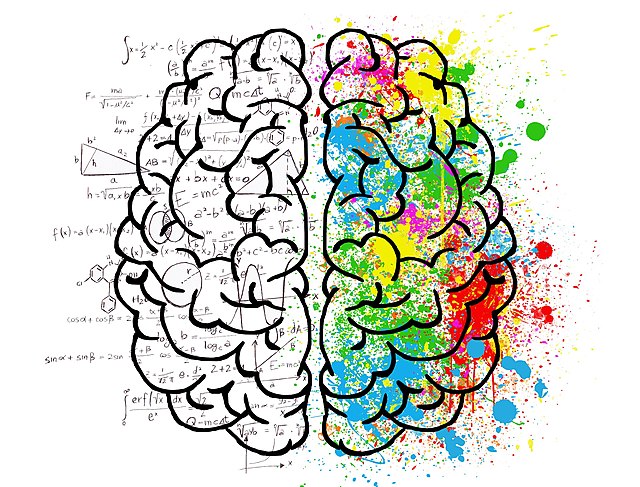
Our two brain hemispheres serve different purposes and work best when one side doesn’t overwhelm the other. The Left-side of my brain is always trying to figure things out. It likes order, reason, logic, systems, analysis, patterns, and predictability. It’s the source of “brain chatter.” The Right-side likes to get lost in time and space. It loves creativity, color, scents, music, and meditation and lives in the present moment. We need both of course.

For a fascinating example of how both sides of the brain function, I recommend “My Stroke of Insight” by Jill Bolte Taylor. At age 37, this Harvard-trained brain scientist experienced a massive stroke in the left hemisphere of her brain, destroying her ability to talk, read, write, or remember how to function in life. With only the right side fully functioning, she floated in a blissful, peaceful, euphoria. Not a bad place to be!  While her medical rehabilitation focused on returning the physical functions of her left side, such as speaking and walking, it also meant inviting back into her life ego-generated thoughts and emotions. She kept wondering why? What’s good about being able to experience impatience, criticism, unkindness?  Did she have a choice? That, it turns out, was her “stroke of insight.”  It took eight years for her to regain full functioning, but in the process, she learned that we have control moment by moment on how we want to be in the world.

My ongoing challenge is not to get overwhelmed by the craziness of the world. Hard as I try to avoid the discouraging news of politics, erratic weather, human behavior, the recent COVID pandemic, and now, high wildfire danger, it’s always there as a stressful backdrop. So knowing I have a Happy Place where I can let the right side of my brain play, is a godsend. 

When I was deep into writing my eco-novel, Heart Wood, my Happy Place was the twilight of early morning, mug of hot coffee, and hours of immersing myself into my characters and creativity. I miss that a lot.

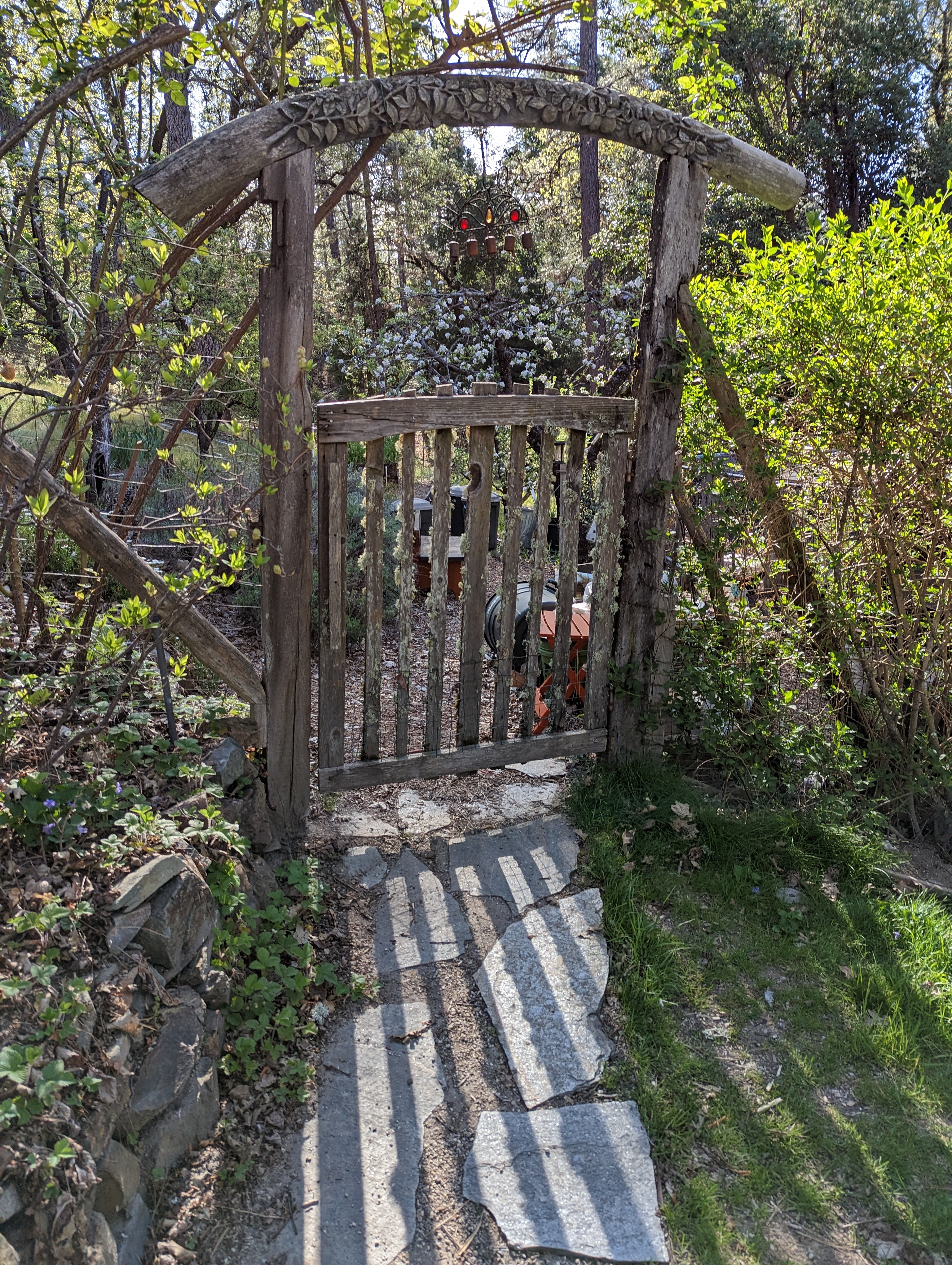
Now I have my homestead garden. It’s really what kept me sane during COVID.

Who’d have thought that sequestering squash seeds into soil, lifting curlicue cucumber tendrils onto the trellis, or culling over-abundant carrots would soothe my spirits – but it happens every time I step into my vegetable garden.

As I walk down the rows each morning, I exchange greetings with my plants. “My how you’ve grown! Looks like you’re almost ready to share those tomatoes. What do you need? – you seem a little yellow.” Mother Earth provides the music – right now the Black headed Grosbeak fledglings are crying out “feed me, feed me!” Red shouldered Hawks call from the pine tops. Bees buzz into flowers. I always leave my garden feeling uplifted and deeply happy.

I asked a few friends about their Happy Places.

Gardens were top of the list! They also mentioned stand-up paddleboarding on a calm lake, reading in a cozy chair, attending live theater, just sitting quietly on their backyard bench, and meditating.  Every moment can be that “Happy Place” if we remember to pay attention through the lens of our right hemisphere.

What are your Happy Places (or whatever you call it)?  What are you doing when you just lose track of time and are in the flow? Please share by hitting “Leave a Reply.” If I get enough, I’ll share your inspirations in another blog. Thank you!


My eco-novel, Heart Wood,  can be purchased at your local book store and online at Amazon

This Never-Ending Spiral

I sometimes imagine life as a spiral, circling upwards, always returning to the same spot, only more experienced, hopefully more highly functioning. So here I am again, cycling around to being a learner, after the last years of being a producer.  Actually, as a gardener, I like to think of my growing and harvesting stages.

Does this feel familiar? You can probably come up with places you keep cycling back around to. Here’s a few of mine:  from crawling toddler to walking to school by myself; from an insecure student nurse to teaching new nurses on the hospital floor; from learning the craft of writing to publishing Heart Wood – my first book (at 74 years!). And now I’m back in the learner’s seat, growing my ability to write a Historical Narrative of my Great-Grandmother Emily Hoppin’s life and times.

Growing requires stress.

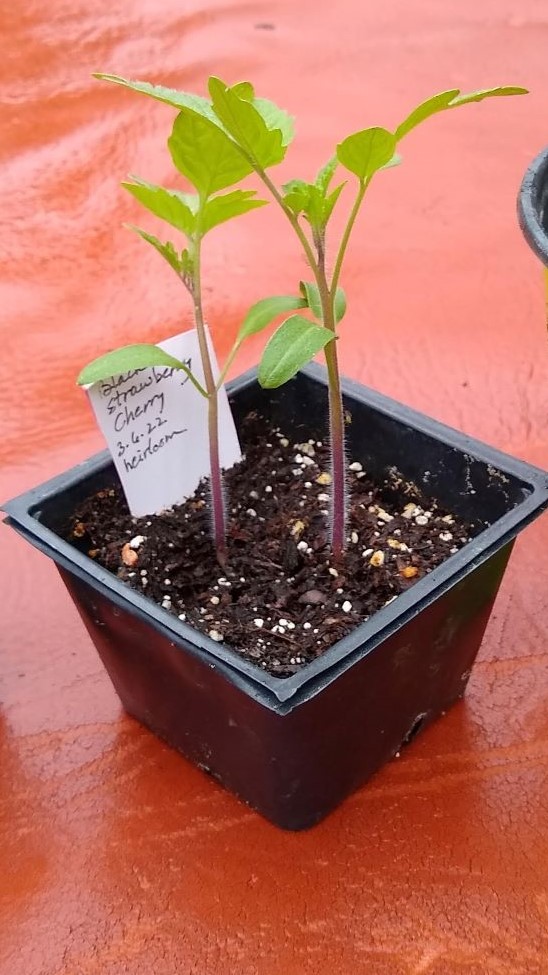
I finally came to terms with that when I saw how much stronger my little tomato seedlings were when they were outside being buttressed by a gentle wind that caused them to twist and turn from their base instead of being continually protected in a warm, sunny room.

Bones are like that too.

The matrix that makes bones strong is developed by the tug and pull of muscles on the bone. Whether it’s weight-lifting or easy strolling, bones need to be prodded by pressure to become strong – a point not lost on me as my bone-density reports show I’m in the middle stages of osteopenia.

Our brains thrive on novelty – even in old age, we put down new neural pathways when we struggle to learn new things – which is why it’s good to do something different and something difficult every day.

I thought it would be easy to shift from writing Historical Fiction to Historical Narrative. Turns out, it’s a whole ‘nother world with a whole new set of “how-tos.”  So I’m now cycling around to being a learner again and immersing myself in a ten-week online course on writing Advanced Historical Narratives with Marty Levine. Now I’m vacillating between “I just love learning so many new things!” to “Aargh, this is too hard. I’ll never get it. I should just write a simple biography.”

But I think of my little seedlings, my bones, and my brain, and keep spiraling on.

Heart Wood is fictional history inspired in part by the life of my great-grandmother, Emily Hoppin. Many of her life events and writings are incorporated into the novel in the character of Eliza. My initial research on Emily and Charles Hoppin is posted on my website: shirleydickard.com under “Historical Research.”

Heart Wood can be found at your local library, bookstore, and Online.

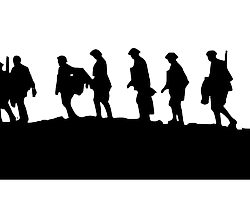
A World Wide Peace – 1911

For Veterans Day 2022 – Reflections from the Past

On the 11th hour of the 11th day of the 11th month of 1918, an armistice, or temporary cessation of hostilities, was declared between the Allied nations and Germany in World War I, then known as “the Great War.” 

Twenty years later in 1938, November 11th was declared “Armistice Day,” dedicated to the cause of world peace. After two more wars (WWII and the Korean War), the US Congress renamed it “Veterans Day” in 1954 to honor all veterans of all wars.

Dedicated to the cause of world peace. Hmmm.

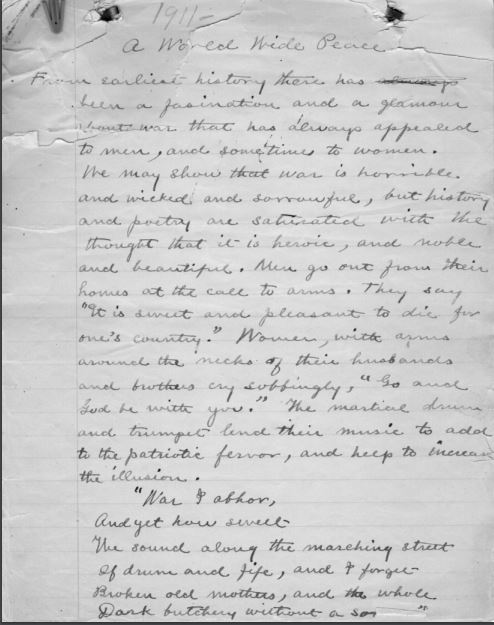
Back in 1911, even before America’s entry into WWI, my pioneer/activist Great-Grandmother Emily Hoppin wrote passionately about the cause of world peace in a 21-page handwritten speech that I recently found doing research at the Yolo County Archives and Record Center in Woodland, California. Written amid the rumblings in Europe leading to World War I, she pleaded for a better way than war.
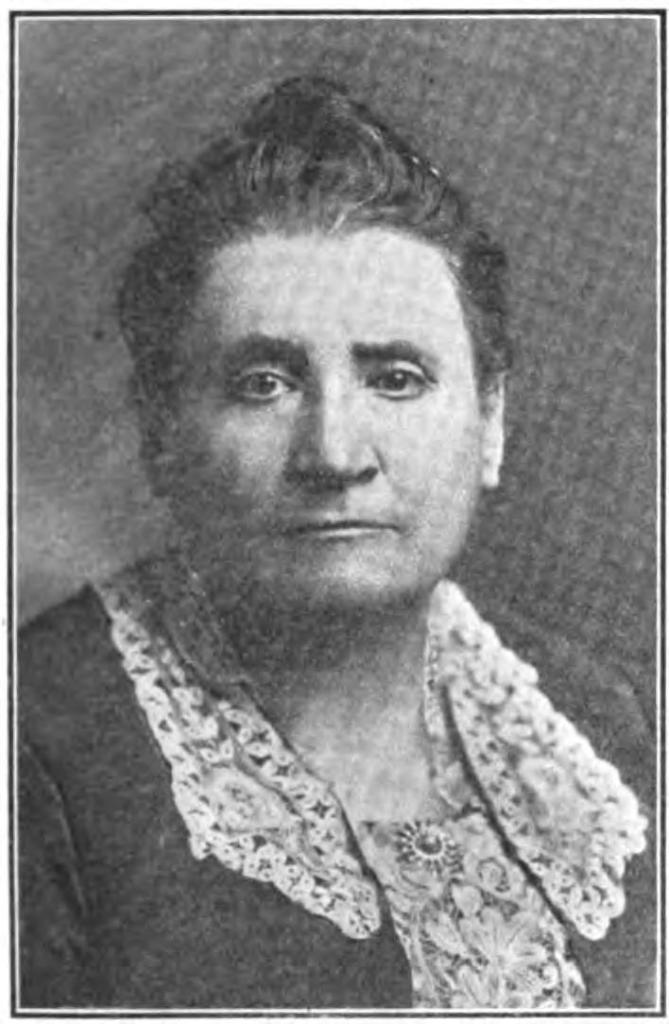
Working for peace, she said, must be largely woman’s work.

On Veterans Day, November 11, 2022, with the backdrop of Russia waging a bloody war in the Ukraine, and other wars being waged around the globe, we pay tribute to those who served and sacrificed in wars. This seems a good time to share a selection of Great-Grandmother’s thoughts on war and peace written 111 years ago.

Why I Love Archivists (2)

(Re-formatted – Sorry, something went screwy in the layout. I’m such a perfectionist – hopefully this looks better!)

Like a kid in a candy store, I was surrounded by boxes of old documents from the 1850s to 1915, selected for me by the Archivists at the Yolo County Archives at my recent visit to Woodland, California in September. After years of researching my Yolo Pioneer and activist Great-Grandmother using online searches and old family documents, I was eager to locate primary sources, especially personal correspondence. But COVID hit in 2020, and I had to put my research visits on hold for two years.

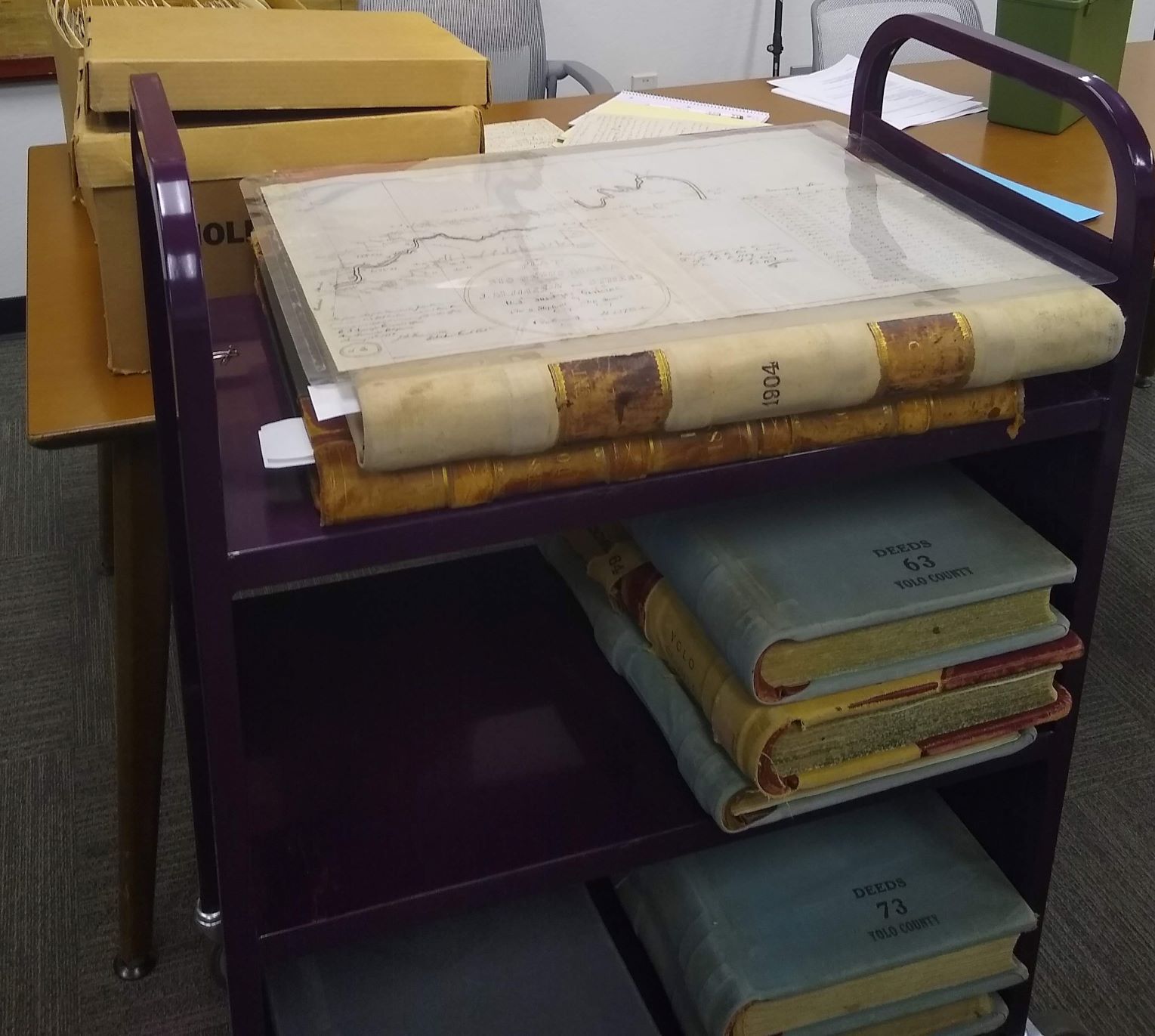
Boxes, Ledgers, Maps, and Files
Emily Hoppin’s Scrapbook

I’m excited to finally be writing a comprehensive biography of Emily Hoppin, my great-grandmother.  Not just as an ancestor, but because she lived in an era where women were coming into new power in their communities. She was part of the struggle for women’s suffrage, and she fought to eliminate the devastating effects of alcohol from the lives of women and children. She was a farmer who ran an 800-acre farm and won the 1915 statewide election for President of the California Federation of Women’s Clubs (CFWC) based on her rural perspective, and she was a WWI peace activist.

Emily Hoppin 1915

But her gift, as Heather Lanctot, Yolo County Archives and Records Center Coordinator noted, is that she left a paper trail. Hundreds of women had joined in her efforts, but Emily left writings and speeches for posterity. Much of what she wrote has wisdom for today and will be part of her biography. Additionally, many Hoppin descendants had the foresight to donate family papers to the archives. Not many people think to do that, according to Mollie Watson, Assistant Director of the Niles History Center in Michigan.

I think about today’s electronic communications and wonder how much of our lives will be lost if not also documented in paper and archived. We may be saving trees and time, but those who follow us will have less access to our history.

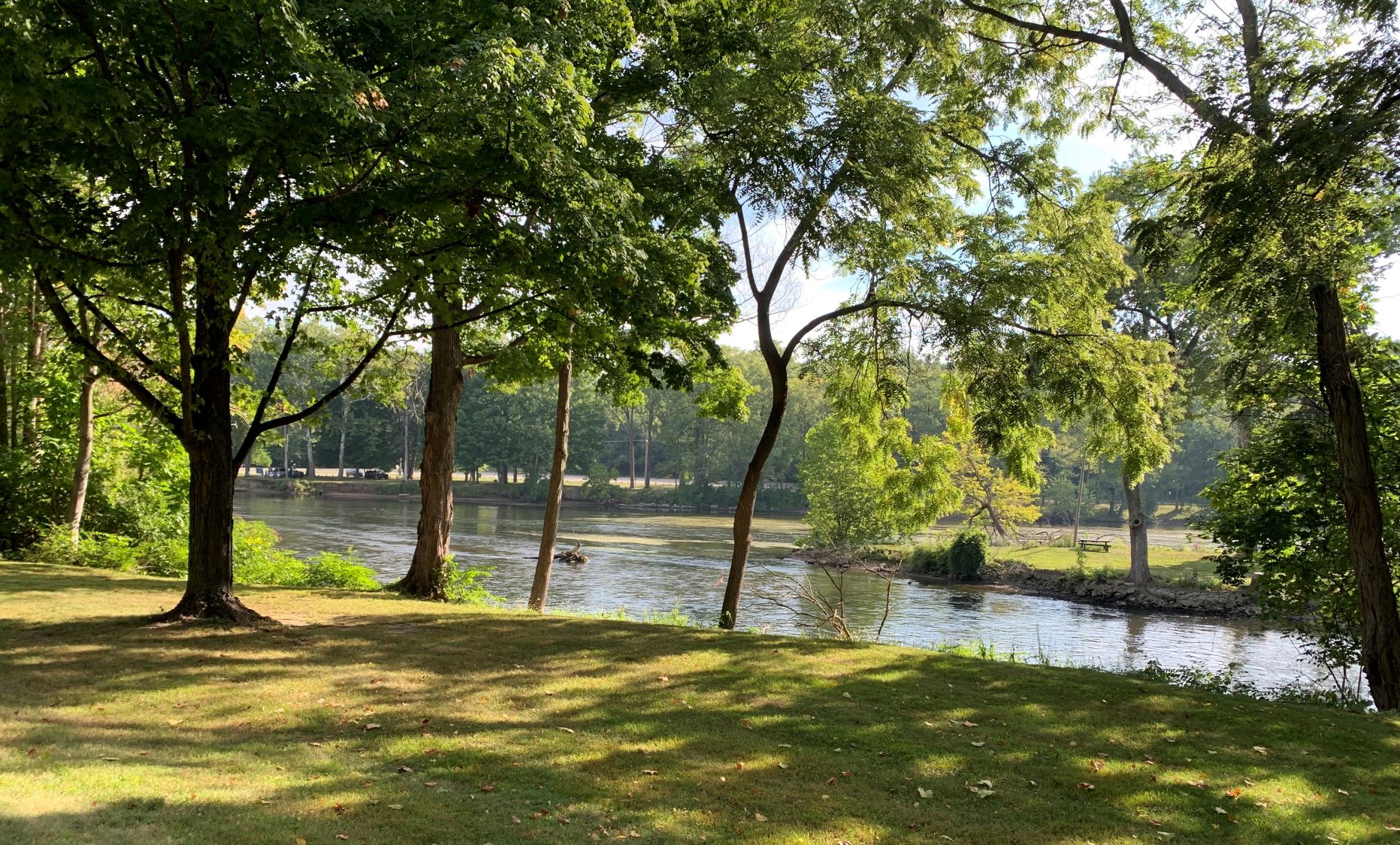
As I fill in the details of Emily’s life, the deeper I research, the more content appears – like the multiplying brooms in the Sorcerer’s Apprentice! Yikes! My cousins are now helping with Emily’s early days in Niles, Michigan. Nancy Peters, who lives in Michigan, and Cathy Altuvilla from LA, took my research questions to the archive staff at the Niles History Center to find answers, and while visiting, took photos of Emily’s family house, church, and the nearby St. Joseph River.

Niles History Center Assistant Director Mollie Watson,
and Cousins Nancy and Cathy
St Joseph River in Niles – also a setting in “Heart Wood”

Closer to home in California, I had the new experience of watching professional archivists at work. Before my appointment at the Yolo County Archives, I had sent two pages of areas I wanted to research, as well as some perplexing questions I had. Archives and Records Center Coordinator, Heather Lanctot, and Rachel Poutasse, Library Assistant, were on it!  I arrived to tables and carts filled with ledgers, maps, voter registrations, deeds, wills, probate records, and fragile bound newspapers from the 1850s to 1915. They not only gave me what I asked for, but as professional archivists, they knew what else would be relevant from their vast archive storage – materials I didn’t even know existed. You may enjoy this link to a behind-the-scenes look at the Yolo Archives: https://youtu.be/SEw0cZNhEdA .

Shirley with Yolo Archive Staff: Heather and Rachel

 After giving me an overview, I was set loose…like a kid in a candy shop!

There’s nothing comparable to the feel, the smell, even the sound of fragile pages rustling in my hands. But holding my great-grandmother’s actual 1911 voter registration (first woman to register in the Cacheville precinct after California women gained suffrage in 1911!), and examining her hand-written will? Those took my breath away.

And then there’s witnessing a gathering storm as I turned the bound pages of the 1915 Mail of Woodland newspaper and viewed the events leading up to World War I and the parallel events leading to Emily Hoppin’s election as president of the California Federation of Women’s Clubs.

I wonder what people in the future will say about the progression of today’s aggressive headlines and where we are heading. 

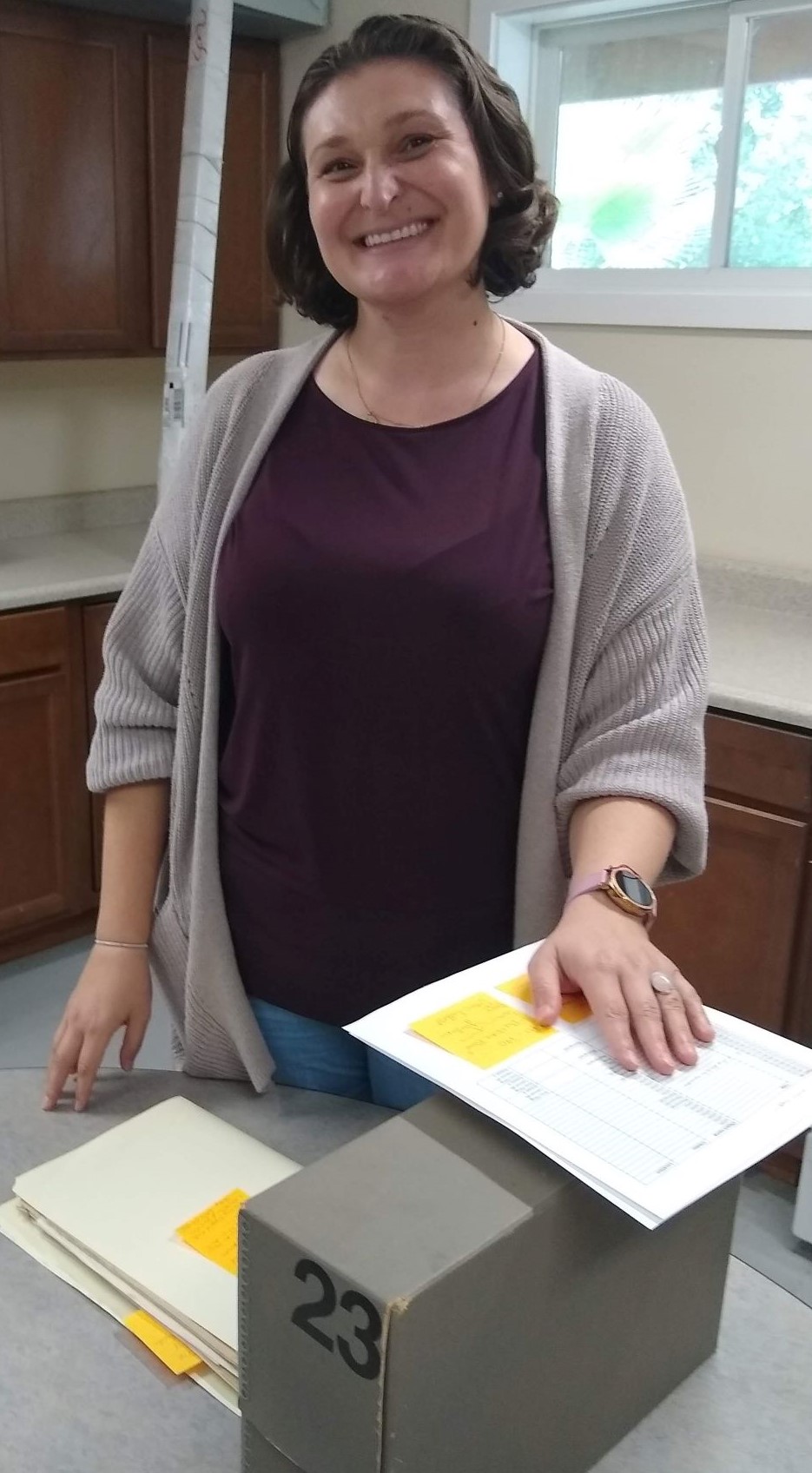
My dream was still to find Emily Hoppin’s personal letters or journals as a way to glimpse her inner world. The next afternoon, across Woodland at the Yolo County Historical Collection at The Gibson House, Iulia Bodeanu, Yolo County Museum Curator, presented me with more Hoppin file boxes.

Iulia Bodeneau with the Hoppin Files

I held my breath, for behind the folder of Gold Rush letters from my great-uncle, John Hoppin, was a thick folder of fragile, hand-written pages. Yes, Emily’s handwriting! Not personal letters, but about a dozen of her speeches, written in pencil, words crossed out, edits made, notes on the margins. Some I had never seen before. It was like discovering gold! Of course, Iulia wouldn’t let me have them, so we arranged to have them scanned and sent to me.

Selection of Emily Hoppin’s Handwritten and typed Speeches

I asked these ladies what it takes to be a professional archivist and was impressed with their educational background:

Heather Lanctot: BA in Music History with an emphasis in History and Literature, MA in Musicology (both from University of Oregon), MLIS with a specialization in Archives and Records Management (San Jose State)

Rachel Poutasse:  MLIS with a specialization in Archival Studies from UCLA

Iulia Bodeanu:  Masters in Museum Studies from San Francisco State University. Bachelor of Arts in Art History and English from UC Berkeley


I returned to my mountain home, not only with a digital trunk load of documents, but with great respect for all the professional and volunteer archivists who work as guardians and guides to our past. Thank you!


Heart Wood is fictional history inspired in part by the life of Emily Hoppin. Many of her life events and writings are incorporated into the novel in the character of Eliza. My initial research on Emily and Charles Hoppin is posted on my website: shirleydickard.com under “Historical Research.”

Heart Wood can be found at your local library, bookstore, and online .

Why I Love Archivists

Like a kid in a candy store, I was surrounded by boxes of old documents from the 1850s to 1915, selected for me by the Archivists at the Yolo County Archives at my recent visit to Woodland, California in September. After years of researching my Yolo Pioneer and activist Great-Grandmother using online searches and old family documents, I was eager to locate primary sources, especially personal correspondence. But COVID hit in 2020, and I had to put my research visits on hold for two years.

I’m excited to finally be writing a comprehensive biography of Emily Hoppin, my great-grandmother.  Not just as an ancestor, but because she lived in an era where women were coming into new power in their communities. She was part of the struggle for women’s suffrage, and she fought to eliminate the devastating effects of alcohol from the lives of women and children. She was a farmer who ran an 800-acre farm and won the 1915 statewide election for President of the California Federation of Women’s Clubs (CFWC) based on her rural perspective, and she was a WWI peace activist.

Emily Hoppin 1915

But her gift, as Heather Lanctot, Yolo County Archives and Records Center Coordinator noted, is that she left a paper trail. Hundreds of women had joined in her efforts, but Emily left writings and speeches for posterity. Much of what she wrote has wisdom for today and will be part of her biography. Additionally, many Hoppin descendants had the foresight to donate family papers to the archives. Not many people think to do that, according to Mollie Watson, Assistant Director of the Niles History Center in Michigan.

I think about today’s electronic communications and wonder how much of our lives will be lost if not also documented in paper and archived. We may be saving trees and time, but those who follow us will have less access to our history.

As I fill in the details of Emily’s life, the deeper I research, the more content appears – like the multiplying brooms in the Sorcerer’s Apprentice! Yikes! My cousins are now helping with Emily’s early days in Niles, Michigan. Nancy Peters, who lives in Michigan, and Cathy Altuvilla from LA, took my research questions to the archive staff at the Niles History Center to find answers, and while visiting, took photos of Emily’s family house, church, and the nearby St. Joseph River.

Closer to home in California, I had the new experience of watching professional archivists at work. Before my appointment at the Yolo County Archives, I had sent two pages of areas I wanted to research, as well as some perplexing questions I had. Archives and Records Center Coordinator, Heather Lanctot, and Rachel Poutasse, Library Assistant, were on it!  I arrived to tables and carts filled with ledgers, maps, voter registrations, deeds, wills, probate records, and fragile bound newspapers from the 1850s to 1915. They not only gave me what I asked for, but as professional archivists, they knew what else would be relevant from their vast archive storage – materials I didn’t even know existed. You may enjoy this link to a behind-the-scenes look at the Yolo Archives: https://youtu.be/SEw0cZNhEdA .

Shirley with Yolo Archive Staff: Heather and Rachel

 After giving me an overview, I was set loose…like a kid in a candy shop!

There’s nothing comparable to the feel, the smell, even the sound of fragile pages rustling in my hands. But holding my great-grandmother’s actual 1911 voter registration (first woman to register in the Cacheville precinct after California women gained suffrage in 1911!), and examining her hand-written will? Those took my breath away.

And then there’s witnessing a gathering storm as I turned the bound pages of the 1915 Mail of Woodland newspaper and viewed the events leading up to World War I and the parallel events leading to Emily Hoppin’s election as president of the California Federation of Women’s Clubs.

I wonder what people in the future will say about the progression of today’s aggressive headlines and where we are heading. 

My dream was still to find Emily Hoppin’s personal letters or journals as a way to glimpse her inner world. The next afternoon, across Woodland at the Yolo County Historical Collection at The Gibson House, Iulia Bodeanu, Yolo County Museum Curator, presented me with more Hoppin file boxes.

I held my breath, for behind the folder of Gold Rush letters from my great-uncle, John Hoppin, was a thick folder of fragile, hand-written pages. Yes, Emily’s handwriting! Not personal letters, but about a dozen of her speeches, written in pencil, words crossed out, edits made, notes on the margins. Some I had never seen before. It was like discovering gold! Of course, Iulia wouldn’t let me have them, so we arranged to have them scanned and sent to me.

Iulia Bodeanu with the Hoppin Files
Selection of Emily Hoppin’s Handwritten and typed Speeches

I asked these ladies what it takes to be a professional archivist and was impressed with their educational background:

Heather Lanctot: BA in Music History with an emphasis in History and Literature, MA in Musicology (both from University of Oregon), MLIS with a specialization in Archives and Records Management (San Jose State)

Rachel Poutasse:  MLIS with a specialization in Archival Studies from UCLA

Iulia Bodeanu:  Masters in Museum Studies from San Francisco State University. Bachelor of Arts in Art History and English from UC Berkeley


I returned to my mountain home, not only with a digital trunk load of documents, but with great respect for all the professional and volunteer archivists who work as guardians and guides to our past. Thank you!


Heart Wood is fictional history inspired in part by the life of Emily Hoppin. Many of her life events and writings are incorporated into the novel in the character of Eliza. My initial research on Emily and Charles Hoppin is posted on my website: shirleydickard.com under “Historical Research.”

Heart Wood can be found at your local library, bookstore, and online .