From Yard Sale to Escape Room: the Journey Home of an Historic Farmhouse Photo

I received an intriguing email from a “Brian” in Michigan last August:


I have a 13 x 10 inch framed picture of the Charles Hoppin house that I purchased from a yard sale in Michigan. I did a Google search based on the photo and found your website. On the back of the photo it tells who is on the porch and in the yard.


The homestead photo just had a certain vibration about it that sparked curiosity and imagination; and that is one of the reasons that drew me to it and why I searched the Internet to identify it. I just thought I would let you know that I appreciated knowing where the house was located and stories behind it
.

This unknown homestead photo just had a certain vibration about it that sparked curiosity and imagination

I wrote him back:
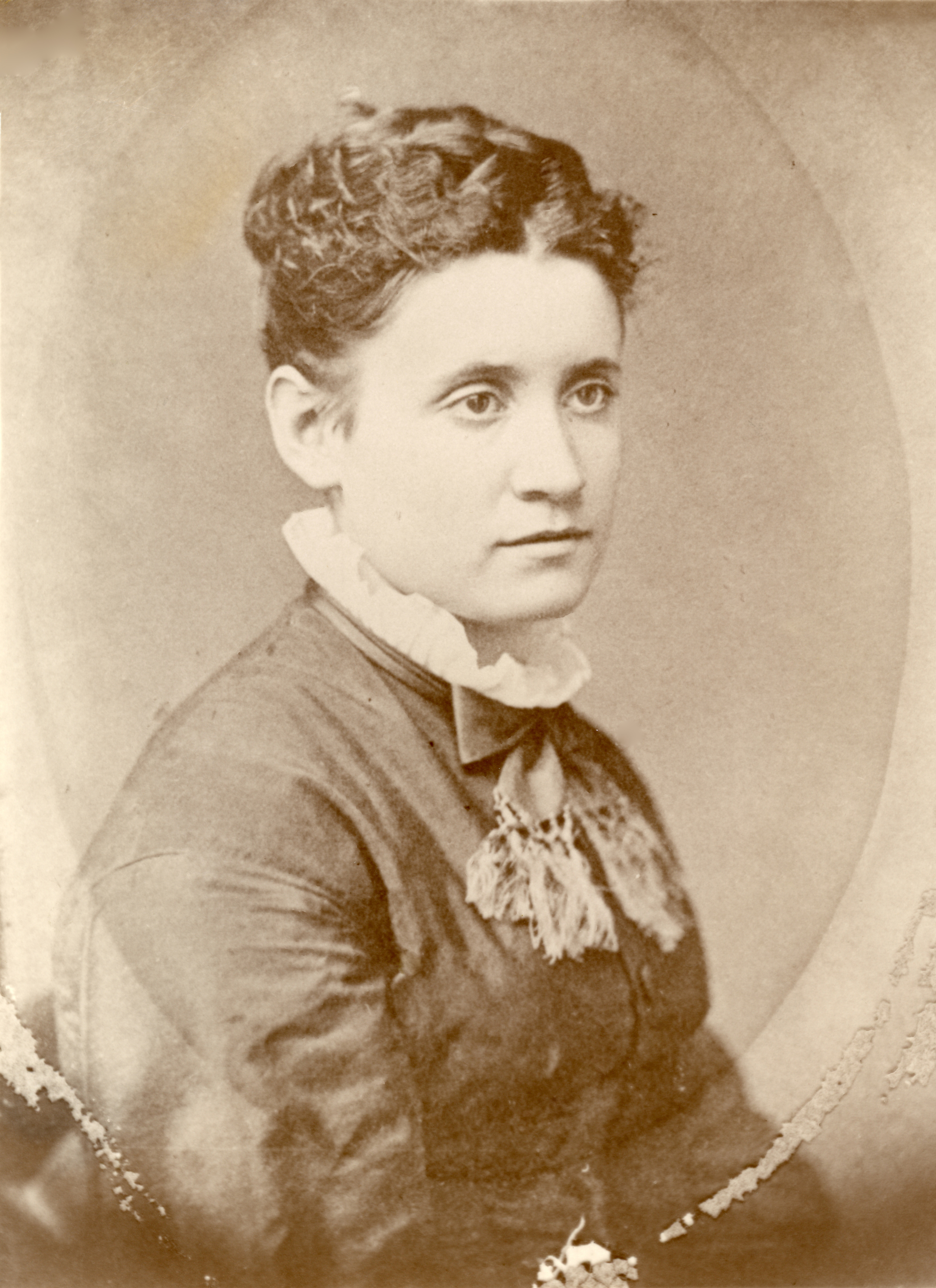
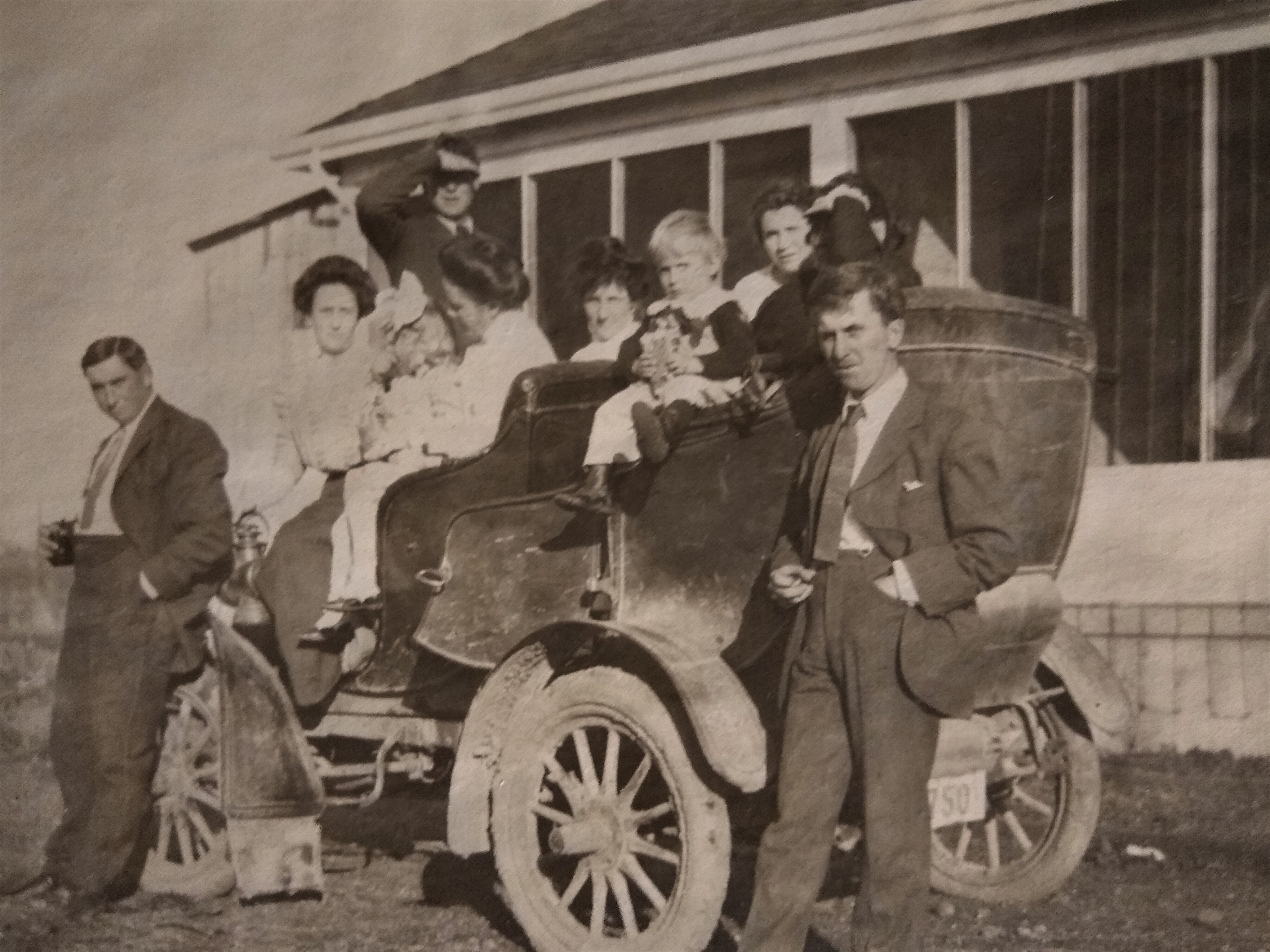
Hello Brian, What a surprise to hear that you found the family’s old California farmhouse at a Michigan yard sale! The Hoppin family was originally from Niles Michigan, and one great-granddaughter still lives in Muskegon, Michigan. You may have read on my website that this farmhouse plays a big part in my novel, “Heart Wood- Four Women, for the Earth, for the Future.” That was a fictional account inspired by family stories. Now I’m going back and writing the actual biography of my great-grandmother Emily Hoppin who was a successful farmer and women’s activist in Yolo in the Northern California Sacramento Valley in the late1800s. She is standing to the right in the photograph.

Nearly everyone in my family has a treasured copy of this historic photograph, thanks to my sister Emily and her then-husband Chris who made copies of the originals back in the late 1970s. But how in the world did this one end up in a yard sale across the country in Michigan? I wrote to my cousin Nancy who lives in Muskegon, figuring she would probably have an answer.
Nancy replied:

We have two framed photos of Emily and Charles Hoppin that my parents had hanging next to the framed photo of the Hoppin Farmhouse for years and years in California. When Mom moved to Michigan, she had them reframed and hung them together. Sometime during her many moves and downsizing, the photo of the farmhouse came up missing. We figure it must have mistakenly gotten in with the give-away stuff (many grandkids and friends trying to be helpful). I’m sure it’s the same framed photo because the label of the picture framing shop is on the back of all three framed photos .

Feeling just a tad possessive about our family’s farmhouse picture, and curious about what Brian planned to do with the photograph, I wrote him back.

His answer surprised me:

The reason that the photo came into my possession is that I bought it to use in my business. I own an Escape Room in Muskegon (Lakeshore Quest) and I purchase unique items that add a richness to my room’s design and story. This particular photo is the foundation to one of the themes I am working on.

Well, well, the old farmhouse photo is in an Escape Room – I hope it’s having fun!

Escape Rooms, for those who don’t know, are group experiences where you’re immersed in a themed room to search for and uncover hidden clues, codes, puzzles that will help you escape, usually within an hour. I could just envision Brian’s customers scouring the farmhouse picture for clues.

I asked Brian to tell me more.

The objects must fit the theme of the room and if it can be used as a puzzle, that’s even better. The best objects come from antique stores, auctions and estate sales. We especially love objects that have a history, tell a story, or just work well as “eye candy”. We want our guests to be as fully immersed in the background story of the room as possible.


The theme of this Escape Room called “Mortimer’s Mansion” was an old Victorian style house that was due to be torn down; it was rumored that the previous owner had a treasure hidden inside the house that no one had ever found. Therefore, the goal of the room is to find the treasure before the home is torn down.

“Mortimer’s Mansion” (Lakeshore Quest Escape Room)


The photo had a great deal of mystery behind it that made us both wonder who these folks were and what their lives were like; there was a little information on the back side of the photo but most of it was left to our imaginations. Over time that made me more curious, and I didn’t want to just toss it into a storage box; this mystery deserved a little more investigation.

Knowing that technology is so powerful, I took the chance that doing a Google photo search may turn up something. And Bingo, it did!! I found your website with the identical photo and a great deal more information. I contacted you and let you know that we found the Hoppin Farmhouse photo.

Hello again from California, I replied.

That farmhouse picture has been around! Nearly every family descendant has a copy; it’s posted on my website (shirleydickard.com), and included in the University of California Davis Archives and Special Collections. In fact, I’m just getting ready to post a blog about “Setting Foot on my Ancestor’s Soil” – about finding the original farmhouse property and walking it with the current almond farmer there.

I then suggested to Brian that if he’s ever finished using the photograph and would consider donating it the Yolo County Historical Archives, they would be very interested in having it.

Long story short, Brian recently contacted me that they were finished using the photo; my cousin Nancy picked it up at the Lakeshore Quest Escape Room in Muskegon Michigan, and mailed it back to its original home in Yolo County, California.

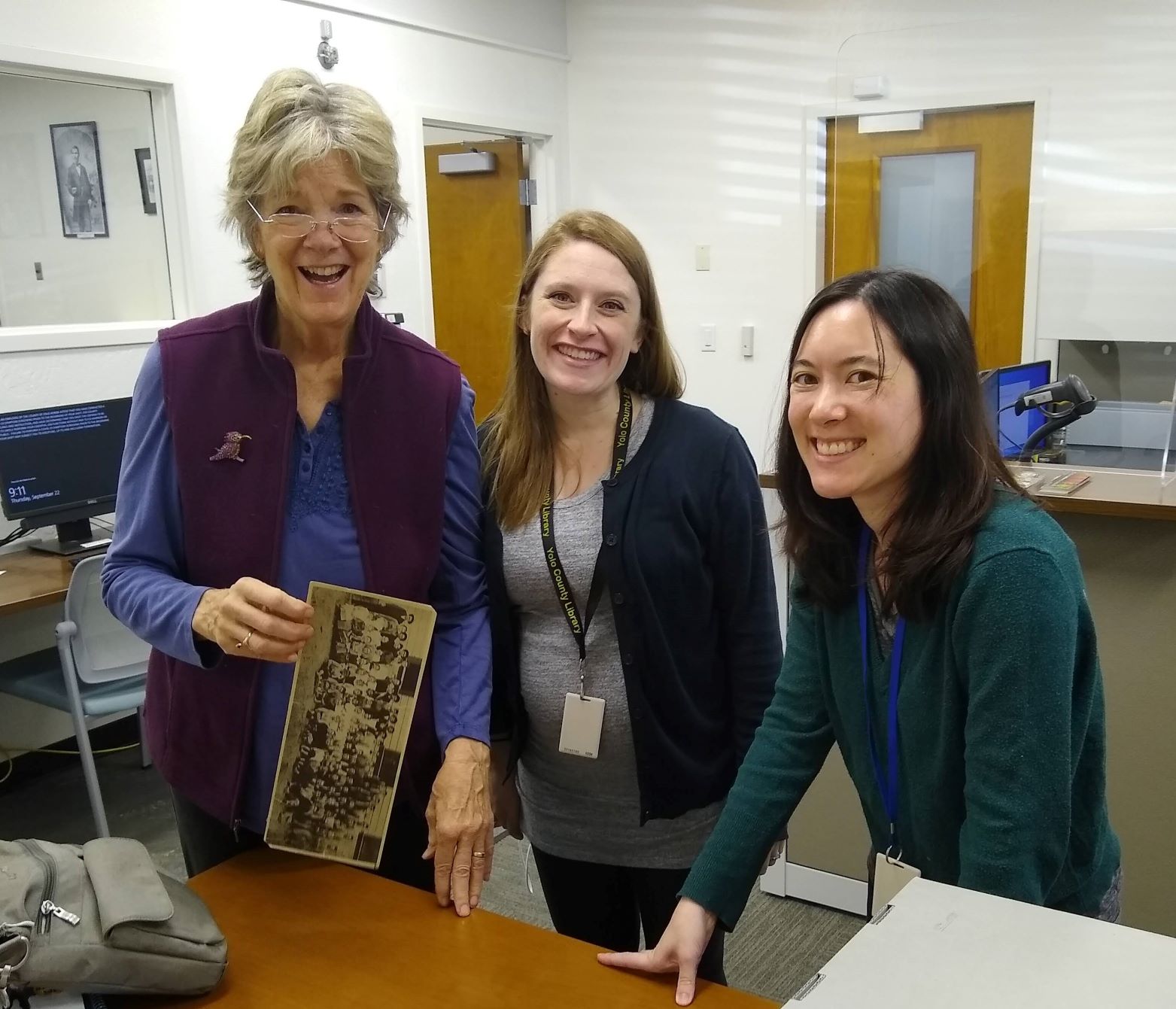
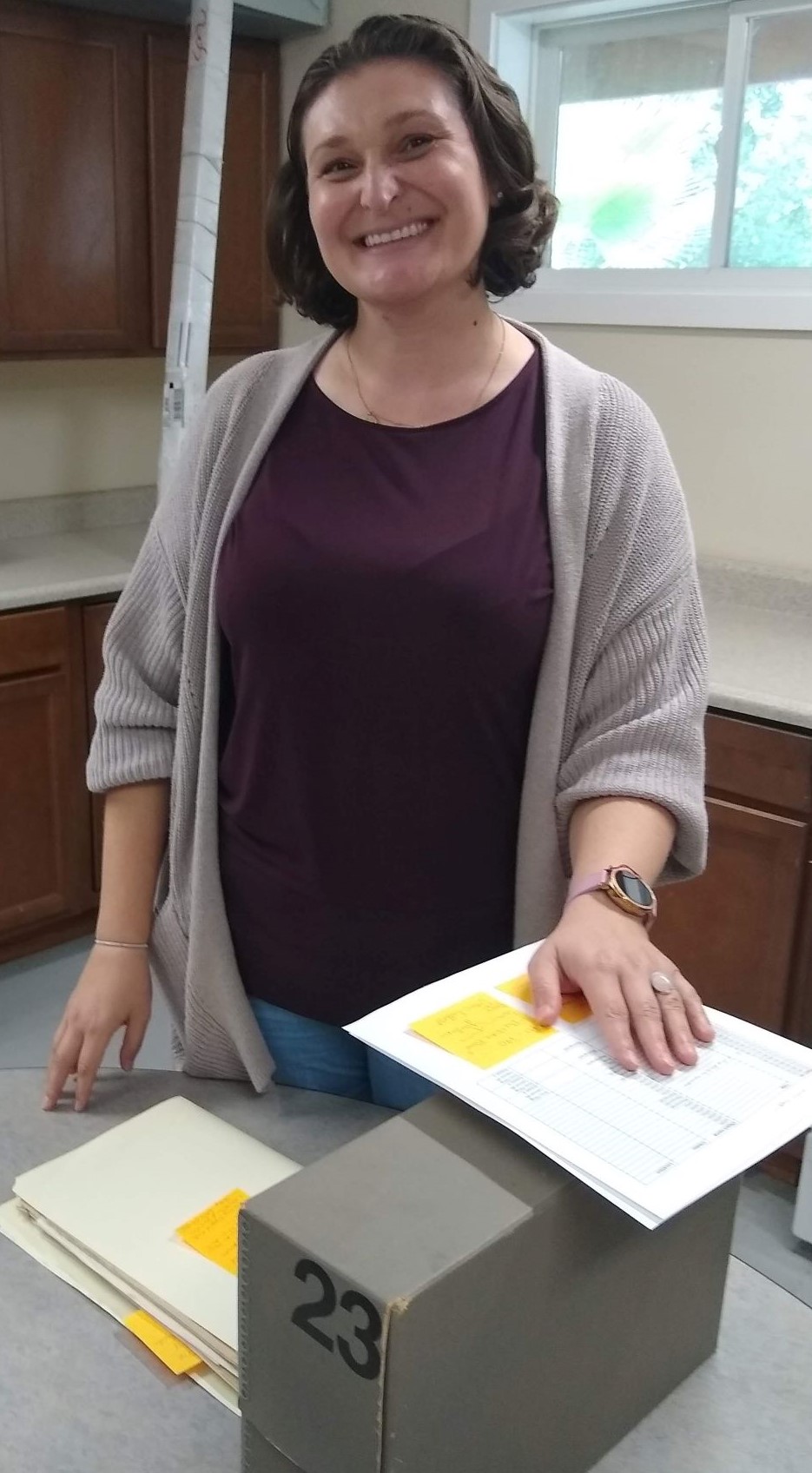
Heather Lanctot, Coordinator of the Yolo County Archives and Historical Collection now has it documented and safely stored in its vast collection of historical documents for family genealogists and future researchers to enjoy finding.

If you have family artifacts that the next generation isn’t interested in, consider donating them to an appropriate Historical Archives collection.

Heather Lanctot, Coordinator of the Yolo County Archives and Historical Collection with a photo of the historic Hoppin farmhouse, Yolo California 1885.


I am currently working on the Biography of Emily Hoppin, the Life and Times of a Yolo Pioneer and Women’s Activist (and also the inspiration for the fictional Eliza in Heart Wood). You’re welcome to sign up for my Blog and Newsletter to follow my progress on this and other topics I care about.

Heart Wood  – Four Women, for the Earth, for the Future can be purchased at your local bookstore and Online.
Setting Foot on Ancestor’s Soil

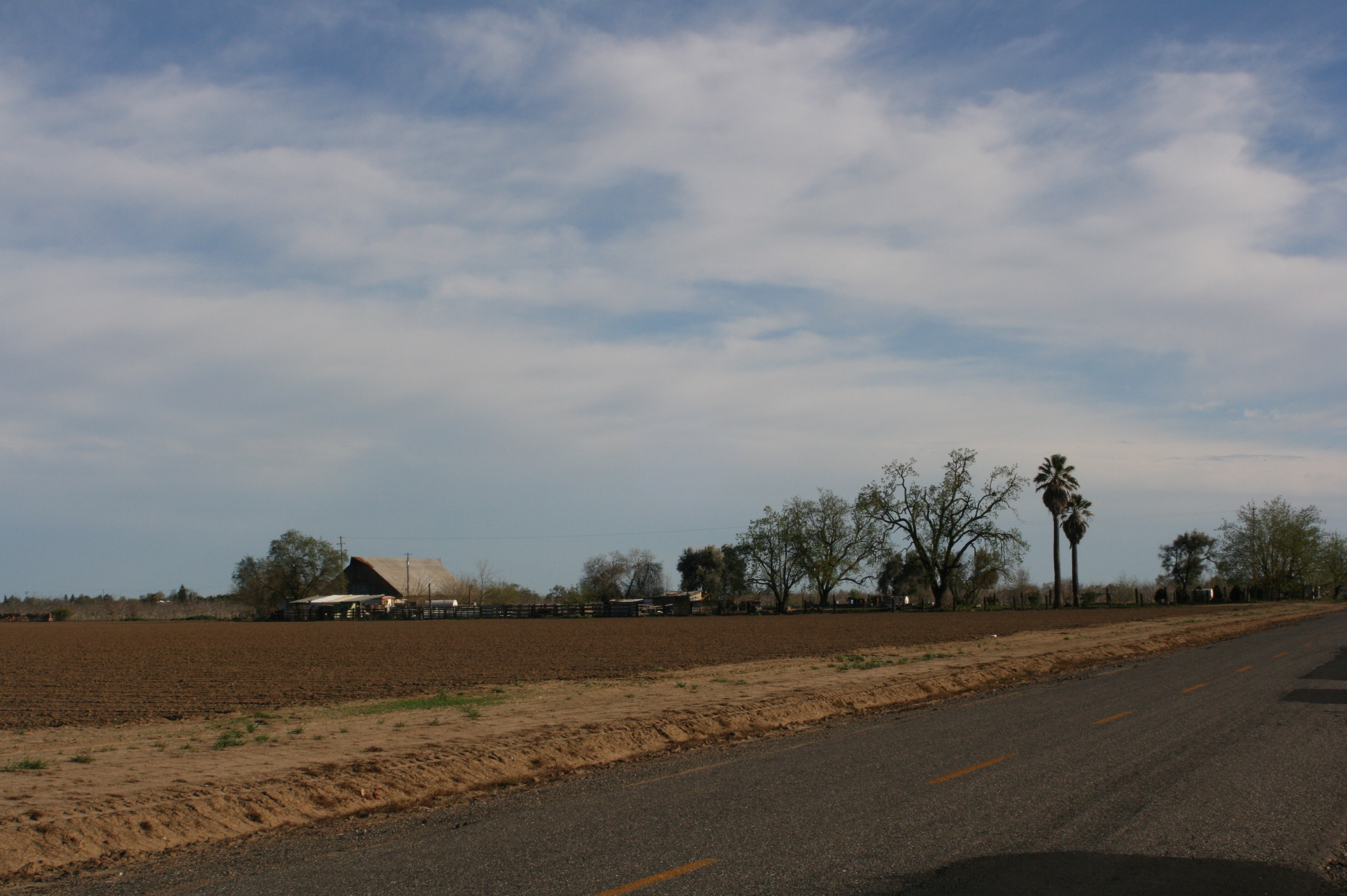
This summer I made another pilgrimage to the land where my great grandparents farmed in Yolo, California from the mid-1850s to early 1900s. In the past twenty years, I’d driven past the location several times, following the hand drawn “treasure map” my Uncle John Kergel drew for me from memory in 1980. “Look for the two tall palm trees in front of the original Hoppin house site,” he had told me. I always found the palm trees, but the house was gone. Built in 1881, the house was torn down in 1935, as I would find out later.

Each time I drove past the site in the past, I never felt comfortable entering it. Leaning out my car window, I photographed from a distance the ramshackle wooden barn, old fencing, and piles of rubble, along with the surrounding furrowed rows of bare, brown earth. Through the weedy rubble, I tried to imagine the stately two-story white Victorian house , Great-grandma Emily fanning herself on the front porch, children playing in the yard, and a herd of black and white Holstein cows in the back pasture. I wanted to touch the earth, feel for any sense of my ancestors still present.

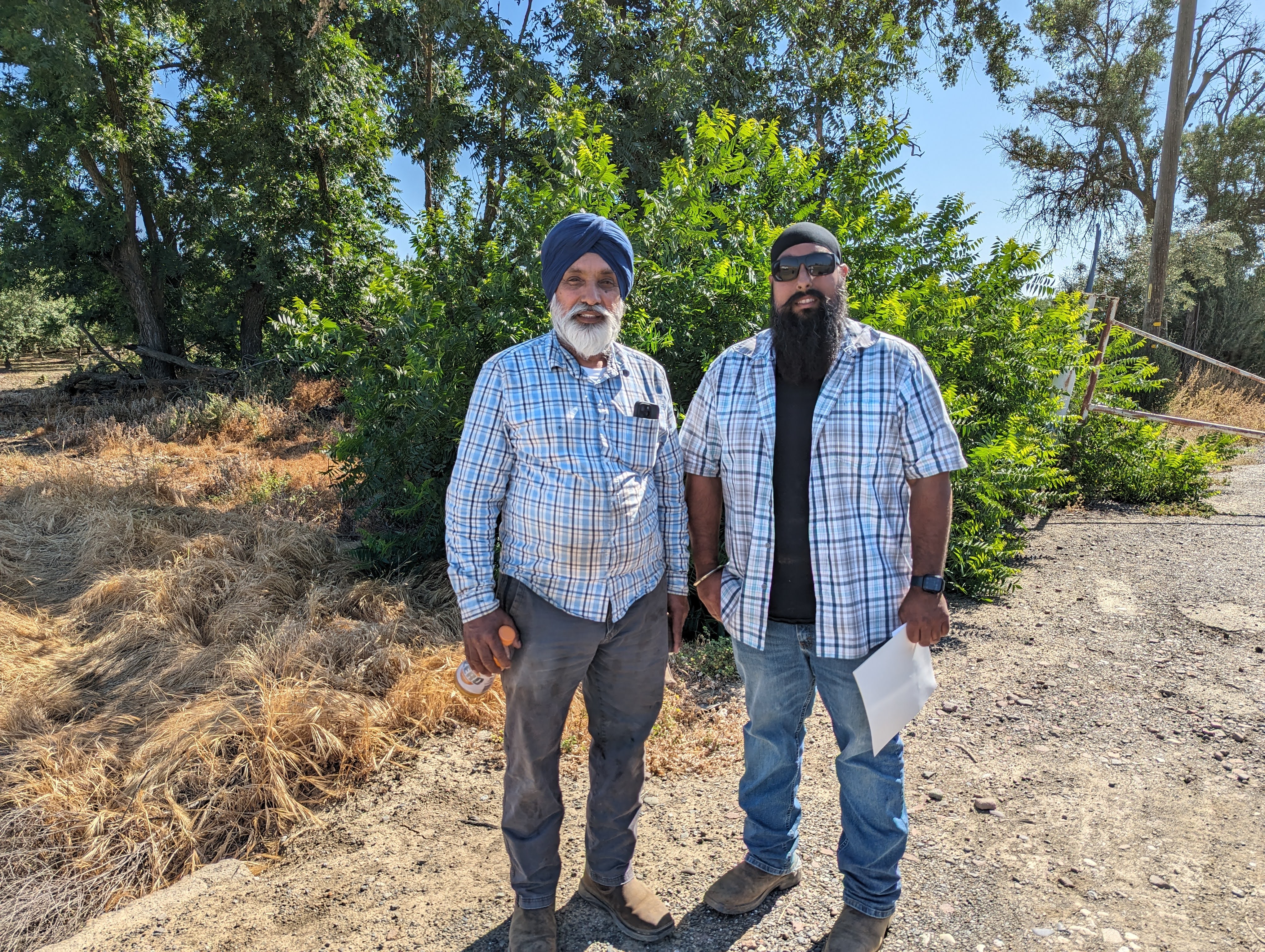
June 2024:  At last, I was going to walk the land with the current owner – Mr. Dhillon. With a folder of old photographs and maps tucked under my arm, I waited with excited anticipation along with my husband Richard. We were joined by Meg Sheldon from the town of Yolo’s small library, who had taken an interest in my story and did the research at the Yolo County Assessor’s Office to find the current property ownership records. I had written Mr. Dhillon a letter describing my desire to visit my ancestor’s property without trespassing. He had agreed to meet me when I was in Yolo doing research in June.

I watched as Mr. Dhillon’s white pick-up truck pulled up across the road. He and his father crossed over to greet us. His father was born in Punjab, India, and at age 17, left India for a better life to farm in America. 

They bought this parcel in 2020, with its two-year old almond orchard. All that remained today of the farmhouse was an old barn (most likely not the original), which they now rent out for storage. We talked about almond farming today, how difficult it is to grow organic, and the influx of rodents they experienced after switching from irrigation by flooding rows with water (which drowns out underground rodents), to drip irrigation which saves water and money, but gives rodents free run to dig underground burrows and damage their trees.

However, they didn’t have much to say about the original inhabitants. They may not have given any thought to the history of the land before they bought the almond orchard. I gave Mr. Dhillon the folder with photographs of my great-grandparent’s farmhouse, and for his wife, a description of Great-grandma Emily as the 1900s feminist activist who wrote speeches from her desk in the farmhouse.

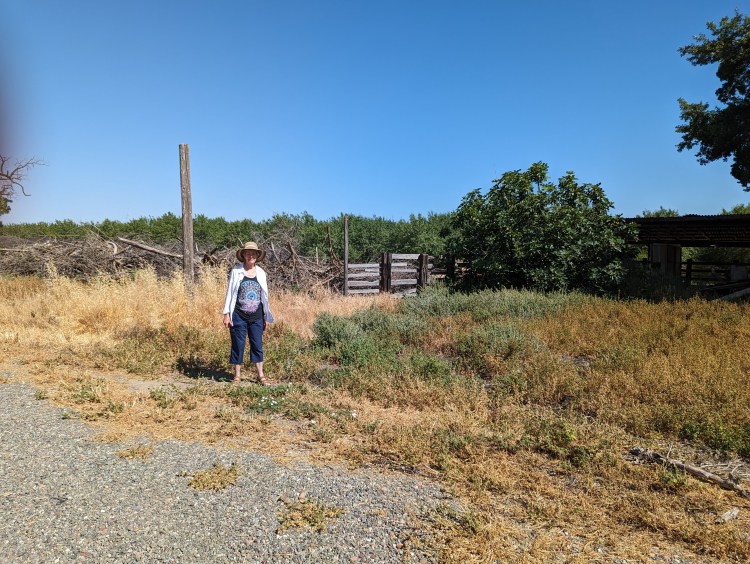
With their permission, we walked the land after they left. I tried but couldn’t figure out where the house was situated. The palm trees had been cut down. Empty cans of farming chemicals were stacked beneath a low branching tree. The barn was locked, but looking through the cracks, it was a scene of old boxes, barrels, dust and cobwebs, a reminder that time had moved on.

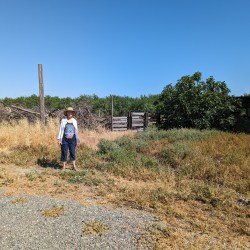
Shirley at possible house site

To the land, the current people are but another wave of inhabitants who walk and work its soil – from the Indigenous peoples, Spanish, Mexicans, Europeans, and now farmers with roots in India. With a sigh, I picked up a small stone from the dirt and slipped it in my pocket – my only memento of what might have been.

Hoppin Farm and Holsteins (unknown date)

Will They Remember?

Years ago, in my early days of searching for my ancestor’s land, I was moved to write these words of poetry. Although it is still a work in progress, it describes my realization that what we build will one day be a passing moment in time. As are we all.

Will They Remember?   


What will they say of us when they pass by here,
Centuries later, what will remain?
Will they remember the work of their ancestors
Whose dreams had sought roots they could water forever?

We stand on our homesteads and watch seasons pass,
Who are we now in the flow of time?
We built fences and floors, stoked flames for the future,
Will only our whispered shadows remain?

What will they say of us when they pass by here?
Will they still know of our place in the mountains
Where our pole beans climbed as high as our dreams
And children clambered in summer rivers and winter snow.

Do we remember who came here before us?
The Nisenan ground acorns to meal by these streams,
They built their shelters from gifts of the forest,
Feet danced out their stories, ‘til white man arrived.

The miners swarmed in with their pans and their shovels,
They cut down big oaks, and dammed up the streams
They scoped up the glitter, sent gold home in sacks
For families to know that the wild west was won.

The miners stayed on then to stake out possession,
Dividing the land, making tents into towns.
Did they remember the people before they
Took over their land and silenced their songs?

Where once stood a farmhouse, an old barn survives,
No trace of the farmer or furrowed golden wheat,
Or the farmwife’s fresh chickens, eggs and soft butter,
Only old photographs prove they were there.

We are but sojourners, we too shall pass away
Our streets will grow over and our fences will fall,
Deer and bear will come freely to eat of our apples,
Climbing over our steel, glass and cement walls.

What will they say of us? Will they remember?
What will remain after decades gone by?
When they walk past our place here in the mountains
What will they know of us? What will they say?

-Shirley DicKard

Shirley DicKard is currently working on the Biography of Emily Hoppin, the Life and Times of a Yolo Pioneer and Women’s Activist. Shirley’s great-grandmother Emily Hoppin, was the inspiration for the fictional Eliza in Heart Wood.

Heart Wood can be purchased at your local bookstore and Online.
What did he whisper in her ear?

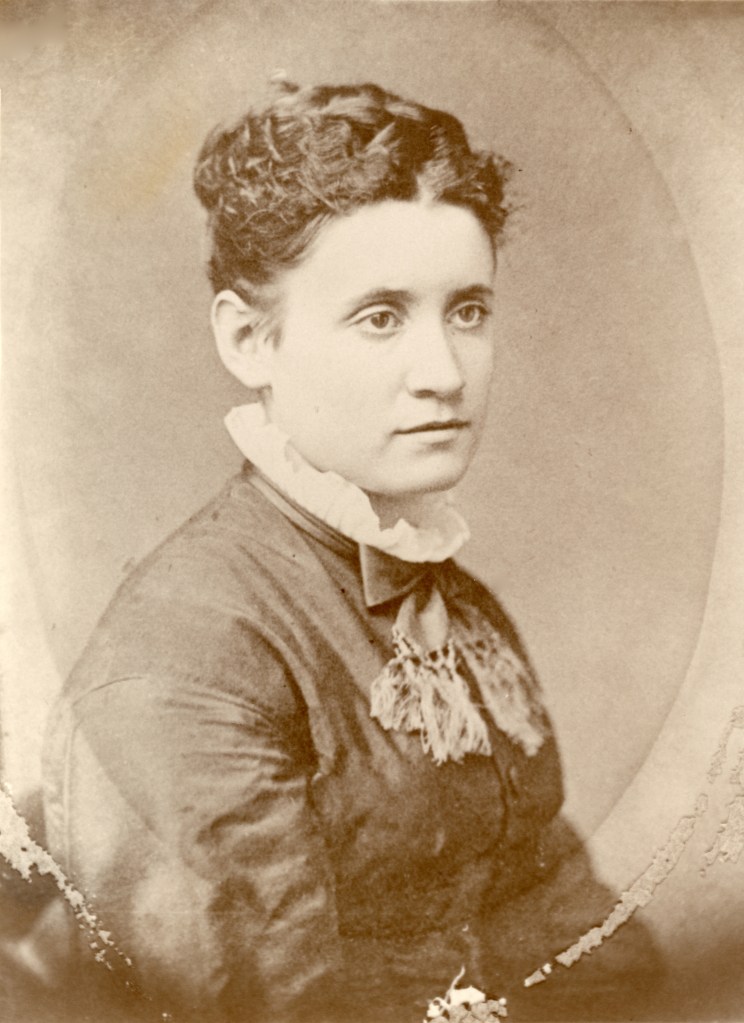
I knew the story well – retold  hundreds of times in my family – that in 1874, my great-grandfather traveled from California back to his hometown in Niles, Michigan, to ask my great-grandmother to marry him and return to his ranch in Yolo, California.

Simple facts. That is, until I started to do research for her Biography to reconstruct what might have actually happened.  Writing fiction is fun. You can just make up events, people, and conversations to suit your story, as I did in Heart Wood, a fictionalized inspiration of my Great-grandmother’s life.

But writing an historical Biography is like writing with one hand tied behind your back. There’s so many constraints: everything must be documented and verified, with no conjecture, imagining, or creativity . . . Darn.

But I’m always up for learning new things, and now my brain synapses are tingling with this new challenge.

Here’s my dilemma.

The scene opens in 1874 with Emily Anna Bacon, age 20, now at the end of her first six months of teaching high school in Niles, Michigan. She’s worked hard to get here – especially as a female in the late-1800s when it was more common for a girl to go to finishing school after eighth grade to learn the home arts and attract a husband. But Emily grew up in a household that valued education – her four brothers were all attorneys and her father a district judge. So in 1869, she enrolled in the Michigan Female Seminary in Kalamazoo, 75 miles from home. From the course catalogue, I know that she graduated in 1873 with knowledge of Latin, Botany, Algebra, Essay Writing, Geography, the Bible, Physiology, History, Government, English Literature, Trigonometry, Chemistry, Art History, Astronomy, and more. Whew!

Missing are her grades and any personal letters or journal, so I can’t write how she felt about her education, but I do know by comparing dates, that her father died about her first week of starting school. That must have affected her deeply.

Enter Charles Rossiter Hoppin in 1874, an old family friend recently returned to Niles from the California farm he built during the Gold Rush. What did he say to convince her to marry a 47-year-old Scottish bachelor farmer and leave her teaching job, four years of education, widowed mother, brothers, sisters, and girlfriends – to travel to the unknown of California?

I envision Biographies as like Weavings – comprised of threads, colors, patterns, textures, and holes. The more I research, the more holes I encounter. I’m not an historian, but I’m learning how to work with these gaps in information. Sometimes with enough sleuthing, I can dig up some facts (thanks to the professional Archivists who’ve helped me). Sometimes I look around at what others in similar situations have done (such as examples from other similar women’s diaries). I can also work around the hole by not mentioning it at all. If the reader won’t notice, this is often the easiest.

Still, I do wonder what he whispered in her ear. . .


I am currently working on the Life and Times of Emily Hoppin – Yolo Pioneer and Activist who I first introduced as the inspiration for Eliza in my eco-novel, Heart Wood – Four Women, for the Earth, for the Future

Website: shirleydickard.com

Contact the author at: heartwoodnovel@gmail.com


Heart Wood can be purchased at your local book store and online at Amazon

Acknowledging Who Owns the Land?

I had an eye-opening moment recently while researching the history of my ancestor’s ranch for the book I’m currently writing. My original search was to find out the price my Great-grandfather Charles Hoppin paid in the 1850s for a quarter of the Rancho Rio de Jesus Maria land grant in Yolo, Northern California.

Curious, I decided to trace the land even further back – and – it’s not what I learned in school! What follows is the short version of what I found. The rest of the story will be included in “The Life and Times of Emily Hoppin,” the biography of my pioneer, activist, Great-grandmother.

If you start with the land, you’ll find that it existed without human inhabitants for unknown eons. It wasn’t until the Ice Age that humans crossed a bridge of land between Siberia and Alaska and continued down the continent. In their book Yolo History, A Land of Changing Patterns, Shipley Waters and Joann Larkey suggest that human activity was present in Yolo County at least by 2,000 B.C. The Wintun (includes Patwins) people arrived in the upper Sacramento Valley about 1,500 years ago. They were the first peoples in the Yolo area. They have never, ever, ceded this land to anyone!

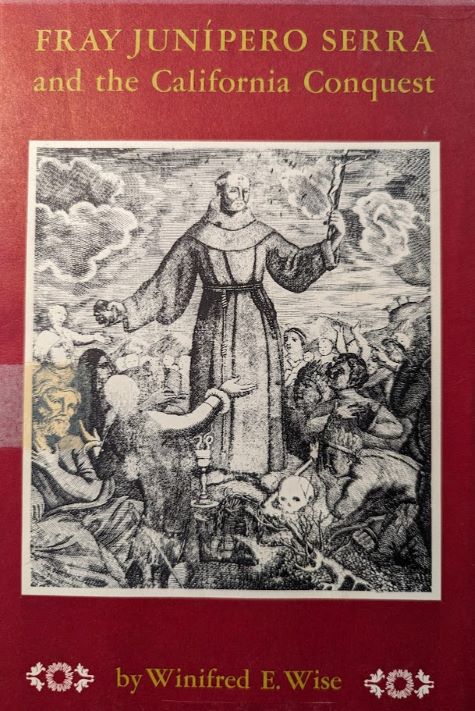
History books have traditionally overlooked this little detail. As a fourth grader studying California history back in the 1950s, I was so enamored by the flashy images of Spanish Conquistadores in the early 1800s and the virtuous Franciscan Father Junipero Serra who built a series of Missions from San Diego to San Francisco, each a day’s ride apart. Their plan was to protect Spain’s holdings in Alta California and to convert the savage heathens.

 It wasn’t until the 1970s that we started hearing the Indian’s version of this Missionization. Their reality was that missions were plantation-like estates with a workforce of enslaved Indians who had been ripped from their land, homelife, language, culture, and health, often beaten and tortured into submission. They are still struggling to recover to this day.

The Spanish government gave away massive tracts of their surrounding land to Spanish soldiers as favors for being stationed in such a remote outpost. By 1846, Spanish mission lands were owned by 800 private rancheros.

When Spain lost the war to Mexico in 1821, the Mexican governor Jose Figueroa determined that mission lands should rightfully return to the Indians rather than colonists. He died a year later (note: research this!) and conveniently, the land was distributed to private Mexican citizens. The era of Land Grant Ranchos began. We see the vestiges in today’s names such as Rancho Cordova and Rancho Murieta, although most names today have dropped the “Rancho” and are now La Brea, Santa Anita, etc.  Interestingly, many cities were conveniently founded on top of indigenous sites and still bear the footprint of the rancho land use.

Rancho Rio de Jesus Maria Land Grant
(From the Yolo County Archives and Historical Collection)

When my Great-grandfather bought a quarter (8,000 acres) of the Mexican Land Grant called The Rancho Rio de Jesus Maria near Cache Creek in Yolo in the early 1850s, it had been previously owned by a naturalized Mexican citizen, then a European settler.

And yet….

The Wintun nation never conceded this land to anyone. After struggling from near extinction by the Spanish, Mexican, and European settlers, the Yocha Dehe Wintun Nation is now reclaiming its heritage, culture, language and independence, and has created a Land Acknowledgement reminder that we are on their traditional land today.

Public Land Acknowledgements:  I had never heard of these until 2021 when I gave a webinar on Emily Hoppin for the Yolo County Library. Before my presentation, a statement was read acknowledging that we (in Yolo) are on the traditional lands of the Yocha Dehe Wintun Nation.

In 2019, the Yocha Dehe Tribal Council created this formal statement:

We should take a moment to acknowledge the land on which we are gathered. For thousands of years, this land has been the home of Patwin people. Today, there are three federally recognized Patwin tribes: Cachil DeHe Band of Wintun Indians of the Colusa Indian Community, Kletsel Dehe Band of Wintun Indians, and Yocha Dehe Wintun Nation. The Patwin people have remained committed to the stewardship of this land over many centuries. It has been cherished and protected, as elders have instructed the young through generations. We are honored and grateful to be here today on their traditional lands.

Land Acknowledgements are being replicated throughout the state. Closer to where I live in the northern Sierra Nevada, the Nevada City Rancheria Nisenan Tribe created their Land Acknowledgement.

Today, I may have legal ownership of my parcel of land, but these Land Acknowledgements remind me of the real history behind that ownership. In truth, it’s better to consider myself a caretaker rather than owner of the land.

This Never-Ending Spiral

I sometimes imagine life as a spiral, circling upwards, always returning to the same spot, only more experienced, hopefully more highly functioning. So here I am again, cycling around to being a learner, after the last years of being a producer.  Actually, as a gardener, I like to think of my growing and harvesting stages.

Does this feel familiar? You can probably come up with places you keep cycling back around to. Here’s a few of mine:  from crawling toddler to walking to school by myself; from an insecure student nurse to teaching new nurses on the hospital floor; from learning the craft of writing to publishing Heart Wood – my first book (at 74 years!). And now I’m back in the learner’s seat, growing my ability to write a Historical Narrative of my Great-Grandmother Emily Hoppin’s life and times.

Growing requires stress.

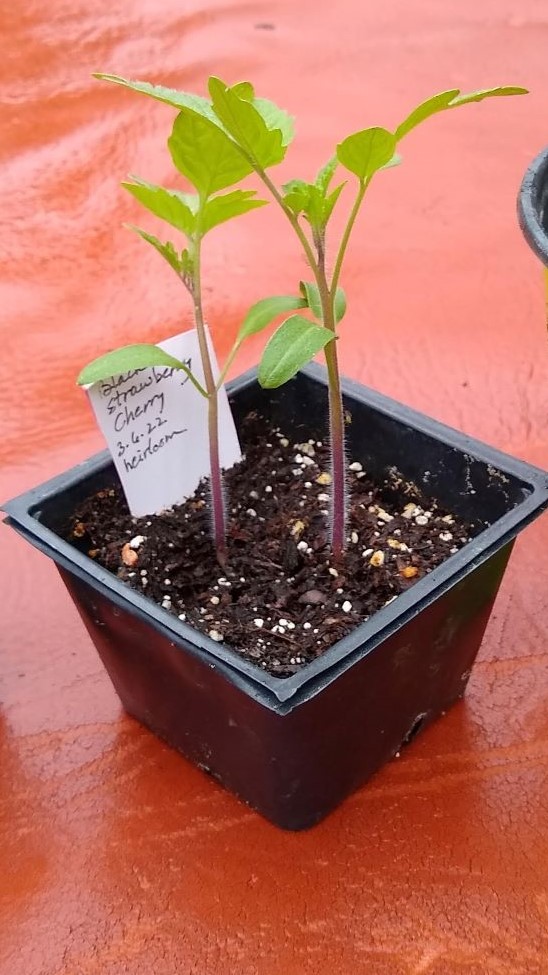
I finally came to terms with that when I saw how much stronger my little tomato seedlings were when they were outside being buttressed by a gentle wind that caused them to twist and turn from their base instead of being continually protected in a warm, sunny room.

Bones are like that too.

The matrix that makes bones strong is developed by the tug and pull of muscles on the bone. Whether it’s weight-lifting or easy strolling, bones need to be prodded by pressure to become strong – a point not lost on me as my bone-density reports show I’m in the middle stages of osteopenia.

Our brains thrive on novelty – even in old age, we put down new neural pathways when we struggle to learn new things – which is why it’s good to do something different and something difficult every day.

I thought it would be easy to shift from writing Historical Fiction to Historical Narrative. Turns out, it’s a whole ‘nother world with a whole new set of “how-tos.”  So I’m now cycling around to being a learner again and immersing myself in a ten-week online course on writing Advanced Historical Narratives with Marty Levine. Now I’m vacillating between “I just love learning so many new things!” to “Aargh, this is too hard. I’ll never get it. I should just write a simple biography.”

But I think of my little seedlings, my bones, and my brain, and keep spiraling on.

Heart Wood is fictional history inspired in part by the life of my great-grandmother, Emily Hoppin. Many of her life events and writings are incorporated into the novel in the character of Eliza. My initial research on Emily and Charles Hoppin is posted on my website: shirleydickard.com under “Historical Research.”

Heart Wood can be found at your local library, bookstore, and Online.

Why I Love Archivists (2)

(Re-formatted – Sorry, something went screwy in the layout. I’m such a perfectionist – hopefully this looks better!)

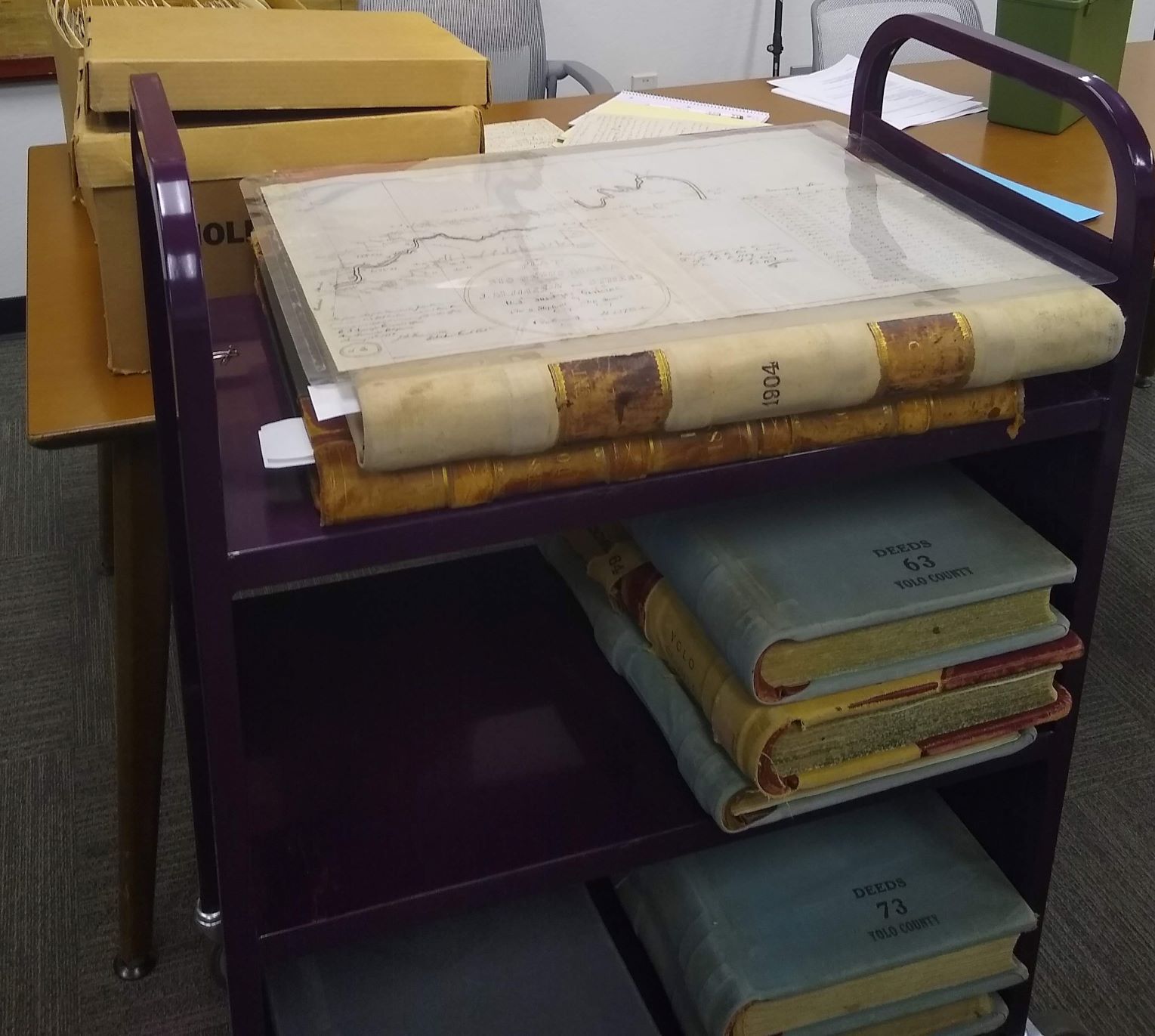
Like a kid in a candy store, I was surrounded by boxes of old documents from the 1850s to 1915, selected for me by the Archivists at the Yolo County Archives at my recent visit to Woodland, California in September. After years of researching my Yolo Pioneer and activist Great-Grandmother using online searches and old family documents, I was eager to locate primary sources, especially personal correspondence. But COVID hit in 2020, and I had to put my research visits on hold for two years.
Boxes, Ledgers, Maps, and Files
Emily Hoppin’s Scrapbook

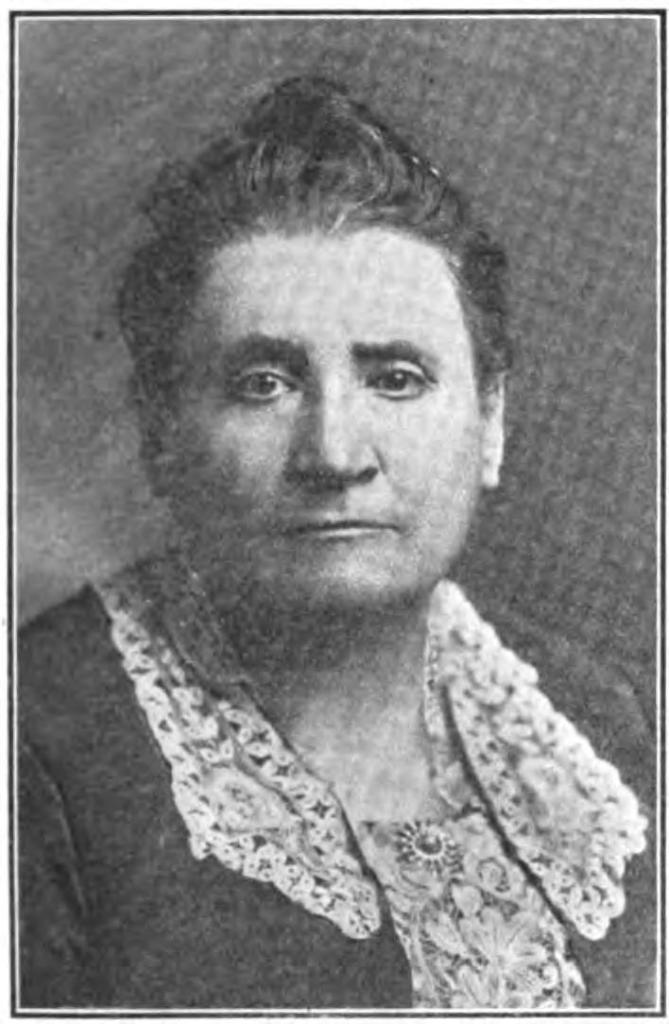
I’m excited to finally be writing a comprehensive biography of Emily Hoppin, my great-grandmother.  Not just as an ancestor, but because she lived in an era where women were coming into new power in their communities. She was part of the struggle for women’s suffrage, and she fought to eliminate the devastating effects of alcohol from the lives of women and children. She was a farmer who ran an 800-acre farm and won the 1915 statewide election for President of the California Federation of Women’s Clubs (CFWC) based on her rural perspective, and she was a WWI peace activist.

Emily Hoppin 1915

But her gift, as Heather Lanctot, Yolo County Archives and Records Center Coordinator noted, is that she left a paper trail. Hundreds of women had joined in her efforts, but Emily left writings and speeches for posterity. Much of what she wrote has wisdom for today and will be part of her biography. Additionally, many Hoppin descendants had the foresight to donate family papers to the archives. Not many people think to do that, according to Mollie Watson, Assistant Director of the Niles History Center in Michigan.

I think about today’s electronic communications and wonder how much of our lives will be lost if not also documented in paper and archived. We may be saving trees and time, but those who follow us will have less access to our history.

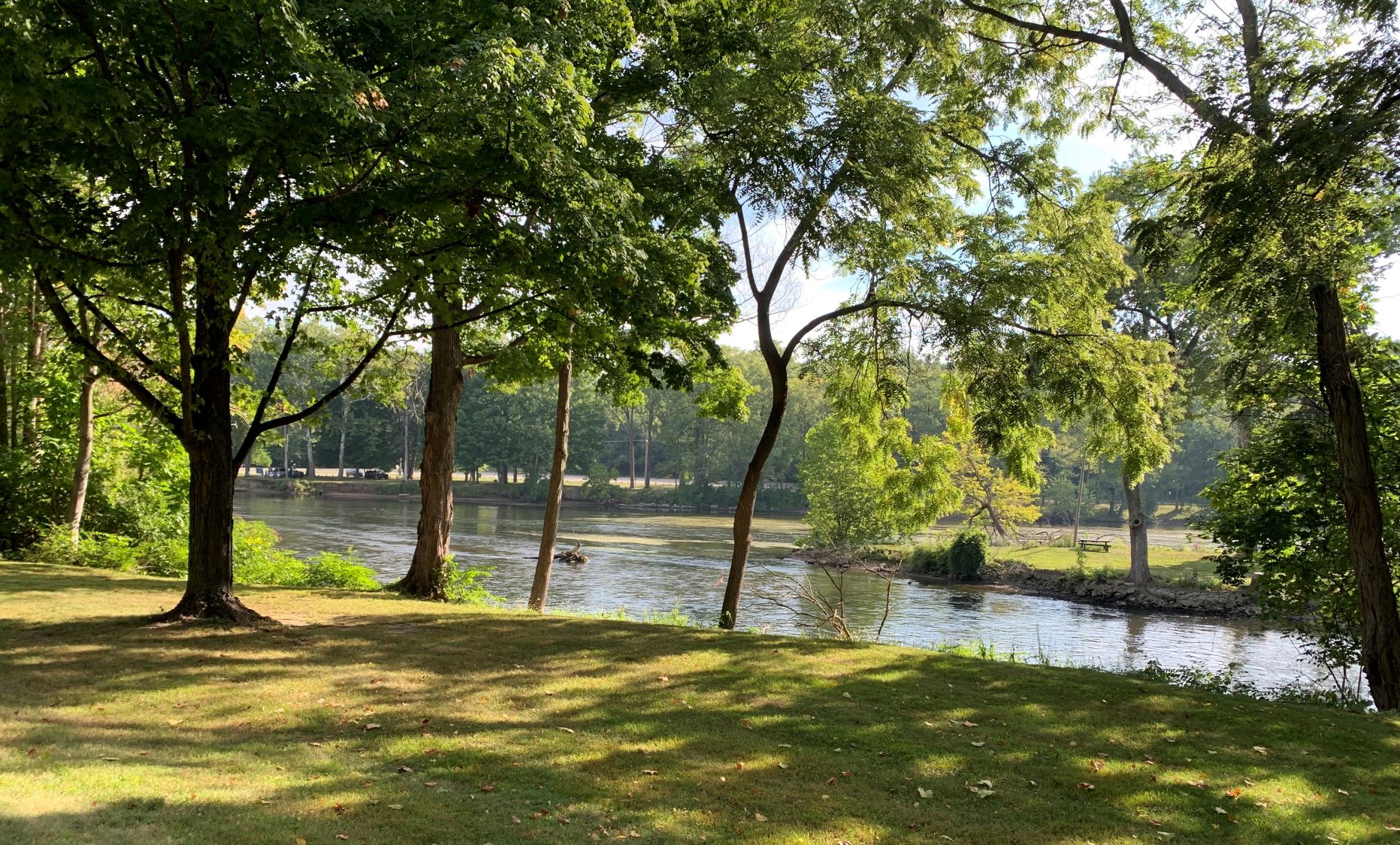
As I fill in the details of Emily’s life, the deeper I research, the more content appears – like the multiplying brooms in the Sorcerer’s Apprentice! Yikes! My cousins are now helping with Emily’s early days in Niles, Michigan. Nancy Peters, who lives in Michigan, and Cathy Altuvilla from LA, took my research questions to the archive staff at the Niles History Center to find answers, and while visiting, took photos of Emily’s family house, church, and the nearby St. Joseph River.

Niles History Center Assistant Director Mollie Watson,
and Cousins Nancy and Cathy
St Joseph River in Niles – also a setting in “Heart Wood”

Closer to home in California, I had the new experience of watching professional archivists at work. Before my appointment at the Yolo County Archives, I had sent two pages of areas I wanted to research, as well as some perplexing questions I had. Archives and Records Center Coordinator, Heather Lanctot, and Rachel Poutasse, Library Assistant, were on it!  I arrived to tables and carts filled with ledgers, maps, voter registrations, deeds, wills, probate records, and fragile bound newspapers from the 1850s to 1915. They not only gave me what I asked for, but as professional archivists, they knew what else would be relevant from their vast archive storage – materials I didn’t even know existed. You may enjoy this link to a behind-the-scenes look at the Yolo Archives: https://youtu.be/SEw0cZNhEdA .

Shirley with Yolo Archive Staff: Heather and Rachel

 After giving me an overview, I was set loose…like a kid in a candy shop!

There’s nothing comparable to the feel, the smell, even the sound of fragile pages rustling in my hands. But holding my great-grandmother’s actual 1911 voter registration (first woman to register in the Cacheville precinct after California women gained suffrage in 1911!), and examining her hand-written will? Those took my breath away.

And then there’s witnessing a gathering storm as I turned the bound pages of the 1915 Mail of Woodland newspaper and viewed the events leading up to World War I and the parallel events leading to Emily Hoppin’s election as president of the California Federation of Women’s Clubs.

I wonder what people in the future will say about the progression of today’s aggressive headlines and where we are heading. 

My dream was still to find Emily Hoppin’s personal letters or journals as a way to glimpse her inner world. The next afternoon, across Woodland at the Yolo County Historical Collection at The Gibson House, Iulia Bodeanu, Yolo County Museum Curator, presented me with more Hoppin file boxes.

Iulia Bodeneau with the Hoppin Files

I held my breath, for behind the folder of Gold Rush letters from my great-uncle, John Hoppin, was a thick folder of fragile, hand-written pages. Yes, Emily’s handwriting! Not personal letters, but about a dozen of her speeches, written in pencil, words crossed out, edits made, notes on the margins. Some I had never seen before. It was like discovering gold! Of course, Iulia wouldn’t let me have them, so we arranged to have them scanned and sent to me.

Selection of Emily Hoppin’s Handwritten and typed Speeches

I asked these ladies what it takes to be a professional archivist and was impressed with their educational background:

Heather Lanctot: BA in Music History with an emphasis in History and Literature, MA in Musicology (both from University of Oregon), MLIS with a specialization in Archives and Records Management (San Jose State)

Rachel Poutasse:  MLIS with a specialization in Archival Studies from UCLA

Iulia Bodeanu:  Masters in Museum Studies from San Francisco State University. Bachelor of Arts in Art History and English from UC Berkeley


I returned to my mountain home, not only with a digital trunk load of documents, but with great respect for all the professional and volunteer archivists who work as guardians and guides to our past. Thank you!


Heart Wood is fictional history inspired in part by the life of Emily Hoppin. Many of her life events and writings are incorporated into the novel in the character of Eliza. My initial research on Emily and Charles Hoppin is posted on my website: shirleydickard.com under “Historical Research.”

Heart Wood can be found at your local library, bookstore, and online .

Why I Love Archivists

Like a kid in a candy store, I was surrounded by boxes of old documents from the 1850s to 1915, selected for me by the Archivists at the Yolo County Archives at my recent visit to Woodland, California in September. After years of researching my Yolo Pioneer and activist Great-Grandmother using online searches and old family documents, I was eager to locate primary sources, especially personal correspondence. But COVID hit in 2020, and I had to put my research visits on hold for two years.

I’m excited to finally be writing a comprehensive biography of Emily Hoppin, my great-grandmother.  Not just as an ancestor, but because she lived in an era where women were coming into new power in their communities. She was part of the struggle for women’s suffrage, and she fought to eliminate the devastating effects of alcohol from the lives of women and children. She was a farmer who ran an 800-acre farm and won the 1915 statewide election for President of the California Federation of Women’s Clubs (CFWC) based on her rural perspective, and she was a WWI peace activist.

Emily Hoppin 1915

But her gift, as Heather Lanctot, Yolo County Archives and Records Center Coordinator noted, is that she left a paper trail. Hundreds of women had joined in her efforts, but Emily left writings and speeches for posterity. Much of what she wrote has wisdom for today and will be part of her biography. Additionally, many Hoppin descendants had the foresight to donate family papers to the archives. Not many people think to do that, according to Mollie Watson, Assistant Director of the Niles History Center in Michigan.

I think about today’s electronic communications and wonder how much of our lives will be lost if not also documented in paper and archived. We may be saving trees and time, but those who follow us will have less access to our history.

As I fill in the details of Emily’s life, the deeper I research, the more content appears – like the multiplying brooms in the Sorcerer’s Apprentice! Yikes! My cousins are now helping with Emily’s early days in Niles, Michigan. Nancy Peters, who lives in Michigan, and Cathy Altuvilla from LA, took my research questions to the archive staff at the Niles History Center to find answers, and while visiting, took photos of Emily’s family house, church, and the nearby St. Joseph River.

Closer to home in California, I had the new experience of watching professional archivists at work. Before my appointment at the Yolo County Archives, I had sent two pages of areas I wanted to research, as well as some perplexing questions I had. Archives and Records Center Coordinator, Heather Lanctot, and Rachel Poutasse, Library Assistant, were on it!  I arrived to tables and carts filled with ledgers, maps, voter registrations, deeds, wills, probate records, and fragile bound newspapers from the 1850s to 1915. They not only gave me what I asked for, but as professional archivists, they knew what else would be relevant from their vast archive storage – materials I didn’t even know existed. You may enjoy this link to a behind-the-scenes look at the Yolo Archives: https://youtu.be/SEw0cZNhEdA .

Shirley with Yolo Archive Staff: Heather and Rachel

 After giving me an overview, I was set loose…like a kid in a candy shop!

There’s nothing comparable to the feel, the smell, even the sound of fragile pages rustling in my hands. But holding my great-grandmother’s actual 1911 voter registration (first woman to register in the Cacheville precinct after California women gained suffrage in 1911!), and examining her hand-written will? Those took my breath away.

And then there’s witnessing a gathering storm as I turned the bound pages of the 1915 Mail of Woodland newspaper and viewed the events leading up to World War I and the parallel events leading to Emily Hoppin’s election as president of the California Federation of Women’s Clubs.

I wonder what people in the future will say about the progression of today’s aggressive headlines and where we are heading. 

My dream was still to find Emily Hoppin’s personal letters or journals as a way to glimpse her inner world. The next afternoon, across Woodland at the Yolo County Historical Collection at The Gibson House, Iulia Bodeanu, Yolo County Museum Curator, presented me with more Hoppin file boxes.

I held my breath, for behind the folder of Gold Rush letters from my great-uncle, John Hoppin, was a thick folder of fragile, hand-written pages. Yes, Emily’s handwriting! Not personal letters, but about a dozen of her speeches, written in pencil, words crossed out, edits made, notes on the margins. Some I had never seen before. It was like discovering gold! Of course, Iulia wouldn’t let me have them, so we arranged to have them scanned and sent to me.

Iulia Bodeanu with the Hoppin Files
Selection of Emily Hoppin’s Handwritten and typed Speeches

I asked these ladies what it takes to be a professional archivist and was impressed with their educational background:

Heather Lanctot: BA in Music History with an emphasis in History and Literature, MA in Musicology (both from University of Oregon), MLIS with a specialization in Archives and Records Management (San Jose State)

Rachel Poutasse:  MLIS with a specialization in Archival Studies from UCLA

Iulia Bodeanu:  Masters in Museum Studies from San Francisco State University. Bachelor of Arts in Art History and English from UC Berkeley


I returned to my mountain home, not only with a digital trunk load of documents, but with great respect for all the professional and volunteer archivists who work as guardians and guides to our past. Thank you!


Heart Wood is fictional history inspired in part by the life of Emily Hoppin. Many of her life events and writings are incorporated into the novel in the character of Eliza. My initial research on Emily and Charles Hoppin is posted on my website: shirleydickard.com under “Historical Research.”

Heart Wood can be found at your local library, bookstore, and online .

Creating Historical Fiction

Note to reader: I am struck by the irony of my post Creating Historical Fiction that I planned for today. Start with the facts, I write, but if you want a richer, more powerful story, try converting your story into a fictionalized version. We’re living in a time when a president is attempting to stay in power by creating a fictional version of the election. Future historians will help us understand the facts and how we responded thereafter. (SD – 1/12/21)


A thin, wavering curtain separates historical facts from the imagination of fiction. Research files may bulge with historical documents that provide the framework for fictionalized ancestors, but imagination and inspiration weave them into a deeper story.

Start with the Facts

Nearly every family has colorful characters and fascinating stories. You can probably think of a few yourself; maybe you have considered writing about them. But how? When I first became interested in my gold-rush era great-grandmother, I decided to write a biographical account of what I knew about how she came to California, ran an 800-acre farm, and worked to better the condition of her community.

Facts evolve into Fiction

At some point, I realized there was a larger story to tell – not just of her life and work, but how it related to the present generation, and even to our unknown future generations who will inherit our stories. I was encouraged to stretch into the realm of historical fiction. Gary Noy, editor of The Illuminated Landscape, A Sierra Nevada Anthology, agreed that fictionalized history carries an emotional resonance that far exceeds the presentation of facts. By writing a novel inspired by historical facts, I was free to tell a deeper, unhindered story.

From Fiction Back to Fact

Like the tip of an iceberg, fictionalized characters are more believable because of the bulk of research that lies beneath their story. Now that my fictionalized version is published, I return full circle to all the facts that launched Heart Wood. In conducting years of research, I’ve been delighted to know my great-grandmother as a larger-than-life thinker, writer, and activist. This research is now posted on my website under “Historical Research.” I am pleased to share my findings with my greater family and to make it available to the public for historical research.

I invite you browse the research that went into the creation of the past in Heart Wood. Perhaps it will be an inspiration to create something from your own family’s story!

Emily and Charles Hoppin (Yolo, California, 1850-1915)

The ancestors whose story inspired me to create Eliza and Silas in Heart Wood

I have recently posted over 25 documents and photographs on my website , including:  

Charles Hoppin’s letters home from the Gold Rush (1850-1863)

An oral history with my grandmother, Dorothea Hoppin Moffett, about growing up on the Yolo Ranch with her mother, Emily Hoppin

Pages of Emily Hoppin’s personal scrapbook (1890s-1915) with news clippings of her campaign for president of the California Federation of Women’s Clubs, 1915

Photographs, maps, and selected documents from internet research

Conducting historical research has changed dramatically over the years

The Internet was unheard of when I first started investigating my family’s history in the late 1980s. To locate and read documents back then, I had to get in my car and travel to distant libraries and archives. Today, it’s a different world: my recent internet search for “Emily Hoppin, Yolo” found over 240 references to her in the California Digitalized Newspaper Collection!

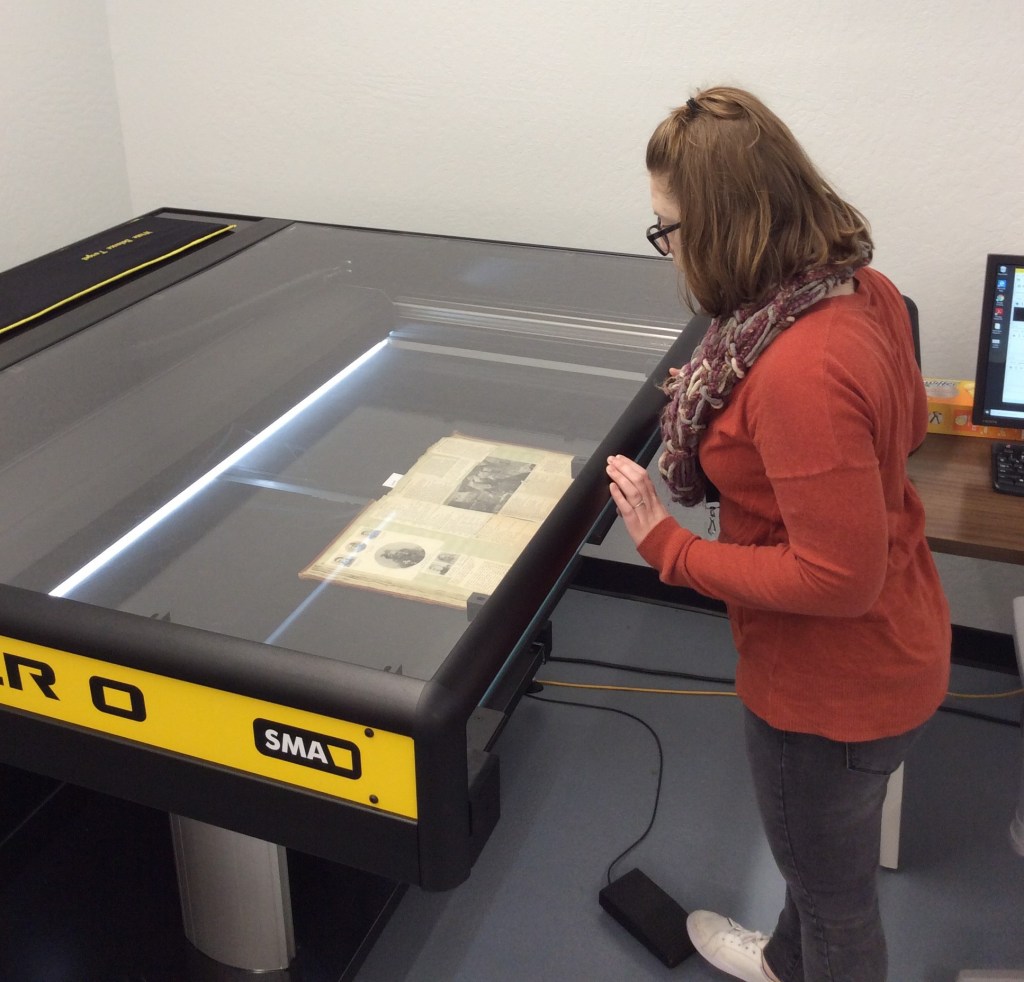
AND…without the invaluable assistance of the Yolo County Archives and Records Center, Emily’s scrapbook would still be sitting on my bookshelf.  I am grateful to Coordinator Heather Lanctot who scanned each page with their large-sized scanner so that the scrapbook can be read on my website, and in time, will be a permanent public record at The Yolo Archives. Like all volunteer-based organizations during this time of COVID, The Yolo Archives appreciates donations (bit.ly/fyca-join).

I hope you will enjoy browsing my Historical Research page and perhaps be inspired to be creative with your own family’s history. If you’re curious about writing historical fiction, traditional memoir, or a biography, you can find a wealth of support on the internet, on-line classes, writing coaches, and books.

“Hold to the now, the here, through which all future plunges into the past.” – James Joyce, Ulysses


Heart Wood can be purchased online and at all bookstores

Thank you for supporting independently-published authors and local bookstores!

HERE: To support your local, independent bookstore

HERE: To purchase on Amazon (ebook and paperback)

www.shirleydickard.com


Open House at shirleydickard.com

You’re invited to an Open House at the newly remodeled website dedicated to my eco-novel: Heart Wood – Four Women, for the Earth, for the Future.

Years ago, when Heart Wood was in its infancy, I created my first website and blog. Having since outgrown the space, I’ve been working with a web designer to give it an updated look with new rooms and décor. Please stroll around and take a look!

There is one last room I want to remodel and I’m hoping readers can help me. If you click on the “Research” tab, you’ll see tabs for Past, Present, and Future. These are where I’m gathering Present data and evidence of mankind’s cumulative impact on the Future, as well as my family’s historical documents from the Past.

If you’ve read Heart Wood, you may share my concern for what we’re doing to our air, water, food, and earth, and the impact on our health and longevity – especially of our children. You can contribute by sending articles and links that I can post. Discussions welcome!

Thank you to Sky (who actually spent her first years in the mythical “Luna Valley”) for this first article: Why the World is Becoming Allergic to Food  https://getpocket.com/explore/item/why-the-world-is-becoming-more-allergic-to-food?utm_source=pocket-newtab.  Cue the rise of Pharm.food!

For history buffs, especially my family, I will post all the documentation I gathered about my great-grandparents, Emily and Charles Hoppin of Yolo, California – the inspiration for the characters of Eliza and Silas in Heart Wood. In my research, I found previously unknown speeches, writings, and interviews with Emily Hoppin. She was a woman before her time and now, 100 years later, her voice can be heard! I invite anyone with information about Charles and Emily Hoppin to add to this documentation on my website.

Please sign the guest book by leaving a comment. If you see any corners that need attention, let me know. I’m learning how websites nowadays must work across all types of screens: computers, tablets, and mobile devices – rather like a three-dimensional tic-tac-toe board! My appreciation to Katie (who also grew up in the “Luna Valley”) and her design team at Urban Sherpa Marketing: www.urbansherpa.marketing