Heading Toward the Dystopic Future of Heart Wood

I take no pleasure in watching the future world unfolding – the future I described in my eco-novel Heart Wood. My aim was to show through storytelling that what we do and what we don’t do matters to the future. I described the actions and attitudes of my ancestors (1800s) and today’s generation (early 2020s), and how we are collectively creating a future world that my imaginary great-granddaughter Amisha must live in (2075-2090).

I’m often asked about the future parts, “How did you know? It’s so unsettling!” I can only say I picked out threads of what I saw today and projected them into the future…asking what would life be like if this continues?

Are you ready to explore with me? I’ve selected six main themes from Heart Wood and contrasted our present world with Amisha’s future in 2075-2090.

 Future: a miniscule bio-electronic Nib is implanted behind all baby’s ears at birth. These directly input information and directions into the brain, eventually overriding much of the person’s thinking. In addition to tracking a person’s location, Nibs also monitor their physical and emotional health, and when it detects an imbalance, automatically delivers “rebalancing” medications from the person’s “Medpak” implanted into their belly. Later in Heart Wood, Nibs subtly begin to deteriorate, giving erroneous information as if it were real.

Present: Where to start? Siri, Alexa? GPS directions? Smart watches? Fitness Trackers? These are part of our mainstream world now. AI wasn’t mainstream when I wrote Heart Wood in the early 2020s, but we’re getting closer to having an AI device implanted (for our benefit and convenience, of course).

Billionaire businessman Elon Musk has developed the NeuroLink in which fine electronic threads have been inserted into the brain of at least seven men with spinal cord injuries, enabling them to move a computer mouse with their minds. Yes! Check it out here.

In 2025, RFK Jr. – current US Secretary of Health and Human Services – is touting wearable electronics, such as watches, bands, rings, patches, and clothes, to monitor our vital health signs, with the data stored in the “cloud.” Current medical treatment includes inserting miniscule Nanobots into the body for diagnosis, treatment, drug delivery, and surgery. https://relevant.software/blog/nanobots-in-medicine/

While most of these health advances are originally designed for a specific medical benefit, they set up a prototype for a future widespread Nib-like implant.

2.  GARBAGE

Future: Garbage is illegal. There is no “away” for throwing things away. New items must be created from material that already exists, which is why there is a fight between the U.S. and China for ownership of the floating garbage island in the Pacific.
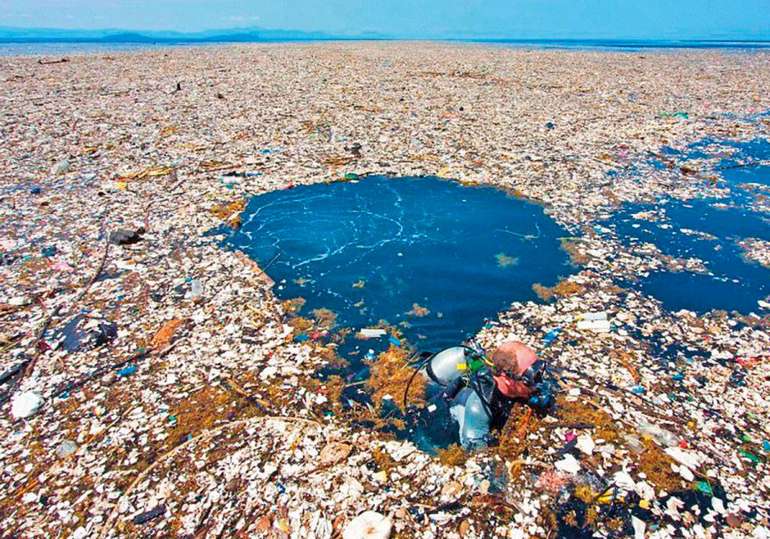
Diver in the Pacific Ocean Plastic Garbage Island

Present: How often have you tossed away single-use containers? I know I have, even knowing they’re filling up our landfills and oceans with garbage that’s mostly plastic. Currently, garbage must be separated and put into recycling bins, where some will actually be recycled. Organizations such as Californians Against Waste  are fighting for legislation that eliminates excess packaging, reduces food waste, promotes the right to repair small appliances/electronics, and promotes effective recycling systems.

3.  PLASTICS

Future: “Plastix” is made from recycled plastics and is used to formulate everything imaginable: shoes, furniture, cars, etc. But people also know how deadly plastic is, as in the scene when a young girl gives birth to a baby born with a reproductive system abnormality:

“But we did right” said the curly-headed grandmother, hugging her daughter tighter. “My daughter never touched plastic in her life!”

“You can’t avoid it,” Amisha said. “Plastic deteriorates so small it floats everywhere, from high in the stratosphere to miles deep on the ocean floor.”

Present: Research is finding plastic nanoparticles not only in the stratosphere and deep ocean, but in breast milk, human tissue  and baby poop . A new disease, “Plasticosis” is identified in seabirds that also impacts humans.  Plastic contains hormone-disrupters that confuses the body’s hormone regulation and reproduction systems. Researchers are investigating the connection between low level exposure to hormone disruptors and gender dysphorias.  

4.  FERTILITY

Future: It has become very difficult to conceive, and viable births are a rarity. Amisha’s group created a “Fertility Room.” When a female is ovulating, she allows multiple males to inseminate her in the hopes of increasing the odds that one of the few viable sperm will fertilize her one egg.

Present: Sperm count and human fertility are decreasing. IVF -In Vetro Fertilization centers have proliferated to help couples increase their odds of becoming pregnant. Of course, now, IVF has become politicized, making it more even difficult for couples to conceive.

5. FOOD INTOLERANCES

Future: Due to long term environmental contamination and genetic manipulation of food ingredients, human babies are increasingly unable to process food to support their growth. However, the Pharma industry has found an answer to the problems they originally created, with “PharmFood,” colorful packages designed for specific food intolerances. Food as we know it has become a rarity.
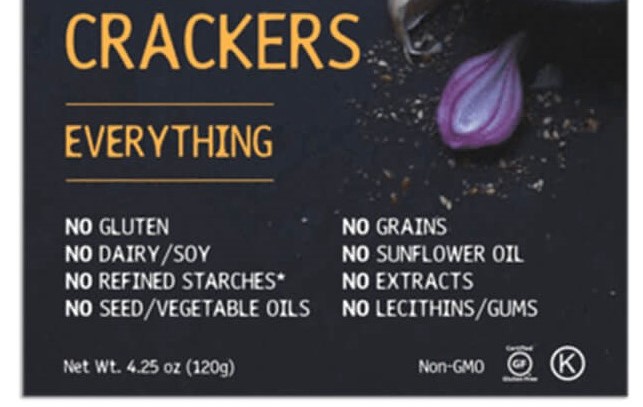
Present: I walk down the grocery aisles and notice large sections set aside for specific health and dietary issues, gluten-free being the most predominant. Package covers tout everything this food is not: “No gluten, no lactose/dairy, no GMOs, no animal products, no tree nuts, no pesticides, no BHT, no artificial colors or flavors, no high-fructose corn syrup, etc. Wow! I can imagine my great-grandmother wondering why in the world anyone would put those things into food in the first place?

6.  WEATHER

Future: California is mostly burned over from massive fires. Rivers hold meager amounts of water, but small pockets of green survive in the foothills. Sea level is rising into the first floors of San Francisco’s Financial District, and Golden Gate Park is now a refuge for Pacific Islanders who lost their islands to the rising sea.

In Heart Wood, Amisha has hitched a ride into the foothills with Charlie, a blind man with a mule and wagon, in search of her family’s old homestead.

Amisha held a small mouthful of water against her sticky dry gums before swallowing. She took another swig and returned the canister to its hiding place. “What's up there?” she asked, pointing to the hint of peaks in the distance.                                                                                          “You're asking ‘bout the hills? Not much,” Charlie replied.                                                           “People?”                                                                                                                                             “They've come and gone, mostly farther north.”                                                                        “Oregon?”                                                                                                                               “Farther. Canada’s still deciding its immigration policy.”                                                                        “They say fires took out most of the foothills. Anything survived?”                                                             “A structure here and there.”                                                                                                                “Trees? People?”                                                                                                                                      “Can't say,” Charlie climbed back into the wagon.                                                                                   “Why are you going up there?” Amisha asked                                                                                        “Can't say that either.”  

I was surprised when I re-read the part about Canada deciding its immigration policy toward US citizens. It seemed far-fetched when I wrote it. Little did I know it could become a political reality!

Present: Forest fires used to be a danger mainly for those living in a forest. Mountain folk learned to have “Go-Bags” ready for a quick evacuation. Now, even those who live in cities are concerned about major fire conflagrations. Fires are larger, fiercer, and create un-precedented destruction.

Homes along coastlines are literally losing ground, as the sea encroaches into lowland communities. Hurricanes and storm damage are more intense. Flash floods, landsides, ice storms all demonstrate water’s increasingly destructive power.

Insurance companies, strained by increasing claims from all the chaotic climate-induced fire, water, and wind disasters, are cancelling home insurance policies. And still, current conservative politicians who refuse to see these massive weather events related to man’s actions on the planet, cancel programs that would have given us hope for either halting or reversing climate-induced damage.

Is there hope?

I often hear two main comments from readers: “This is the most depressing book ever!” and “This is the most satisfying ending I’ve ever read in a dystopian book.”

Future: Yes, Amisha’s future world is depressing, but that’s the point. She is a victim of the world we are creating for her. She survives because she has created a small community that lives with what they have, eats less, and grows or forages for their drought-tolerant food. They learn to listen to and let the earth speak first. Eventually her group will connect with other small groups and share what works. Life is certainly not easy by our standards, but it will be possible for some to survive and, for even fewer, to procreate.

Present: I see the writing on the wall, often feeling helpless because it’s such a huge problem. I do the easy things, of course, like recycle, reuse containers, shop locally (including farmers), turn off lights, shop for previously-used things. On a larger scale, there are (still) so many groups working to educate the population and pressure politicians to “think and act green.” It’s harder than ever to make progress in today’s political climate, but do it anyway. Support these groups however you can. And talk about it!

Group Discussions: One of my favorite parts in talking with Book Clubs about Heart Wood are the thought-provoking discussions: “We see this coming, but what can we do?”  I don’t have answers, but we can collectively ask the right questions.

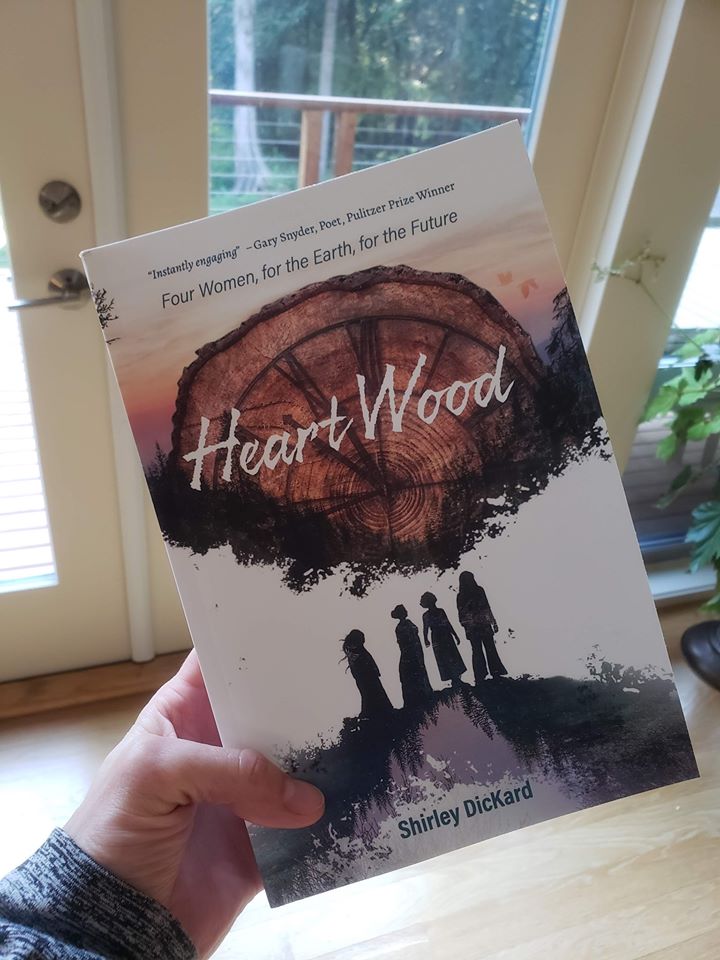
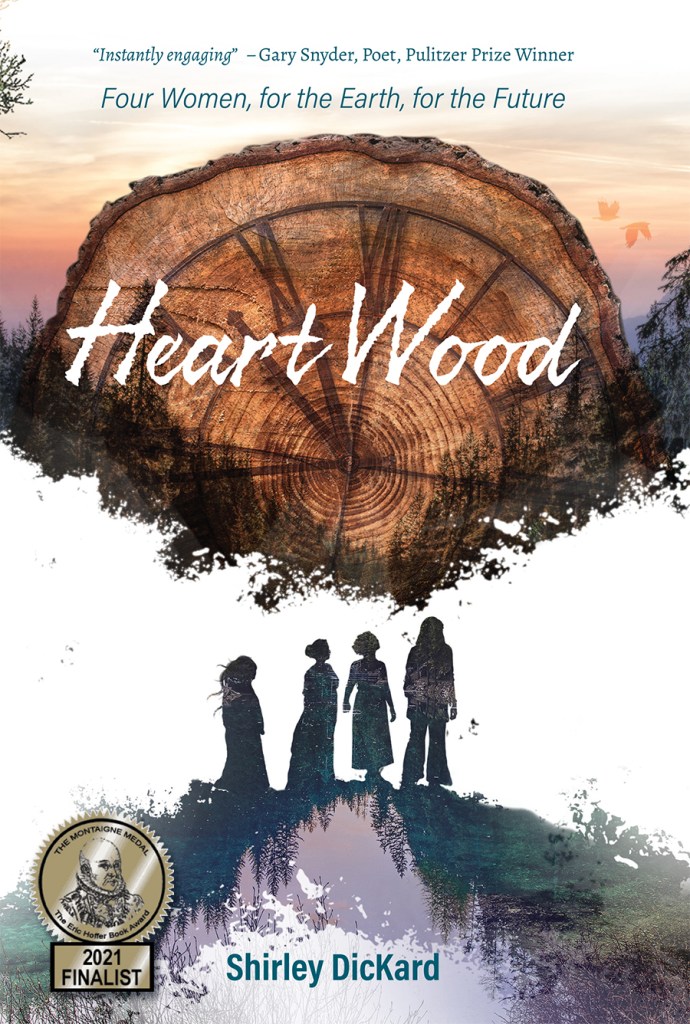
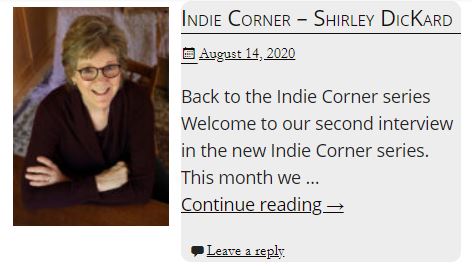
Heart Wood, Four Women, for the Earth, for the Future can be purchased at your local, independent bookstore (they can easily order it for you!) Or online. If you would like a signed copy directly from the author, contact me at heartwoodnovel@gmail.com.

Thought Provoking?

I received a notice that Heart Wood was a finalist for the 2021 Eric Hoffer Award’s Montaigne Medal. The significance didn’t sink in at first.  Although I had applied for several book awards, the Montaigne Medal was not one of them. As an independently published author, I didn’t have the resources of a publishing house to do the necessary marketing for me, and since it was a busy day, I filed the letter away to re-read later.

When I returned to the letter, I was blown away. The Eric Hoffer Award judges had pulled Heart Wood out of the 2,500 books being considered for other award categories and selected it for their Montaigne Medal as “one of the most thought-provoking books that either illuminate, progress, or redirect thought.”

To me, there’s no greater honor than being recognized for my underlying motive in writing Heart Wood. Thought provoking? Perhaps it was because I posed more questions than answers: What if we ignore the Earth’s cries for help all around us, and continue at the pace we’re going? What if we could lean back into the past or forward into the future and influence thinking and outcomes? What if women led the way with their unique style of working together to make decisions and solve problems? What can we do today that our descendants will thank us for? What if we let the Earth speak first? What can we learn from silence?

When the two winners of the Montaigne Medal were announced mid-May (books from the University of California and the John Hopkins University Presses), it didn’t detract from the honor of having Heart Wood recognized as a thought-provoking book of exceptional merit.

Here’s more about the Eric Hoffer Book awards, from their website: (www.hofferaward.com/home).

“The Eric Hoffer Book Award was founded at the start of the 21st century to honor freethinking writers and independent books of exceptional merit. The commercial environment for today’s writers has all but crushed the circulation of ideas. It seems strange that in the Information Age, many books are blocked from wider circulation, and powerful writing is barred from publication or buried alive on the Internet. Furthermore, many of the top literary prizes will not consider independent books, choosing instead to become the marketing arms of large presses.

“Throughout the centuries, writers such as Emily Dickenson, James Joyce, Walt Whitman, and Virginia Woolf have taken the path of self-publishing, rather than have their ideas forced into a corporate or sociopolitical mold. Today, small and academic presses struggle in this same environment. The Hoffer will continue to be a platform for and the champion of the independent voice. Since its inception, the Hoffer has become one of the largest international book awards for small, academic, and independent presses.”


Heart Wood interweaves the lives of three family women who live in the past, present, and future, yet reach across time to bring a feminine perspective to the environmental issues of their era, including exploration of the long-term impacts of gold mining activity, early California land reclamation practices, the controversy of dams in the 21st century, and the development of new ways of living with minimal water and resources. 

Heart Wood readers have this to say:

   “I am thinking that the ultimate review of a book is one that says the reader has been rationing the daily reading of said book. Well into your book, I started rationing the number of chapters I could read at a time.  I have now progressed to rationing the days that I could read it, because I really DO NOT want it to end. It is truly wonderful, and my friends that I have given copies feel exactly the same. Thank you SO MUCH for being so spot on about where we are and expressing it so well.  Let’s just hope we are in a better position to turn things around.” -Marcia P.

Just finished Heartwood and it has now taken its ”proper”  place in my den between Gary Snyder’s This Present Moment and Steve Sanfield’s The Right Place. Proper because the best of the Sierra should be able to rub dust jackets if not elbows. Loved it – thanks for the gift of this wonderful book. -Al D.

Heart Wood – Four Women, for the Earth, for the Future is published independently through Sierra Muses Press, a small collective of four local women writers. It can be purchased at local bookstores, on Amazon, or directly from the author (autographed) by emailing: heartwoodnovel@gmail.com.

You can follow my blog at: https://shirleydickard.com/blog/

Heart Wood Interviewed!

A friend stopped me in the fruit isle of the grocery store recently and asked what I’m doing now that my book is published. Hanging out at the river? Reading? Cooking gourmet dinners?

I chuckled and rolled my eyes.

For authors, writing a book is only the tip of the iceberg. The real work comes afterwards with promotion, interviews, public book events (pre-COVID), and for me, expanding my website to share my “behind the scenes” research and inspirations for my novel.

One of my first goals was to have my eco-novel Heart Wood listed on Dragonfly.eco

Dragonfly.eco is a place to find meaningful stories about our natural world and humanity’s connection with it. The site explores the wild, crazy, and breathtaking literary trail of eco-fiction, with a large book database, spotlights, interviews, and more. Our motto is “blowing your mind with wild words and worlds.”


Not only was I recently listed (thank you to all the readers who gave such positive reviews on Amazon/Goodreads), but I was selected for a feature interview with Mary Woodbury, Dragonfly.eco’s founder. Mary asked me some intriguing questions, which you can read here: https://dragonfly.eco/

In addition to my interview as an Indie Author, I found several other features interesting, especially the results of her Survey on the Impacts of Environmental Fiction. Mary Woodbury describes her insightful survey questions:

“I wanted to explore how readers were affected by fiction (including environmental fiction) that they had read. What were their favorite novels of all times, eco-novels, characters? What did they like and dislike in such fiction? In what ways were they inspired by this fiction, and did they move to action–or how else were they socially impacted, either negatively or positively? What genres and subgenres did they enjoy the most? Did they think eco-fiction impacted society, and how? “

You can read the summary of what she found here:  https://dragonfly.eco/impacts-of-environmental-fiction-survey-results/

Now, back to what I am doing now that I’ve finished my book. To be honest, I also spend hours in my veggie garden picking off tomato horn worms (camouflage experts), figuring out what to do with the dozen cucumbers I pick every day (please send recipes!), packing my emergency “Go-Bag” in case we’re evacuated by a wildfire (welcome to California), and best of all, river time with my husband and dog (yes, river is good medicine).

Be well, be safe, and be kind!

You can purchase Heart Wood for yourself or as a gift to others at all brick and mortar bookstores, Independent Book Stores, and online at Amazon.

Where will the sea first enter San Francisco?

This is first in a series: Behind the Scenes of Heart Wood

San Francisco 2075 –

“San Franciscans were surprised by water falling from the sky. Most water crept in at them from the sea.”  (Heart Wood, page 5)

I originally wrote the opening scene for Amisha (year 2075) set amidst the rising sea levels propelled by continued climate change. The sea would first encroach San Francisco along the Pacific Ocean side, I imagined, then move eastward and slowly flood the city from the beach, up the avenues and into Golden Gate Park.

I was wrong. 

According to professional future projections of rising sea levels, salt water is first going to enter San Francisco from the bay side and flood the waterfront piers, Embarcadero, Financial District, and China Basin – areas mainly built on landfill.

I discovered this, thanks to my friend Mark, who sent me websites that project future sea level scenarios – websites used by land use planners as tools to help understand, visualize, and anticipate vulnerabilities to sea level rise and storms.

This San Francisco map is from Our Coast Our Future (OCOF) at 6.1 ft – 20-year flood. Light blue areas are under water.

Try it yourself! Select a map location on these websites and play with various scenarios. California: http://cal-adapt.org/sealevel/ and USA: Sea Level Rise Viewer  https://coast.noaa.gov/slr/

Based on these projections, I moved the rising sea level scenes away from Golden Gate Park near the Pacific Ocean, and in its place, described the park as “a three-mile long tent city that generously houses Oceania’s Pacific Rim immigrants.”  

According to a 2017 report, at least eight low-lying islands in the Pacific Ocean have disappeared under rising seas. 

After studying the map projections, I decided the most likely place for Amisha to encounter the encroaching sea was in the San Francisco Bay, across town.  From Heart Wood:

(Earthquake) Rubble that wasn’t hauled into the ever-moving sea walls of the Embarcadero, Mission Bay, and Financial Districts was piled high, casting shadows over surrounding buildings. (Page 39)

Amisha and Orion walked through the old Financial District while waiting for the ferry to take them across the bay to the Martinez dock.

Amisha felt herself losing ground. “How much longer ’til the ferry?” she asked, reflexively waiting for Nib’s reply, but getting nothing.

“Forty minutes, at least.”

“Let’s walk then.” She struggled out of the truck and started down the street toward the old Financial District but didn’t get far. The district, once a vibrant collection of purposeful high-rises, was now a forest of toppled buildings standing like barren tree stumps in a swamp. The street ended abruptly at lapping water. Boats floated in front of each building. When did electric power start failing? If she couldn’t remember on her own, then how was she going to know things now? She reached for Orion’s arm, feeling a queasiness return. She could still stay. He’d cover for her.

“Eight minutes,” Orion said, and guided her back to the truck.

When did the sea invade the ground floors? she wondered, unable to stop thinking about the inevitable. (Page 40)

Are rising sea levels inevitable? With the COVID-19 pandemic and political uncertainties currently sweeping the world, we have so many new, urgent problems, yet in the background, the earth continues to warm; the seas continue to rise.

How does global warming cause sea levels to rise? When I’m faced with a complex situation – more than I can get my head around – I first look for easy-to-understand descriptions and suggestions. Here’s a start:

First, as carbon-dioxide traps more heat on the planet, the oceans get warmer and expand in volume. Second, ice caps in Greenland and Antarctica as well as other glaciers start melting, pouring more water into the oceans. Once these processes get underway, they won’t stop quickly, even if we ceased putting carbon-dioxide into the atmosphere tomorrow. https://www.washingtonpost.com/news/wonk/wp/2012/11/01/can-we-stop-the-seas-from-rising-yes-but-less-than-you-think/

Is it hopeless? In imaginary conversations with my character, Amisha, year 2075, she asks me if I even tried to do anything, or like Harmony, did I give up assuming it’s too big a problem for one person to make a difference? With a little research, I found a list of “Seven things you can do today to reverse sea level rise.” 

I decided to start with these:

Check the list yourself https://www.thebalance.com/sea-level-rise-and-climate-change-4158037  Maybe there’s some things you can commit to as well.

I invite you to browse my website, www.shirleydickard.com, where I will be gathering information and links to issues covered in Heart Wood.

PURCHASE HEART WOOD at your local independent bookstores or online at Amazon

Open House at shirleydickard.com

You’re invited to an Open House at the newly remodeled website dedicated to my eco-novel: Heart Wood – Four Women, for the Earth, for the Future.

Years ago, when Heart Wood was in its infancy, I created my first website and blog. Having since outgrown the space, I’ve been working with a web designer to give it an updated look with new rooms and décor. Please stroll around and take a look!

There is one last room I want to remodel and I’m hoping readers can help me. If you click on the “Research” tab, you’ll see tabs for Past, Present, and Future. These are where I’m gathering Present data and evidence of mankind’s cumulative impact on the Future, as well as my family’s historical documents from the Past.

If you’ve read Heart Wood, you may share my concern for what we’re doing to our air, water, food, and earth, and the impact on our health and longevity – especially of our children. You can contribute by sending articles and links that I can post. Discussions welcome!

Thank you to Sky (who actually spent her first years in the mythical “Luna Valley”) for this first article: Why the World is Becoming Allergic to Food  https://getpocket.com/explore/item/why-the-world-is-becoming-more-allergic-to-food?utm_source=pocket-newtab.  Cue the rise of Pharm.food!

For history buffs, especially my family, I will post all the documentation I gathered about my great-grandparents, Emily and Charles Hoppin of Yolo, California – the inspiration for the characters of Eliza and Silas in Heart Wood. In my research, I found previously unknown speeches, writings, and interviews with Emily Hoppin. She was a woman before her time and now, 100 years later, her voice can be heard! I invite anyone with information about Charles and Emily Hoppin to add to this documentation on my website.

Please sign the guest book by leaving a comment. If you see any corners that need attention, let me know. I’m learning how websites nowadays must work across all types of screens: computers, tablets, and mobile devices – rather like a three-dimensional tic-tac-toe board! My appreciation to Katie (who also grew up in the “Luna Valley”) and her design team at Urban Sherpa Marketing: www.urbansherpa.marketing 

Heart Wood has Arrived!

Now that social isolation has become the norm, how about curling up with a good book? The coronavirus will continue to alter our lives in unimaginable ways, but at least we can still enjoy reading! 

Heart Wood will transport you into the lives of three women of the past, present, and future as they cope with their changing worlds. No viruses, I promise! The most common reaction I do get to Heart Wood is “this gives me goose bumps!”

You can order Heart Wood on Amazon Here

The ebook version will be available online soon and Heart Wood will eventually be available in local independent bookstores. Be sure and ask for it and support your local indie bookstores!

“To my own surprise, I don’t expect new authors to be so sly or quick in engaging, holding, and enlightening their readers. Whenever I pick Heart Wood up, I always regret having to put it down. Shirley DicKard is extremely good.”
             – Gary Snyder, Pulitzer Prize-Winning Poet, essayist, environmental activist 

SYNOPSIS

Heart Wood – Four Women, for the Earth, for the Future

Deep in the heart of a small oak writing desk is a legacy that mysteriously connects three family women across centuries and generations in their fight for the future.

     Shima’a, an ancient woman with disturbing visions of the Earth’s demise, sends a message of warning, and a seed of hope, forward in time within the heart of an acorn to three family women:

     Eliza: Post Gold Rush in the Sacramento Valley, late 19th century.

     Harmony: Back-to-the-land homestead in the Sierra Nevada, late 20th century.

     Amisha: Dystopic San Francisco and the Sierra Nevada, late 21st century.    

Writing on the heartwood of the old desk, each woman is influenced by the ancient message as she views mankind’s escalating destruction of the natural world through the eyes of her time. The women learn to listen to the silence, hold the earth in their hands, gather the women, then do what must be done.

Heart Wood is a compelling family saga set in the foothills of California’s Sierra Nevada. Its characters shift from one generation to the next, as do the struggles they face in saving their homestead from the ravages of climate change, fire, and human greed. But it’s mankind that poses the most dire challenges to the land and to those who seek life upon it. Heart Wood speaks of the collective power of feminine energy to protect the Earth. If you feel you’re not doing enough or that it’s already too late to make a difference, Heart Wood may change your mind. An eco-speculative-historical-magical-feminist novel.