Heading Toward the Dystopic Future of Heart Wood

I take no pleasure in watching the future world unfolding – the future I described in my eco-novel Heart Wood. My aim was to show through storytelling that what we do and what we don’t do matters to the future. I described the actions and attitudes of my ancestors (1800s) and today’s generation (early 2020s), and how we are collectively creating a future world that my imaginary great-granddaughter Amisha must live in (2075-2090).

I’m often asked about the future parts, “How did you know? It’s so unsettling!” I can only say I picked out threads of what I saw today and projected them into the future…asking what would life be like if this continues?

Are you ready to explore with me? I’ve selected six main themes from Heart Wood and contrasted our present world with Amisha’s future in 2075-2090.

 Future: a miniscule bio-electronic Nib is implanted behind all baby’s ears at birth. These directly input information and directions into the brain, eventually overriding much of the person’s thinking. In addition to tracking a person’s location, Nibs also monitor their physical and emotional health, and when it detects an imbalance, automatically delivers “rebalancing” medications from the person’s “Medpak” implanted into their belly. Later in Heart Wood, Nibs subtly begin to deteriorate, giving erroneous information as if it were real.

Present: Where to start? Siri, Alexa? GPS directions? Smart watches? Fitness Trackers? These are part of our mainstream world now. AI wasn’t mainstream when I wrote Heart Wood in the early 2020s, but we’re getting closer to having an AI device implanted (for our benefit and convenience, of course).

Billionaire businessman Elon Musk has developed the NeuroLink in which fine electronic threads have been inserted into the brain of at least seven men with spinal cord injuries, enabling them to move a computer mouse with their minds. Yes! Check it out here.

In 2025, RFK Jr. – current US Secretary of Health and Human Services – is touting wearable electronics, such as watches, bands, rings, patches, and clothes, to monitor our vital health signs, with the data stored in the “cloud.” Current medical treatment includes inserting miniscule Nanobots into the body for diagnosis, treatment, drug delivery, and surgery. https://relevant.software/blog/nanobots-in-medicine/

While most of these health advances are originally designed for a specific medical benefit, they set up a prototype for a future widespread Nib-like implant.

2.  GARBAGE

Future: Garbage is illegal. There is no “away” for throwing things away. New items must be created from material that already exists, which is why there is a fight between the U.S. and China for ownership of the floating garbage island in the Pacific.
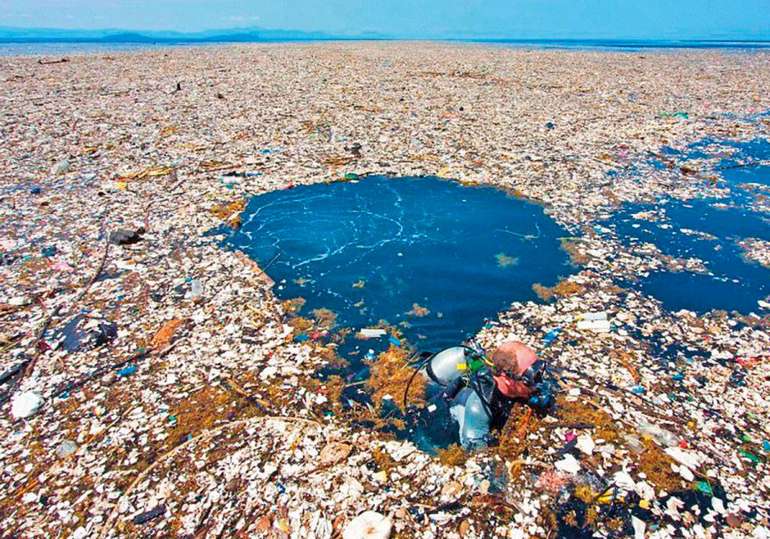
Diver in the Pacific Ocean Plastic Garbage Island

Present: How often have you tossed away single-use containers? I know I have, even knowing they’re filling up our landfills and oceans with garbage that’s mostly plastic. Currently, garbage must be separated and put into recycling bins, where some will actually be recycled. Organizations such as Californians Against Waste  are fighting for legislation that eliminates excess packaging, reduces food waste, promotes the right to repair small appliances/electronics, and promotes effective recycling systems.

3.  PLASTICS

Future: “Plastix” is made from recycled plastics and is used to formulate everything imaginable: shoes, furniture, cars, etc. But people also know how deadly plastic is, as in the scene when a young girl gives birth to a baby born with a reproductive system abnormality:

“But we did right” said the curly-headed grandmother, hugging her daughter tighter. “My daughter never touched plastic in her life!”

“You can’t avoid it,” Amisha said. “Plastic deteriorates so small it floats everywhere, from high in the stratosphere to miles deep on the ocean floor.”

Present: Research is finding plastic nanoparticles not only in the stratosphere and deep ocean, but in breast milk, human tissue  and baby poop . A new disease, “Plasticosis” is identified in seabirds that also impacts humans.  Plastic contains hormone-disrupters that confuses the body’s hormone regulation and reproduction systems. Researchers are investigating the connection between low level exposure to hormone disruptors and gender dysphorias.  

4.  FERTILITY

Future: It has become very difficult to conceive, and viable births are a rarity. Amisha’s group created a “Fertility Room.” When a female is ovulating, she allows multiple males to inseminate her in the hopes of increasing the odds that one of the few viable sperm will fertilize her one egg.

Present: Sperm count and human fertility are decreasing. IVF -In Vetro Fertilization centers have proliferated to help couples increase their odds of becoming pregnant. Of course, now, IVF has become politicized, making it more even difficult for couples to conceive.

5. FOOD INTOLERANCES

Future: Due to long term environmental contamination and genetic manipulation of food ingredients, human babies are increasingly unable to process food to support their growth. However, the Pharma industry has found an answer to the problems they originally created, with “PharmFood,” colorful packages designed for specific food intolerances. Food as we know it has become a rarity.
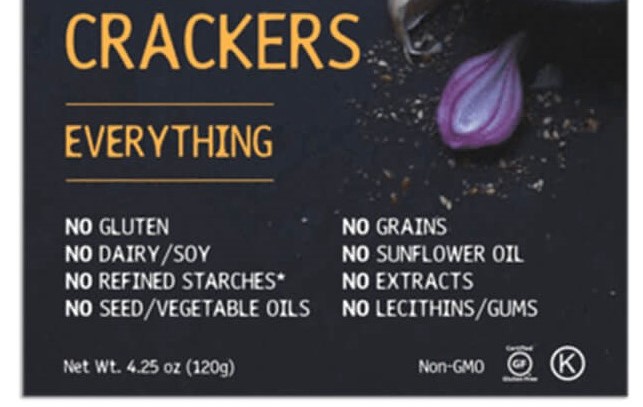
Present: I walk down the grocery aisles and notice large sections set aside for specific health and dietary issues, gluten-free being the most predominant. Package covers tout everything this food is not: “No gluten, no lactose/dairy, no GMOs, no animal products, no tree nuts, no pesticides, no BHT, no artificial colors or flavors, no high-fructose corn syrup, etc. Wow! I can imagine my great-grandmother wondering why in the world anyone would put those things into food in the first place?

6.  WEATHER

Future: California is mostly burned over from massive fires. Rivers hold meager amounts of water, but small pockets of green survive in the foothills. Sea level is rising into the first floors of San Francisco’s Financial District, and Golden Gate Park is now a refuge for Pacific Islanders who lost their islands to the rising sea.

In Heart Wood, Amisha has hitched a ride into the foothills with Charlie, a blind man with a mule and wagon, in search of her family’s old homestead.

Amisha held a small mouthful of water against her sticky dry gums before swallowing. She took another swig and returned the canister to its hiding place. “What's up there?” she asked, pointing to the hint of peaks in the distance.                                                                                          “You're asking ‘bout the hills? Not much,” Charlie replied.                                                           “People?”                                                                                                                                             “They've come and gone, mostly farther north.”                                                                        “Oregon?”                                                                                                                               “Farther. Canada’s still deciding its immigration policy.”                                                                        “They say fires took out most of the foothills. Anything survived?”                                                             “A structure here and there.”                                                                                                                “Trees? People?”                                                                                                                                      “Can't say,” Charlie climbed back into the wagon.                                                                                   “Why are you going up there?” Amisha asked                                                                                        “Can't say that either.”  

I was surprised when I re-read the part about Canada deciding its immigration policy toward US citizens. It seemed far-fetched when I wrote it. Little did I know it could become a political reality!

Present: Forest fires used to be a danger mainly for those living in a forest. Mountain folk learned to have “Go-Bags” ready for a quick evacuation. Now, even those who live in cities are concerned about major fire conflagrations. Fires are larger, fiercer, and create un-precedented destruction.

Homes along coastlines are literally losing ground, as the sea encroaches into lowland communities. Hurricanes and storm damage are more intense. Flash floods, landsides, ice storms all demonstrate water’s increasingly destructive power.

Insurance companies, strained by increasing claims from all the chaotic climate-induced fire, water, and wind disasters, are cancelling home insurance policies. And still, current conservative politicians who refuse to see these massive weather events related to man’s actions on the planet, cancel programs that would have given us hope for either halting or reversing climate-induced damage.

Is there hope?

I often hear two main comments from readers: “This is the most depressing book ever!” and “This is the most satisfying ending I’ve ever read in a dystopian book.”

Future: Yes, Amisha’s future world is depressing, but that’s the point. She is a victim of the world we are creating for her. She survives because she has created a small community that lives with what they have, eats less, and grows or forages for their drought-tolerant food. They learn to listen to and let the earth speak first. Eventually her group will connect with other small groups and share what works. Life is certainly not easy by our standards, but it will be possible for some to survive and, for even fewer, to procreate.

Present: I see the writing on the wall, often feeling helpless because it’s such a huge problem. I do the easy things, of course, like recycle, reuse containers, shop locally (including farmers), turn off lights, shop for previously-used things. On a larger scale, there are (still) so many groups working to educate the population and pressure politicians to “think and act green.” It’s harder than ever to make progress in today’s political climate, but do it anyway. Support these groups however you can. And talk about it!

Group Discussions: One of my favorite parts in talking with Book Clubs about Heart Wood are the thought-provoking discussions: “We see this coming, but what can we do?”  I don’t have answers, but we can collectively ask the right questions.

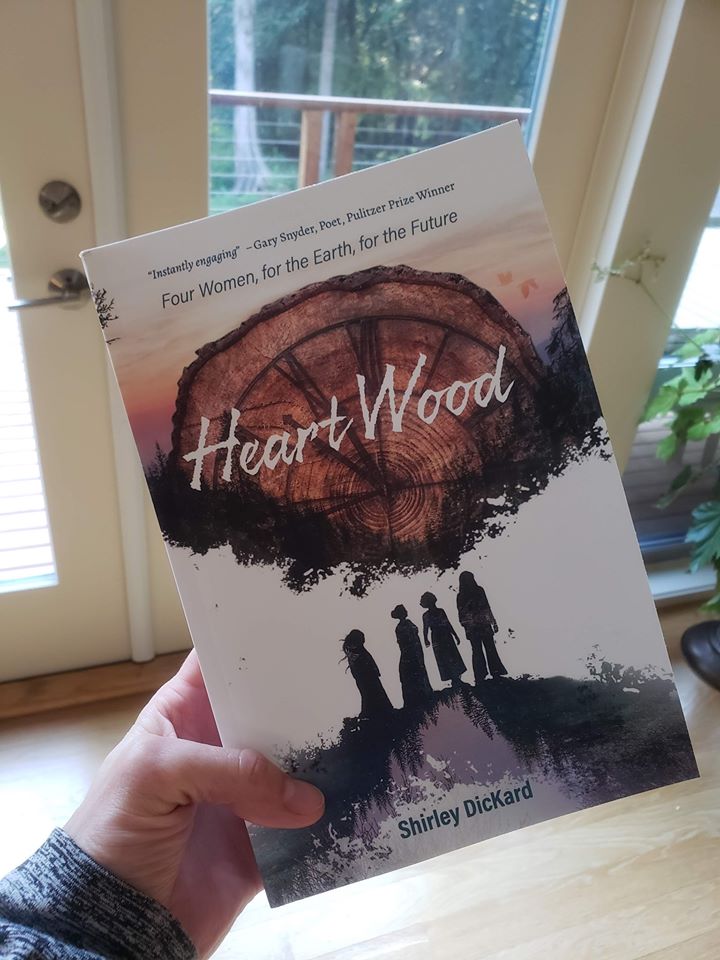
Heart Wood, Four Women, for the Earth, for the Future can be purchased at your local, independent bookstore (they can easily order it for you!) Or online. If you would like a signed copy directly from the author, contact me at heartwoodnovel@gmail.com.
Are We Under the Weather?

While feeling a bit under the weather recently, I had a small “ah-hah” moment thinking about the phrase “under the weather.” As weather is becoming more erratic and powerful around the world, I realized that it’s probably not the prophesied “peak oil” or lengthy drought per se that will change our way of life, but it will be the escalating threats from weather – too much, too little, too hot, too cold.  

Take our reliance on electricity. Do power outages seem to be happening much more frequently? My husband and I have lived in the Sierra for 48 years. We’re used to dealing with occasional winter outages caused by rain, wind, snow, and trees falling onto power lines.

We’re entering new territory now with power outages occurring regularly during the summer months as well. Over the last decade, we’ve been accommodating to record high temperatures, massive wildfires, and Public Safety Power Shutoff (PSPS) events meant to protect us by preemptively shutting off our power on Red Flag Days.

Back in 2018, I wrote this section of Heart Wood where Harmony muses on what will be the demise of civilization. “Luna Valley, 1987.  During our communal dinners, we first catch up on each other’s week, then turn the conversation to what’s happening in the outside world. Last week we brainstormed how to eat lower on the food chain to avoid the accumulation of man-made toxins in the fish and animals we eat. This week we’re back to the prophesized great collapse of all society due to the impending depletion of oil….We’re so prepared for the prophesy that lack of oil will be civilization’s downfall, that I ignore my dreams where it’s always the lack of water.

If I were writing this today, what would I say? Not lack of oil or water, but chaotic weather extremes?

I think about the escalating number of natural disasters where people are without electricity, water, or communications for long periods of time: hurricanes, snowstorms, tornadoes, wildfires, flooding, even an ice storm in Texas. Huge blocks of the power grid were physically wiped out in a very short time. Can you prepare for these?

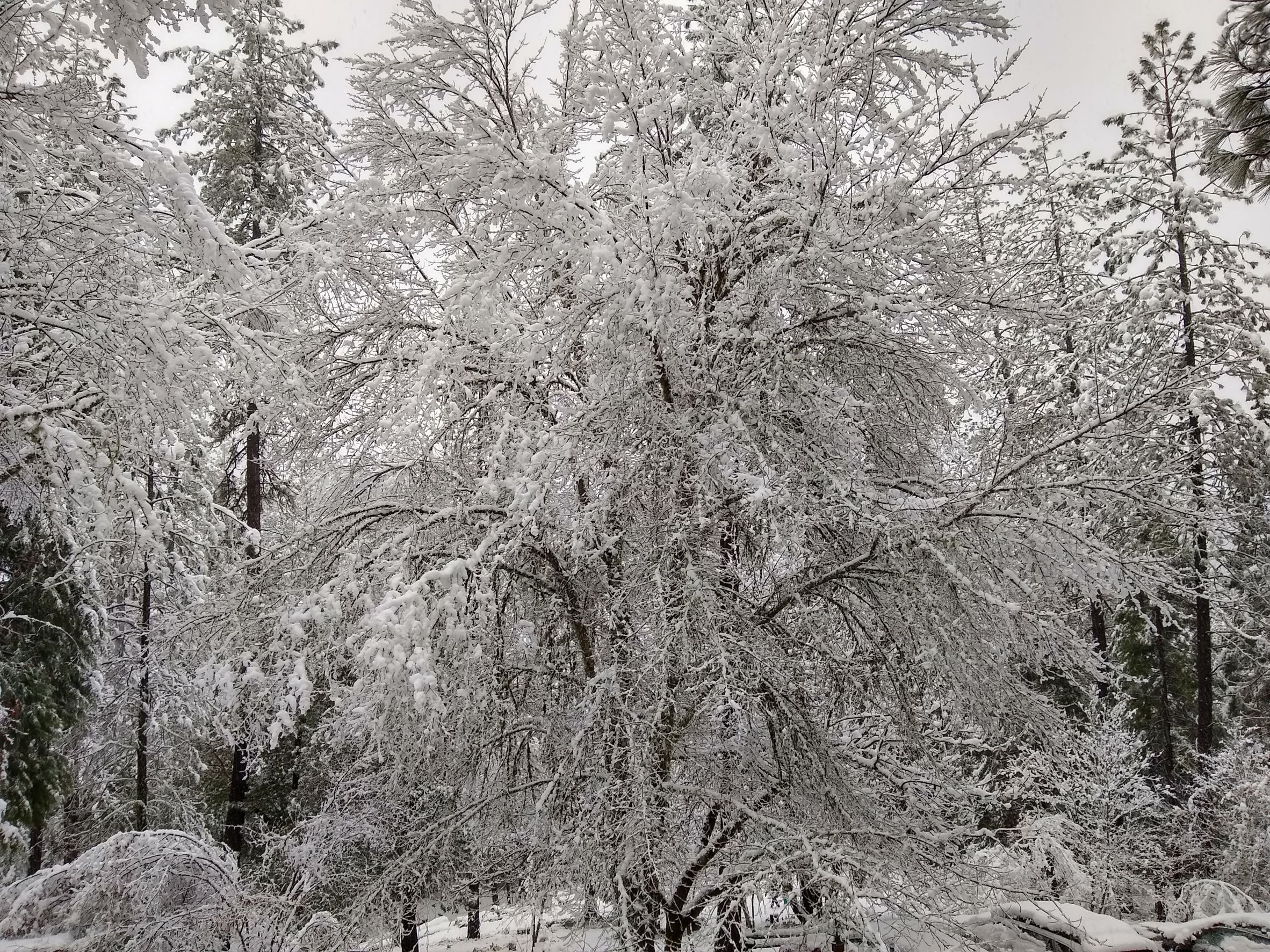
After living ten days without power during the mega snowstorm in the Sierra last month, I wrote this in my journal:

“The power’s out again. I’m almost getting used to this. Almost. I’ve got a routine down: Unannounced, the power goes out; I text neighbors to see how widespread the outage is; turn off the beeping powerpack at our computers; phone PG&E to report the outage before our landline goes dead; then re-plan my day.

I must admit, my first thought is usually how long can I go without needing to turn on the noisy generator?  How long can I be content with this peaceful silence, perhaps curling up with a book slanted to catch the window’s light. At some point, the siren’s call of the Internet beckons me to turn on the trusty generator and the spell is broken.”

I may not have answers, but I do have questions.  Sure, we can prepare on the personal level: fill our “Go-Bags” with important documents, food, clothing, emergency supplies, etc. But I think the writing’s on the wall. How do we plan for the chaos of large weather-caused events where huge numbers of people are physically fleeing from the emergency and others are stuck in place without food, water, communication, or power?

Regardless of whether you feel these events are related to man-fueled climate change or are part of the earth’s cyclic nature, we still need to respond. I’m counting on man’s ingenuity and resiliency – like the growth of alternative energy and the energy of youth climate activists

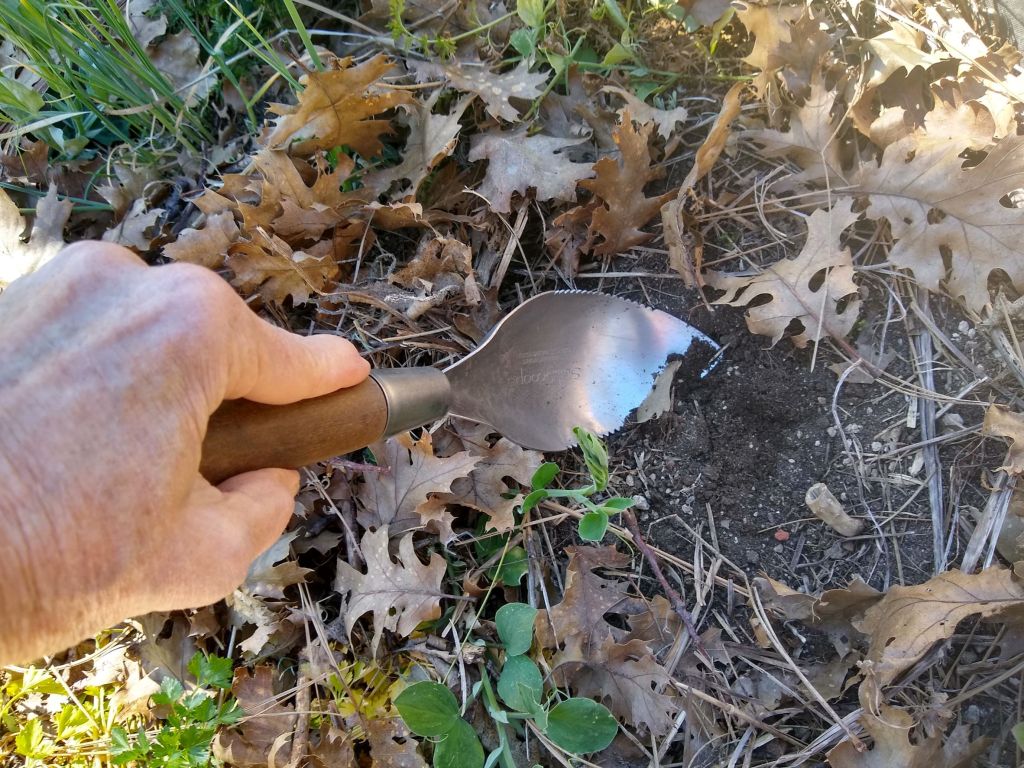
When I get to this point in my thinking, I risk dropping into denial or despair. I know it’s time to close my computer and go outside where I’ll be greeted by early budding apple trees and two Red Shouldered Hawks calling to each other from the pine tops. (Is it mating season already?)  Time to take a deep breath, grab a trowel, and dig into the earth.

Wildfires are our future?

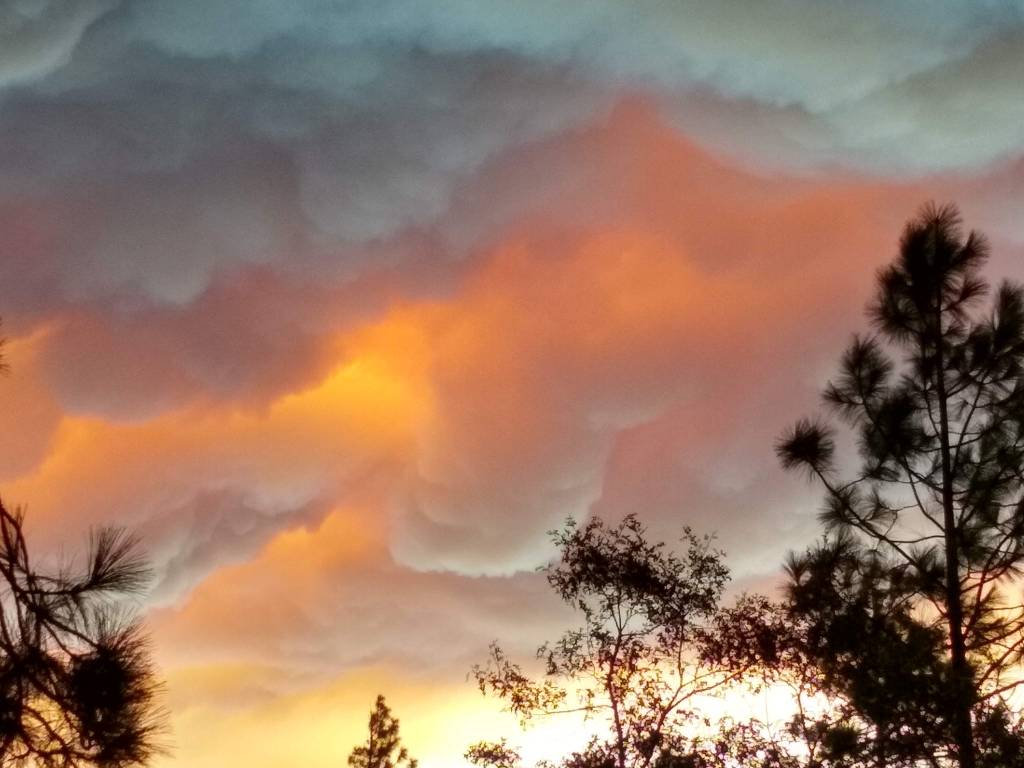
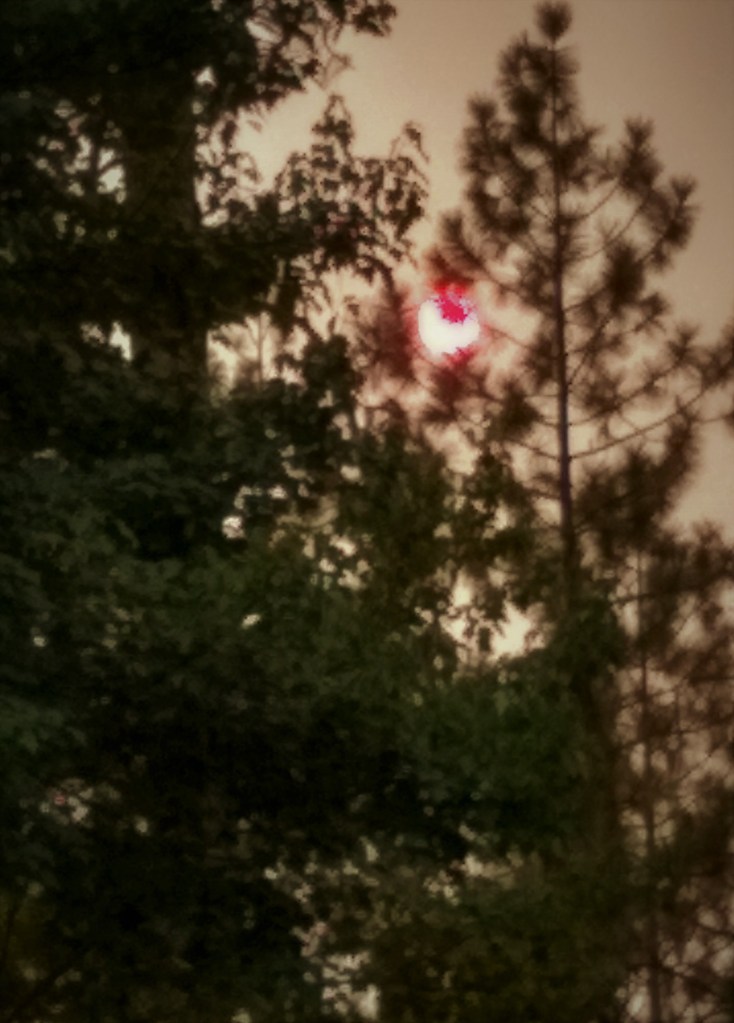
Turbulent clouds from the North Complex Fire cover our Northern California sky – September 8, 2020

The sun hides its fiery crimson ball behind the gray pall overhead and I can hardly make out the ghostly outline of pines beyond my window. Friends report the sky over San Francisco is a dystopic burnt orange. We’ve all been breathing smoky air for days along the entire west coast and as I write, the Air Quality Index in the Sierra is Hazardous at 303.

So much for my original plans for this Blog: Is Elon Musk Musk’s controversial Neurolink the precursor to Heart Wood’s Nib? I’ll come back to that later. Today I want to write about something more pressing: Is there anything we can do to lessen these massive wildfires, or should we and our children’s children expect to live with them from here on out? Here’s what I’ll cover: 1) Wildfires in California’s future – my artistic literary vision and some scientific projections. 2) How the Paris Agreement is designed to help us locally and world-wide (which the president withdrew the US from, but many states are pushing ahead anyway) 3) One tangible way to impact how our legislators vote for the environment.

So here we are. It’s mid-September and I remind myself that wildfire season in California has only just started. As much as I’m grateful we’re not one of the tens of thousands who have lost their homes to this season’s wildfires already, and I’ve sent donations to the Red Cross to help those who have, I’m so aware that we all share in the destruction of our air quality, respiratory, and environmental health.

I “saw” an eerily similar scene years ago when I was writing about the future in Heart Wood and envisioned Amisha moving about in San Francisco in 2075:

The old vase on her dresser was shimmering red the next morning when Amisha raised her head from the pillow. Most days started this way. Though the rising sun was rarely seen, its warmth caused micrometal particles suspended in the air to scintillate in a vague morning glow, casting a sense of dawn across the city.     (Heart Wood, p 14)

“Micrometal particles” suspended in the air? Though I left the details up to the reader’s imagination, it’s not hard to envision a ghastly mix of wildfire smoke and the toxins emitted from a burning civilization, as well as pollutants from industry and indestructible micro-plastics.

By 2075, wildfires have already burned most of the Sierra as Amisha and Charlie head up into the Sierra:

Amisha took another swig, then returned the canister to its hiding place. “What’s up there?” she asked, pointing to the hint of peaks in the distance. “You askin’ ’bout hills? Not much.” “People?” “They’ve come and gone, mostly farther north.” “Oregon?” “Farther. Canada’s still deciding its immigration policy.” “They say fires took out most of the foothills. Anything survive?” “A structure here and there.” “Trees? People?” “Can’t say,” Charlie climbed back into the wagon. “Why are you going up there?” Amisha asked. “Can’t say that either.”  (Heart Wood p 93)

These 2075 scenarios were heavily influenced by the study: California’s Fourth Climate Change Assessment, 2018 sent to me by Ashley Overhouse, River Policy Manager for SYRCL (South Yuba Citizen’s League: https://yubariver.org/)  The study gives projections for California in 2100 (temperature, water, wildfire, sea level, public health, communities, and governance). Here’s what they say about future wildfires in California (https://climateassessment.ca.gov/)

Projections: Wildfire

From: https://www.energy.ca.gov/sites/default/files/2019-11/Statewide_Reports-SUM-CCCA4-2018-013_Statewide_Summary_Report_ADA.pdf

Impact: Climate change will make forests more susceptible to extreme wildfires. By 2100, if greenhouse gas emissions continue to rise, one study found that the frequency of extreme wildfires burning over approximately 25,000 acres would increase by nearly 50 percent, and that average area burned statewide would increase by 77 percent by the end of the century.

TABLE 9 | CLIMATE IMPACTS IN CALIFORNIA UNDER DIFFERENT EMISSION SCENARIOS

Table 9 presents estimated impacts to California assuming compliance with the Paris goals, as compared to a historic baseline and RCP 8.5 scenario. (RCP 8.5 is a business-as-usual (BAU) scenario that would result in atmospheric CO2 concentrations exceeding 900 parts per million (ppm) by 2100, more than triple the level present in the atmosphere before human emissions began to accumulate).

SCENARIO
CLIMATE IMPACT IN CALIFORNIABASELINE: 1976 – 2005RCP 8.5 End of CenturyPARIS AGREEMENT 1.5°CPARIS AGREEMENT 2°C
Annual Average Temperature14°C (57ºF)19°C (66ºF)15.2°C (59ºF)15.6°C (60ºF)
Number of extreme hot days: Sacramento1.614.32.42.9
April 1st Snow Water Equivalent18.8 inches-74 %-22 %-22.8 %
Soil Moisture11.8 inches-10 %-1.3 %-2.5 %
Wildfires: area burned484.5 thousand acres+ 63 %+ 20 %+ 20 %
Sea-Level Rise (2100 relative to 2000: mean values)NA137 cm (54 in)28 cm (11 in)41 cm (16 in)

Considering the Paris Agreement on Climate Change Mitigation, you may remember that in June 2017, President Trump announced his highly controversial plans to withdraw the US from the 2015 Paris Agreement. He wanted an agreement on terms that were fair to the United States, its businesses, its workers, its people, its taxpayers – in accordance with his America First Policy.  https://en.wikipedia.org/wiki/United_States_withdrawal_from_the_Paris_Agreement

No mention of being fair to the health of our environment.

Twenty-four state governors formed the United States Climate Alliance to continue working collectively toward the goals of the Paris Agreement, including California, Oregon, and Washington.

What can one person do? – Start by supporting the League of Conservation Voters and by voting!

I love this group because they work hard to elect politicians “who stand up for a clean, healthy future for America,” and defeating “anti-environment” candidates – at both federal and state levels. The League of Conservation Voters tracks the voting records of members of Congress on environmental issues in its National Environmental Scorecard, and it annually names a “Dirty Dozen,” a list of politicians whom the group aims to defeat because of their voting records on conservation issues, and their political vulnerability. (The group also names a state-level Dirty Dozen.)

Check them out: https://www.ecovote.org/

Like Harmony in Heart Wood’s present time, I have despaired that one person can make much of an impact. Yet collectively we have more power. Vote to elect decision-makers who will work for the earth!