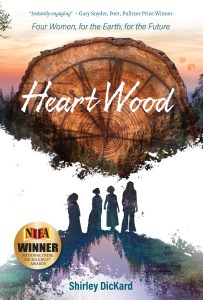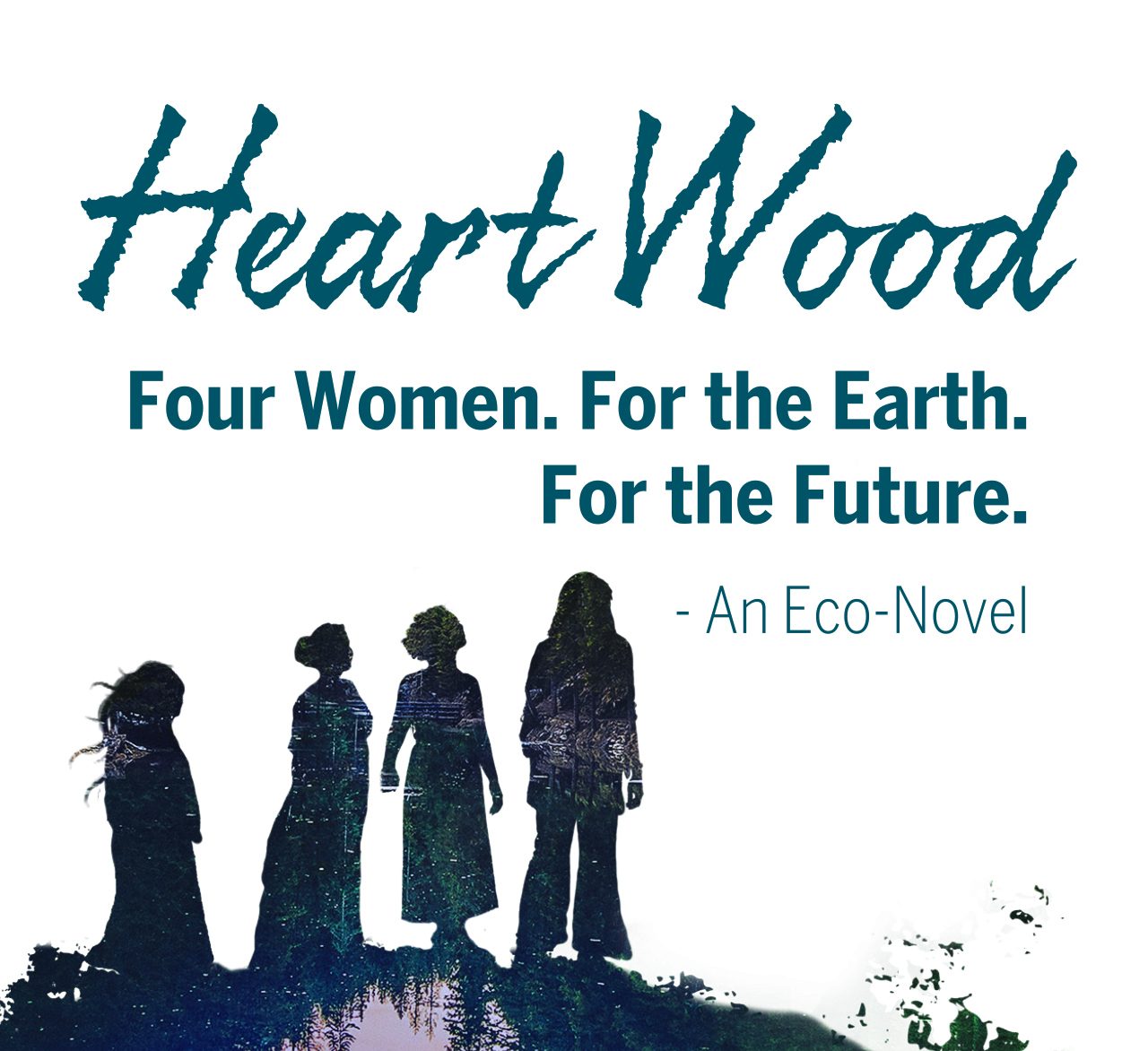
Heading Toward the Dystopic Future of Heart Wood

I take no pleasure in watching the future world unfolding – the future I described in my eco-novel Heart Wood. My aim was to show through storytelling that what we do and what we don’t do matters to the future. I described the actions and attitudes of my ancestors (1800s) and today’s generation (early 2020s), and how we are collectively creating a future world that my imaginary great-granddaughter Amisha must live in (2075-2090).

I’m often asked about the future parts, “How did you know? It’s so unsettling!” I can only say I picked out threads of what I saw today and projected them into the future…asking what would life be like if this continues?

Are you ready to explore with me? I’ve selected six main themes from Heart Wood and contrasted our present world with Amisha’s future in 2075-2090.

 Future: a miniscule bio-electronic Nib is implanted behind all baby’s ears at birth. These directly input information and directions into the brain, eventually overriding much of the person’s thinking. In addition to tracking a person’s location, Nibs also monitor their physical and emotional health, and when it detects an imbalance, automatically delivers “rebalancing” medications from the person’s “Medpak” implanted into their belly. Later in Heart Wood, Nibs subtly begin to deteriorate, giving erroneous information as if it were real.

Present: Where to start? Siri, Alexa? GPS directions? Smart watches? Fitness Trackers? These are part of our mainstream world now. AI wasn’t mainstream when I wrote Heart Wood in the early 2020s, but we’re getting closer to having an AI device implanted (for our benefit and convenience, of course).

Billionaire businessman Elon Musk has developed the NeuroLink in which fine electronic threads have been inserted into the brain of at least seven men with spinal cord injuries, enabling them to move a computer mouse with their minds. Yes! Check it out here.

In 2025, RFK Jr. – current US Secretary of Health and Human Services – is touting wearable electronics, such as watches, bands, rings, patches, and clothes, to monitor our vital health signs, with the data stored in the “cloud.” Current medical treatment includes inserting miniscule Nanobots into the body for diagnosis, treatment, drug delivery, and surgery. https://relevant.software/blog/nanobots-in-medicine/

While most of these health advances are originally designed for a specific medical benefit, they set up a prototype for a future widespread Nib-like implant.

2.  GARBAGE

Future: Garbage is illegal. There is no “away” for throwing things away. New items must be created from material that already exists, which is why there is a fight between the U.S. and China for ownership of the floating garbage island in the Pacific.

Diver in the Pacific Ocean Plastic Garbage Island

Present: How often have you tossed away single-use containers? I know I have, even knowing they’re filling up our landfills and oceans with garbage that’s mostly plastic. Currently, garbage must be separated and put into recycling bins, where some will actually be recycled. Organizations such as Californians Against Waste  are fighting for legislation that eliminates excess packaging, reduces food waste, promotes the right to repair small appliances/electronics, and promotes effective recycling systems.

3.  PLASTICS

Future: “Plastix” is made from recycled plastics and is used to formulate everything imaginable: shoes, furniture, cars, etc. But people also know how deadly plastic is, as in the scene when a young girl gives birth to a baby born with a reproductive system abnormality:

“But we did right” said the curly-headed grandmother, hugging her daughter tighter. “My daughter never touched plastic in her life!”

“You can’t avoid it,” Amisha said. “Plastic deteriorates so small it floats everywhere, from high in the stratosphere to miles deep on the ocean floor.”

Present: Research is finding plastic nanoparticles not only in the stratosphere and deep ocean, but in breast milk, human tissue  and baby poop . A new disease, “Plasticosis” is identified in seabirds that also impacts humans.  Plastic contains hormone-disrupters that confuses the body’s hormone regulation and reproduction systems. Researchers are investigating the connection between low level exposure to hormone disruptors and gender dysphorias.  

4.  FERTILITY

Future: It has become very difficult to conceive, and viable births are a rarity. Amisha’s group created a “Fertility Room.” When a female is ovulating, she allows multiple males to inseminate her in the hopes of increasing the odds that one of the few viable sperm will fertilize her one egg.

Present: Sperm count and human fertility are decreasing. IVF -In Vetro Fertilization centers have proliferated to help couples increase their odds of becoming pregnant. Of course, now, IVF has become politicized, making it more even difficult for couples to conceive.

5. FOOD INTOLERANCES

Future: Due to long term environmental contamination and genetic manipulation of food ingredients, human babies are increasingly unable to process food to support their growth. However, the Pharma industry has found an answer to the problems they originally created, with “PharmFood,” colorful packages designed for specific food intolerances. Food as we know it has become a rarity.

Present: I walk down the grocery aisles and notice large sections set aside for specific health and dietary issues, gluten-free being the most predominant. Package covers tout everything this food is not: “No gluten, no lactose/dairy, no GMOs, no animal products, no tree nuts, no pesticides, no BHT, no artificial colors or flavors, no high-fructose corn syrup, etc. Wow! I can imagine my great-grandmother wondering why in the world anyone would put those things into food in the first place?

6.  WEATHER

Future: California is mostly burned over from massive fires. Rivers hold meager amounts of water, but small pockets of green survive in the foothills. Sea level is rising into the first floors of San Francisco’s Financial District, and Golden Gate Park is now a refuge for Pacific Islanders who lost their islands to the rising sea.

In Heart Wood, Amisha has hitched a ride into the foothills with Charlie, a blind man with a mule and wagon, in search of her family’s old homestead.

Amisha held a small mouthful of water against her sticky dry gums before swallowing. She took another swig and returned the canister to its hiding place. “What's up there?” she asked, pointing to the hint of peaks in the distance.                                                                                          “You're asking ‘bout the hills? Not much,” Charlie replied.                                                           “People?”                                                                                                                                             “They've come and gone, mostly farther north.”                                                                        “Oregon?”                                                                                                                               “Farther. Canada’s still deciding its immigration policy.”                                                                        “They say fires took out most of the foothills. Anything survived?”                                                             “A structure here and there.”                                                                                                                “Trees? People?”                                                                                                                                      “Can't say,” Charlie climbed back into the wagon.                                                                                   “Why are you going up there?” Amisha asked                                                                                        “Can't say that either.”  

I was surprised when I re-read the part about Canada deciding its immigration policy toward US citizens. It seemed far-fetched when I wrote it. Little did I know it could become a political reality!

Present: Forest fires used to be a danger mainly for those living in a forest. Mountain folk learned to have “Go-Bags” ready for a quick evacuation. Now, even those who live in cities are concerned about major fire conflagrations. Fires are larger, fiercer, and create un-precedented destruction.

Homes along coastlines are literally losing ground, as the sea encroaches into lowland communities. Hurricanes and storm damage are more intense. Flash floods, landsides, ice storms all demonstrate water’s increasingly destructive power.

Insurance companies, strained by increasing claims from all the chaotic climate-induced fire, water, and wind disasters, are cancelling home insurance policies. And still, current conservative politicians who refuse to see these massive weather events related to man’s actions on the planet, cancel programs that would have given us hope for either halting or reversing climate-induced damage.

Is there hope?

I often hear two main comments from readers: “This is the most depressing book ever!” and “This is the most satisfying ending I’ve ever read in a dystopian book.”

Future: Yes, Amisha’s future world is depressing, but that’s the point. She is a victim of the world we are creating for her. She survives because she has created a small community that lives with what they have, eats less, and grows or forages for their drought-tolerant food. They learn to listen to and let the earth speak first. Eventually her group will connect with other small groups and share what works. Life is certainly not easy by our standards, but it will be possible for some to survive and, for even fewer, to procreate.

Present: I see the writing on the wall, often feeling helpless because it’s such a huge problem. I do the easy things, of course, like recycle, reuse containers, shop locally (including farmers), turn off lights, shop for previously-used things. On a larger scale, there are (still) so many groups working to educate the population and pressure politicians to “think and act green.” It’s harder than ever to make progress in today’s political climate, but do it anyway. Support these groups however you can. And talk about it!

Group Discussions: One of my favorite parts in talking with Book Clubs about Heart Wood are the thought-provoking discussions: “We see this coming, but what can we do?”  I don’t have answers, but we can collectively ask the right questions.

Heart Wood, Four Women, for the Earth, for the Future can be purchased at your local, independent bookstore (they can easily order it for you!) Or online. If you would like a signed copy directly from the author, contact me at heartwoodnovel@gmail.com.

Why I Love Archivists (2)

(Re-formatted – Sorry, something went screwy in the layout. I’m such a perfectionist – hopefully this looks better!)

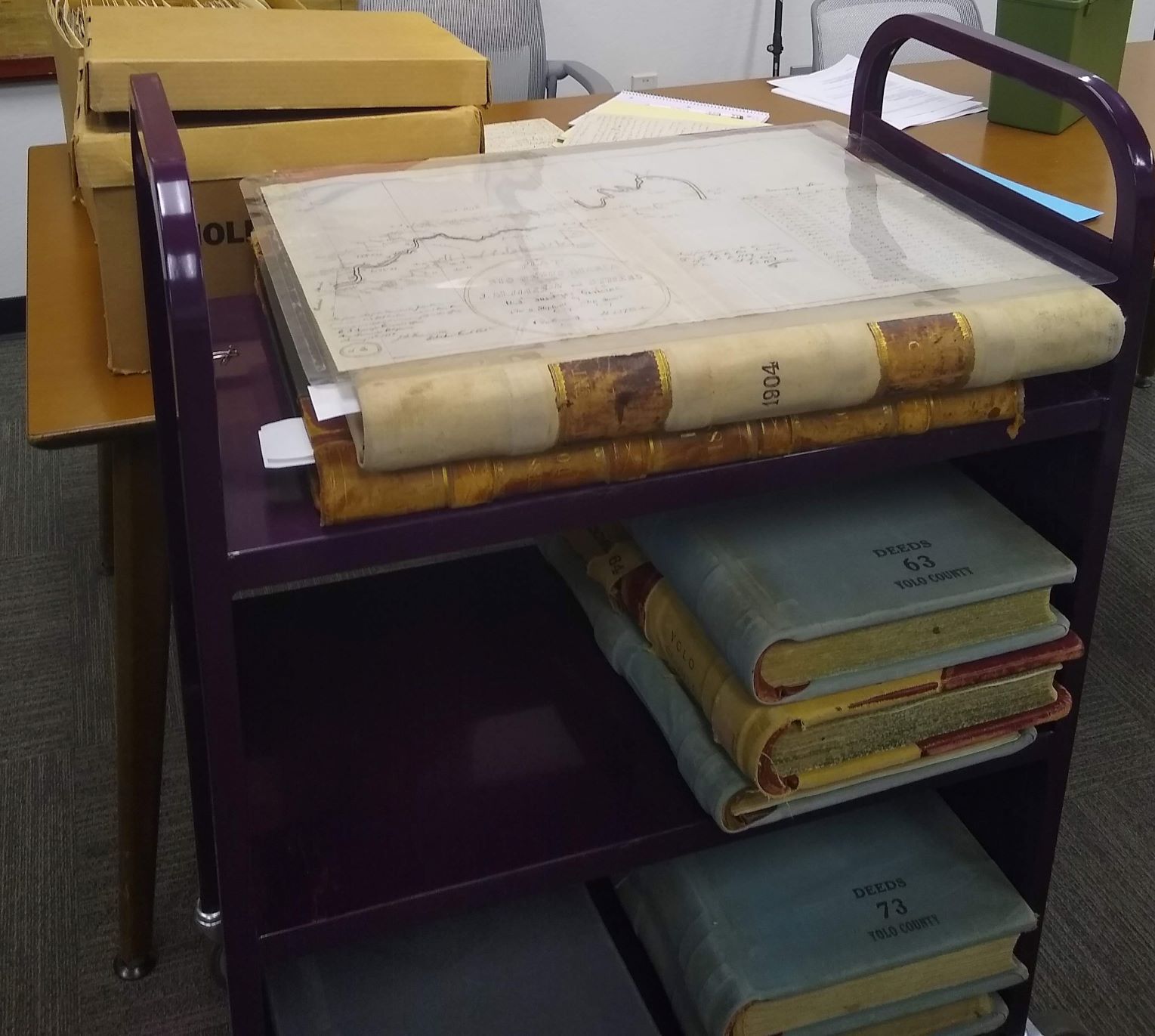
Like a kid in a candy store, I was surrounded by boxes of old documents from the 1850s to 1915, selected for me by the Archivists at the Yolo County Archives at my recent visit to Woodland, California in September. After years of researching my Yolo Pioneer and activist Great-Grandmother using online searches and old family documents, I was eager to locate primary sources, especially personal correspondence. But COVID hit in 2020, and I had to put my research visits on hold for two years.

Boxes, Ledgers, Maps, and Files
Emily Hoppin’s Scrapbook

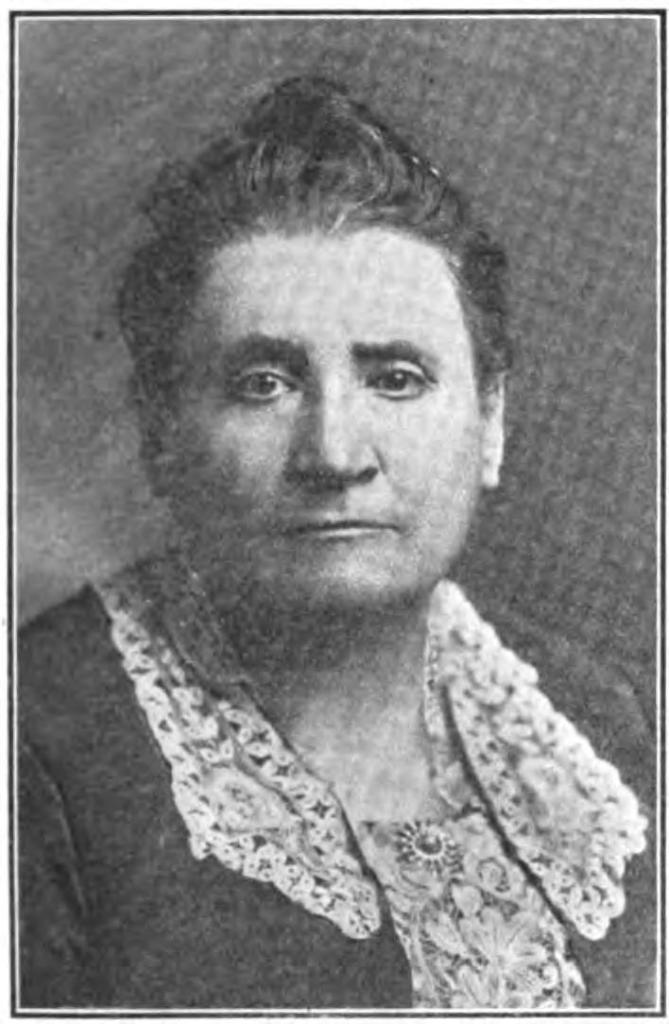
I’m excited to finally be writing a comprehensive biography of Emily Hoppin, my great-grandmother.  Not just as an ancestor, but because she lived in an era where women were coming into new power in their communities. She was part of the struggle for women’s suffrage, and she fought to eliminate the devastating effects of alcohol from the lives of women and children. She was a farmer who ran an 800-acre farm and won the 1915 statewide election for President of the California Federation of Women’s Clubs (CFWC) based on her rural perspective, and she was a WWI peace activist.

Emily Hoppin 1915

But her gift, as Heather Lanctot, Yolo County Archives and Records Center Coordinator noted, is that she left a paper trail. Hundreds of women had joined in her efforts, but Emily left writings and speeches for posterity. Much of what she wrote has wisdom for today and will be part of her biography. Additionally, many Hoppin descendants had the foresight to donate family papers to the archives. Not many people think to do that, according to Mollie Watson, Assistant Director of the Niles History Center in Michigan.

I think about today’s electronic communications and wonder how much of our lives will be lost if not also documented in paper and archived. We may be saving trees and time, but those who follow us will have less access to our history.

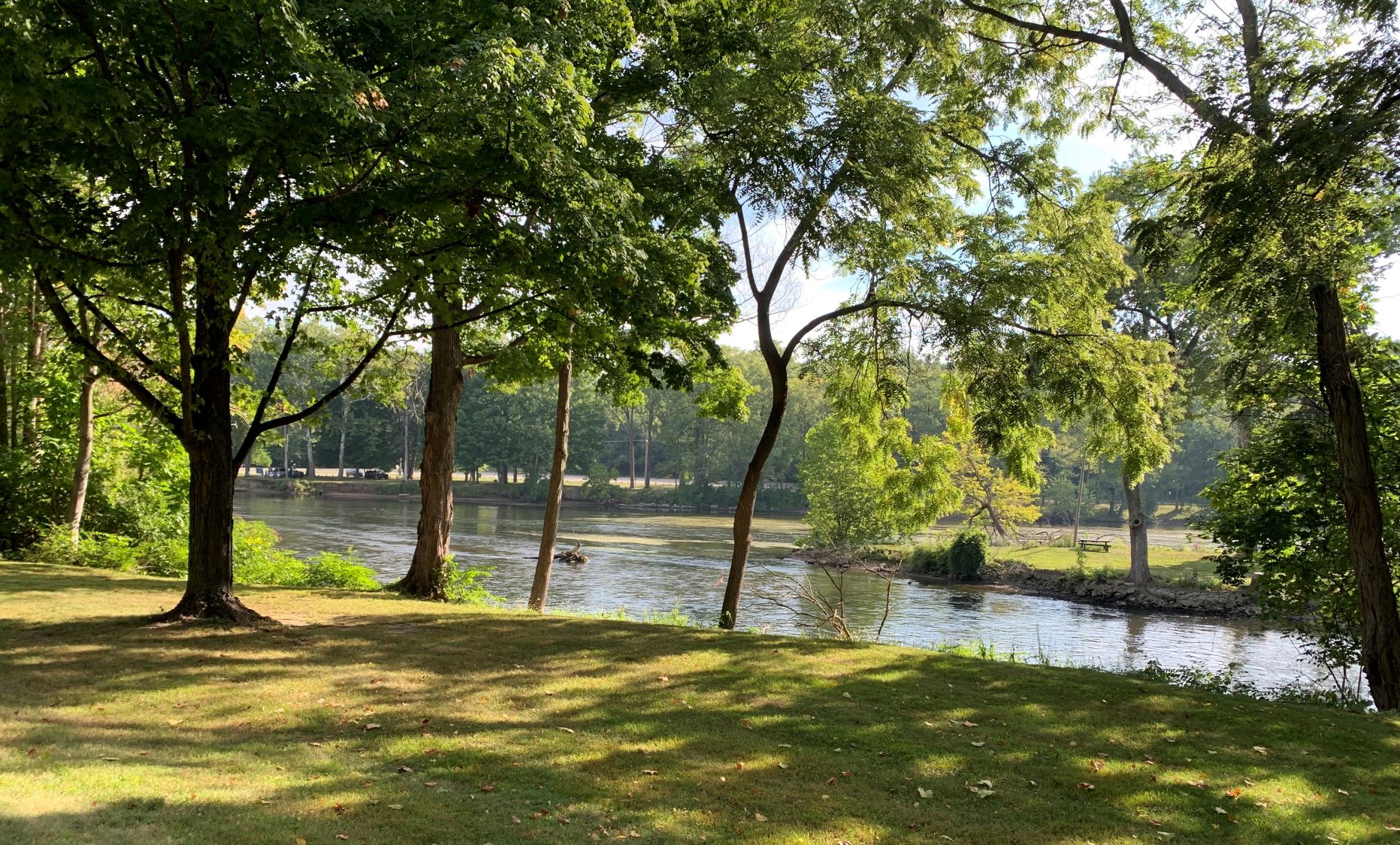
As I fill in the details of Emily’s life, the deeper I research, the more content appears – like the multiplying brooms in the Sorcerer’s Apprentice! Yikes! My cousins are now helping with Emily’s early days in Niles, Michigan. Nancy Peters, who lives in Michigan, and Cathy Altuvilla from LA, took my research questions to the archive staff at the Niles History Center to find answers, and while visiting, took photos of Emily’s family house, church, and the nearby St. Joseph River.

Niles History Center Assistant Director Mollie Watson,
and Cousins Nancy and Cathy
St Joseph River in Niles – also a setting in “Heart Wood”

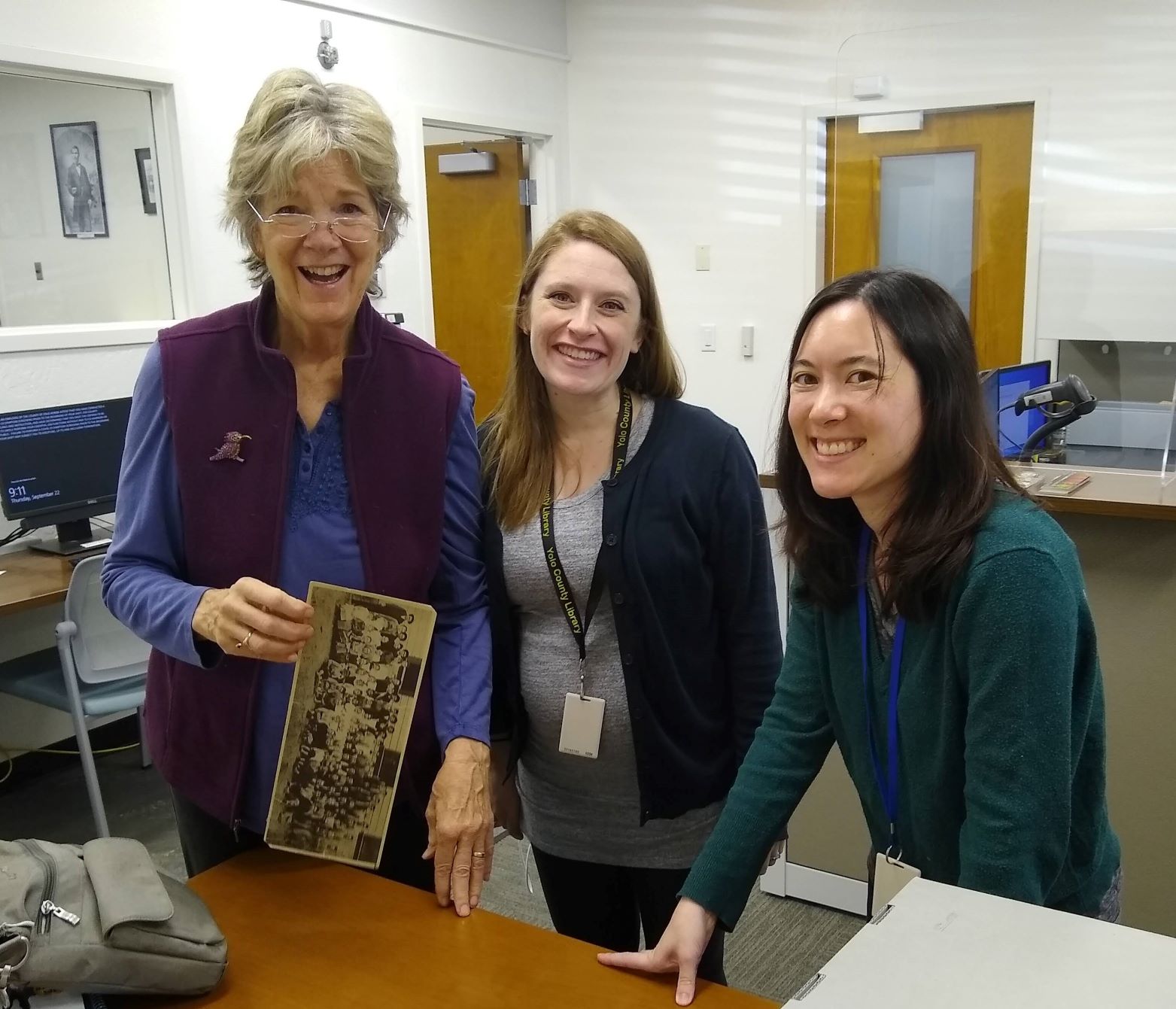
Closer to home in California, I had the new experience of watching professional archivists at work. Before my appointment at the Yolo County Archives, I had sent two pages of areas I wanted to research, as well as some perplexing questions I had. Archives and Records Center Coordinator, Heather Lanctot, and Rachel Poutasse, Library Assistant, were on it!  I arrived to tables and carts filled with ledgers, maps, voter registrations, deeds, wills, probate records, and fragile bound newspapers from the 1850s to 1915. They not only gave me what I asked for, but as professional archivists, they knew what else would be relevant from their vast archive storage – materials I didn’t even know existed. You may enjoy this link to a behind-the-scenes look at the Yolo Archives: https://youtu.be/SEw0cZNhEdA .

Shirley with Yolo Archive Staff: Heather and Rachel

 After giving me an overview, I was set loose…like a kid in a candy shop!

There’s nothing comparable to the feel, the smell, even the sound of fragile pages rustling in my hands. But holding my great-grandmother’s actual 1911 voter registration (first woman to register in the Cacheville precinct after California women gained suffrage in 1911!), and examining her hand-written will? Those took my breath away.

And then there’s witnessing a gathering storm as I turned the bound pages of the 1915 Mail of Woodland newspaper and viewed the events leading up to World War I and the parallel events leading to Emily Hoppin’s election as president of the California Federation of Women’s Clubs.

I wonder what people in the future will say about the progression of today’s aggressive headlines and where we are heading. 

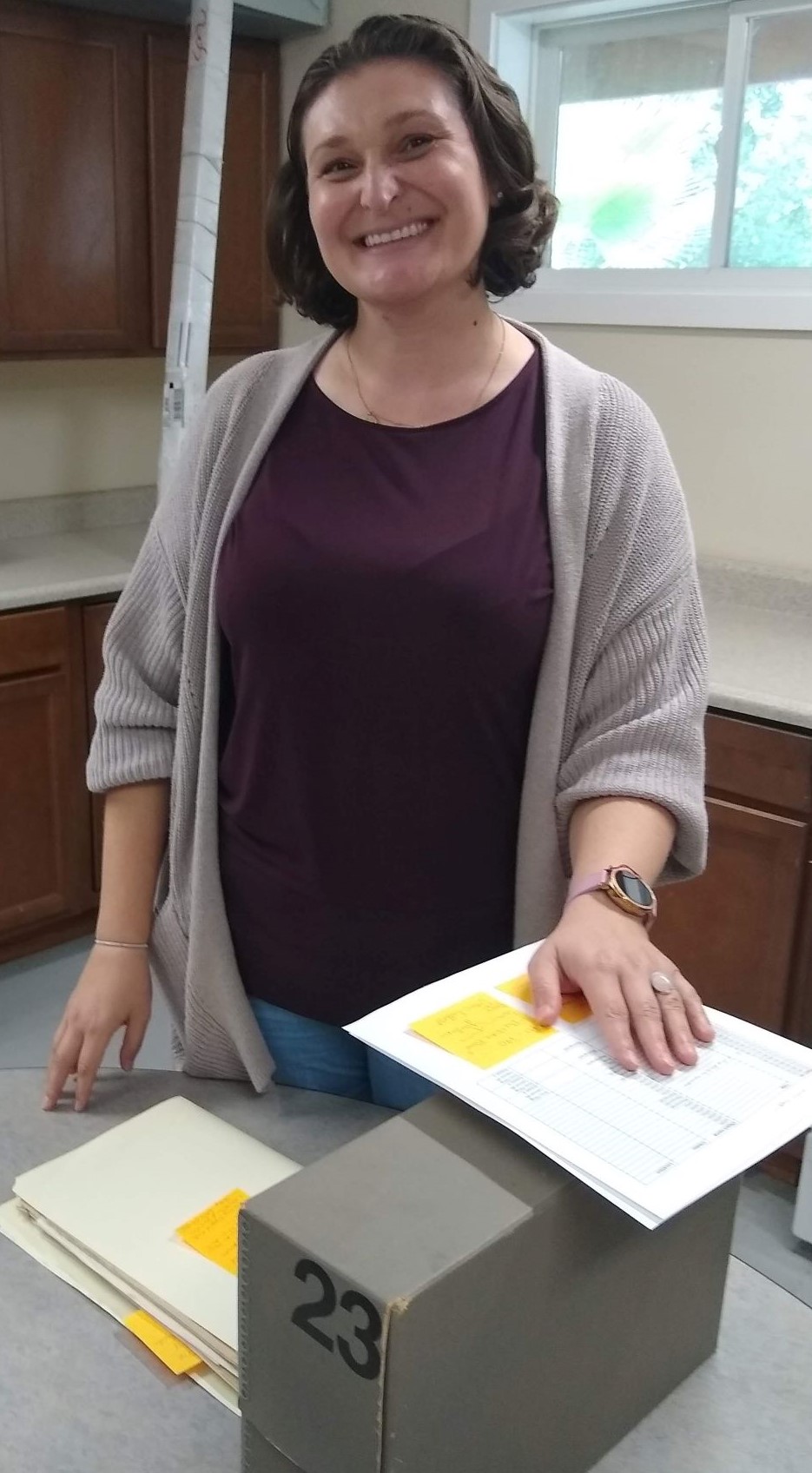
My dream was still to find Emily Hoppin’s personal letters or journals as a way to glimpse her inner world. The next afternoon, across Woodland at the Yolo County Historical Collection at The Gibson House, Iulia Bodeanu, Yolo County Museum Curator, presented me with more Hoppin file boxes.

Iulia Bodeneau with the Hoppin Files

I held my breath, for behind the folder of Gold Rush letters from my great-uncle, John Hoppin, was a thick folder of fragile, hand-written pages. Yes, Emily’s handwriting! Not personal letters, but about a dozen of her speeches, written in pencil, words crossed out, edits made, notes on the margins. Some I had never seen before. It was like discovering gold! Of course, Iulia wouldn’t let me have them, so we arranged to have them scanned and sent to me.

Selection of Emily Hoppin’s Handwritten and typed Speeches

I asked these ladies what it takes to be a professional archivist and was impressed with their educational background:

Heather Lanctot: BA in Music History with an emphasis in History and Literature, MA in Musicology (both from University of Oregon), MLIS with a specialization in Archives and Records Management (San Jose State)

Rachel Poutasse:  MLIS with a specialization in Archival Studies from UCLA

Iulia Bodeanu:  Masters in Museum Studies from San Francisco State University. Bachelor of Arts in Art History and English from UC Berkeley


I returned to my mountain home, not only with a digital trunk load of documents, but with great respect for all the professional and volunteer archivists who work as guardians and guides to our past. Thank you!


Heart Wood is fictional history inspired in part by the life of Emily Hoppin. Many of her life events and writings are incorporated into the novel in the character of Eliza. My initial research on Emily and Charles Hoppin is posted on my website: shirleydickard.com under “Historical Research.”

Heart Wood can be found at your local library, bookstore, and online .

Why I Love Archivists

Like a kid in a candy store, I was surrounded by boxes of old documents from the 1850s to 1915, selected for me by the Archivists at the Yolo County Archives at my recent visit to Woodland, California in September. After years of researching my Yolo Pioneer and activist Great-Grandmother using online searches and old family documents, I was eager to locate primary sources, especially personal correspondence. But COVID hit in 2020, and I had to put my research visits on hold for two years.

I’m excited to finally be writing a comprehensive biography of Emily Hoppin, my great-grandmother.  Not just as an ancestor, but because she lived in an era where women were coming into new power in their communities. She was part of the struggle for women’s suffrage, and she fought to eliminate the devastating effects of alcohol from the lives of women and children. She was a farmer who ran an 800-acre farm and won the 1915 statewide election for President of the California Federation of Women’s Clubs (CFWC) based on her rural perspective, and she was a WWI peace activist.

Emily Hoppin 1915

But her gift, as Heather Lanctot, Yolo County Archives and Records Center Coordinator noted, is that she left a paper trail. Hundreds of women had joined in her efforts, but Emily left writings and speeches for posterity. Much of what she wrote has wisdom for today and will be part of her biography. Additionally, many Hoppin descendants had the foresight to donate family papers to the archives. Not many people think to do that, according to Mollie Watson, Assistant Director of the Niles History Center in Michigan.

I think about today’s electronic communications and wonder how much of our lives will be lost if not also documented in paper and archived. We may be saving trees and time, but those who follow us will have less access to our history.

As I fill in the details of Emily’s life, the deeper I research, the more content appears – like the multiplying brooms in the Sorcerer’s Apprentice! Yikes! My cousins are now helping with Emily’s early days in Niles, Michigan. Nancy Peters, who lives in Michigan, and Cathy Altuvilla from LA, took my research questions to the archive staff at the Niles History Center to find answers, and while visiting, took photos of Emily’s family house, church, and the nearby St. Joseph River.

Closer to home in California, I had the new experience of watching professional archivists at work. Before my appointment at the Yolo County Archives, I had sent two pages of areas I wanted to research, as well as some perplexing questions I had. Archives and Records Center Coordinator, Heather Lanctot, and Rachel Poutasse, Library Assistant, were on it!  I arrived to tables and carts filled with ledgers, maps, voter registrations, deeds, wills, probate records, and fragile bound newspapers from the 1850s to 1915. They not only gave me what I asked for, but as professional archivists, they knew what else would be relevant from their vast archive storage – materials I didn’t even know existed. You may enjoy this link to a behind-the-scenes look at the Yolo Archives: https://youtu.be/SEw0cZNhEdA .

Shirley with Yolo Archive Staff: Heather and Rachel

 After giving me an overview, I was set loose…like a kid in a candy shop!

There’s nothing comparable to the feel, the smell, even the sound of fragile pages rustling in my hands. But holding my great-grandmother’s actual 1911 voter registration (first woman to register in the Cacheville precinct after California women gained suffrage in 1911!), and examining her hand-written will? Those took my breath away.

And then there’s witnessing a gathering storm as I turned the bound pages of the 1915 Mail of Woodland newspaper and viewed the events leading up to World War I and the parallel events leading to Emily Hoppin’s election as president of the California Federation of Women’s Clubs.

I wonder what people in the future will say about the progression of today’s aggressive headlines and where we are heading. 

My dream was still to find Emily Hoppin’s personal letters or journals as a way to glimpse her inner world. The next afternoon, across Woodland at the Yolo County Historical Collection at The Gibson House, Iulia Bodeanu, Yolo County Museum Curator, presented me with more Hoppin file boxes.

I held my breath, for behind the folder of Gold Rush letters from my great-uncle, John Hoppin, was a thick folder of fragile, hand-written pages. Yes, Emily’s handwriting! Not personal letters, but about a dozen of her speeches, written in pencil, words crossed out, edits made, notes on the margins. Some I had never seen before. It was like discovering gold! Of course, Iulia wouldn’t let me have them, so we arranged to have them scanned and sent to me.

Iulia Bodeanu with the Hoppin Files
Selection of Emily Hoppin’s Handwritten and typed Speeches

I asked these ladies what it takes to be a professional archivist and was impressed with their educational background:

Heather Lanctot: BA in Music History with an emphasis in History and Literature, MA in Musicology (both from University of Oregon), MLIS with a specialization in Archives and Records Management (San Jose State)

Rachel Poutasse:  MLIS with a specialization in Archival Studies from UCLA

Iulia Bodeanu:  Masters in Museum Studies from San Francisco State University. Bachelor of Arts in Art History and English from UC Berkeley


I returned to my mountain home, not only with a digital trunk load of documents, but with great respect for all the professional and volunteer archivists who work as guardians and guides to our past. Thank you!


Heart Wood is fictional history inspired in part by the life of Emily Hoppin. Many of her life events and writings are incorporated into the novel in the character of Eliza. My initial research on Emily and Charles Hoppin is posted on my website: shirleydickard.com under “Historical Research.”

Heart Wood can be found at your local library, bookstore, and online .

Triads of Women Give me Hope!

Political appointments don’t usually excite me, but the recent headlines following New York Governor Como’s resignation that three women now hold the top three positions in New York, caught my attention big time.

Kathy Hochul, 2017, Wikipedia Commons

On August 23, 2021, New York Times reporters Dana Rubinstein and Luis Ferré-Sadurní wrote that:

“Lt. Gov. Kathy Hochul, who will become the first female governor of New York on Tuesday, selected experienced political aides to fill her top two administration posts. Ms. Keogh’s appointment, along with the selection of Elizabeth Fine as Ms. Hochul’s counsel, means that a trio of women will be at the helm of the executive branch roiled by allegations of sexual harassment by the outgoing governor.”

Kathy Hochul, 2017, Wikipedia Commons

Why does this give me hope?

Because it’s time. If you’ve read my speculative fiction novel, Heart Wood, you know that the power of women working in triads is one of the main themes.

It’s time that the feminine approach to decision-making and getting things done becomes our leadership style. Just look around at what we’re experiencing: environmental destruction, political unruliness, polarized communities. I don’t need to rant on about how the masculine approach has brought us to the brink of self-inflicted chaos. (Please note, I’m not talking about males and females, but about masculine and feminine approaches to life. It’s not necessarily gender-based).

Have you ever awakened in the dark of night with the answer to a problem? When I wrote Heart Wood, I struggled with how to portray how feminine leadership is different. I kept putting it off until I had written myself into a corner. I went to sleep, knowing that when I work up in the morning, I had to create a scene to illustrate how the feminine style of decision-making and getting things done differs from the masculine. To make it more challenging, I gave this task to Eliza in 1915.

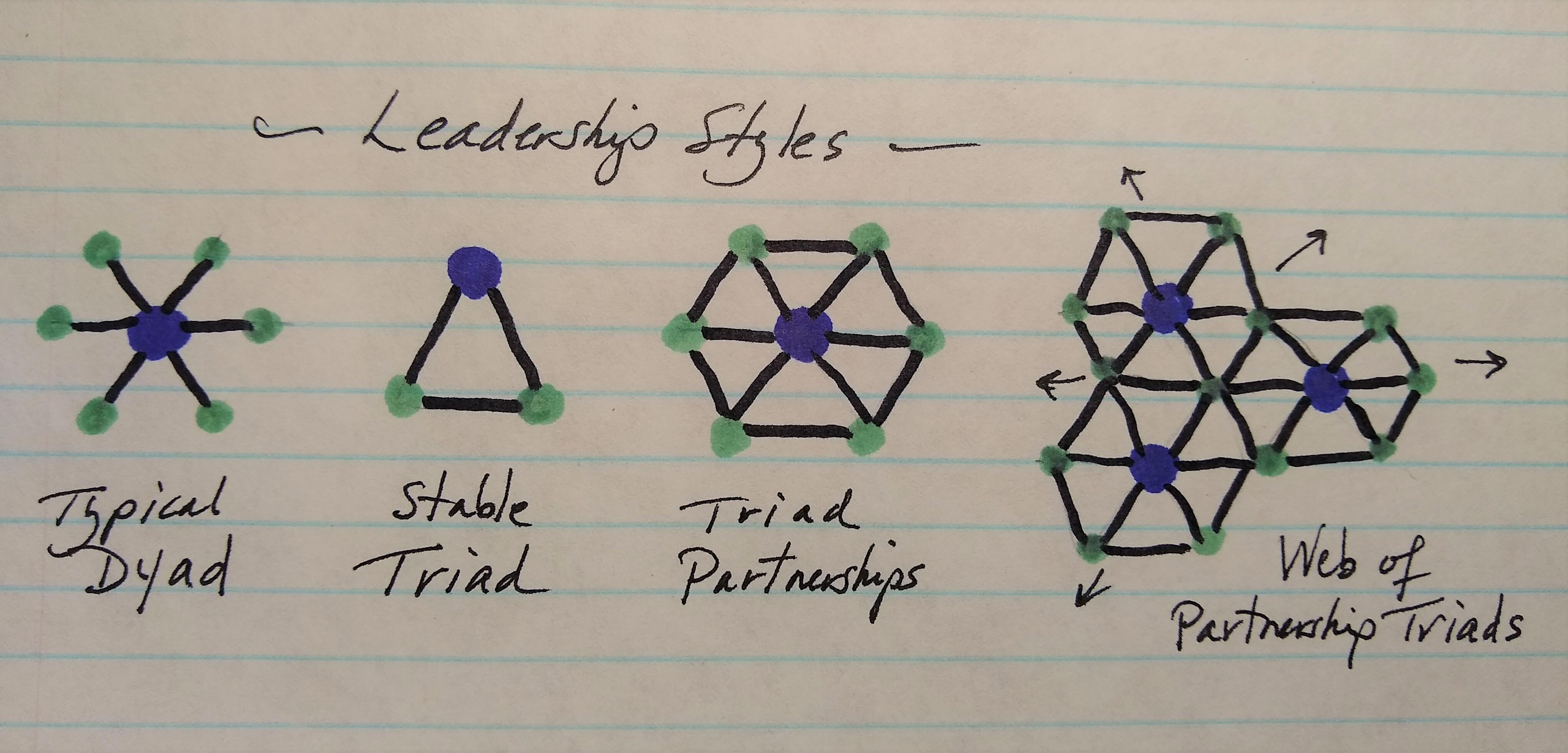
In a dreamy haze, I awoke thinking about a class I took back in 2007 as part of Sierra Health Foundation’s Health Leadership Program. The instructors, Dave Logan from the Marshall School of Business, USC, and John King, JLS Consulting, had us experience the power of setting up triads in our work setting instead of the more traditional leader-at-the-hub-of-the-wheel or top of a pyramid.  I don’t have a background in sociology or organizational development, but this model has been helpful to me ever since. (You can research Dyads/Triads online for a deeper description).

Triads? Threesomes? Trios? Each person is connected to two others, forming a triangle that can independently problem-solve and move forward. Stable like a three-legged stool, each triangle is connected to other triangles for support. It felt like a feminine way of working: cooperation, collaboration, communication. It wasn’t a perfect model, but it felt right. 

When I began writing that morning, the creation of an analogy came easily. What did women in early 1900s do? Quilt. I envisioned Eliza working on a quilt made of triangle-shaped pieces as she talked with her daughter about how she would organize her departments as the new president of the California Federation of Women’s Clubs.

Here’s the scene from Heart Wood, Eliza, 1915 ( page 383)

     Eliza reached for the pincushion, pulled out a needle with enough pink thread to work with, and started on the pink calico triangle. They continued stitching in a silence, punctuated by needles slipping in and out of each triangle with a quiet pop. Eliza thought back to all the times she and her mother had worked on quilts together. And the Bowtie quilt her mother had hung on the back porch. Who would have guessed it was a signpost pointing the way to safety for escaping slaves? Hidden in plain sight, it was.
     “Mother?”
     Eliza didn’t reply, for she was deep in thought, drawing her index finger along the seam lines, moving from color to color, edge to edge, triangle to triangle.
     “Mother, are you finished?”
     Eliza held up her hand; she needed more time to think. After a few moments she rose abruptly. 
“Of course!” 
     Dottie followed her to the dining table and watched her rearrange the stacks of files from one side of the table then back again. 
      “Help me take these into the parlor, Dottie. This table is simply not the right shape.” 
After pushing the furniture back against the walls, Eliza worked trance-like, for the next hour. She covered the carpet with her department files arranged into sets of three, each set forming a triangle by bordering with and connecting to the other two; each of those creating another triangle with its neighbors, until the floor was like a quilt of interconnecting triangles. It was a bit awkward using rectangle files, but as she straightened her aching back, she saw what had been hidden in plain sight. 
     “Do you see how this works, Dottie? Each department head is connected to two other heads. They form a unit; help each other out, share resources. On either side of each woman is, in turn, another triad of women, making each woman and department stronger. You can go on and on, creating as many connections as you need. This is as stable as a three-legged stool. And no one woman has to bear all the weight.”
     Eliza threw open her arms with excitement. “This is how women work - we reach out to each other, we set personal issues aside in order to strengthen the whole. This is women’s power.”

And so I have hope. Hope that the newly installed New York Governor, Kathy Hochul, along with Karen Keogh (Secretary to the Governor) and Elizabeth Fine (Counsel to the Governor), will usher in a fresh wave of New York politics; that they show us how to work together for the community’s benefit, and that we are all smart enough to learn from them.

As Eliza concluded:
     “We’re all so accustomed to the organizing structure that men have handed to us,” she told them. “But it is a structure that keeps women from our power. I propose we try something more aligned to our female nature: a structure that facilitates sharing connections and power, not merely an exclusive hierarchy of power. One that promotes the integrity of our planet, not one that destroys the planet for man’s selfish gain.”  This, the women understood.”  

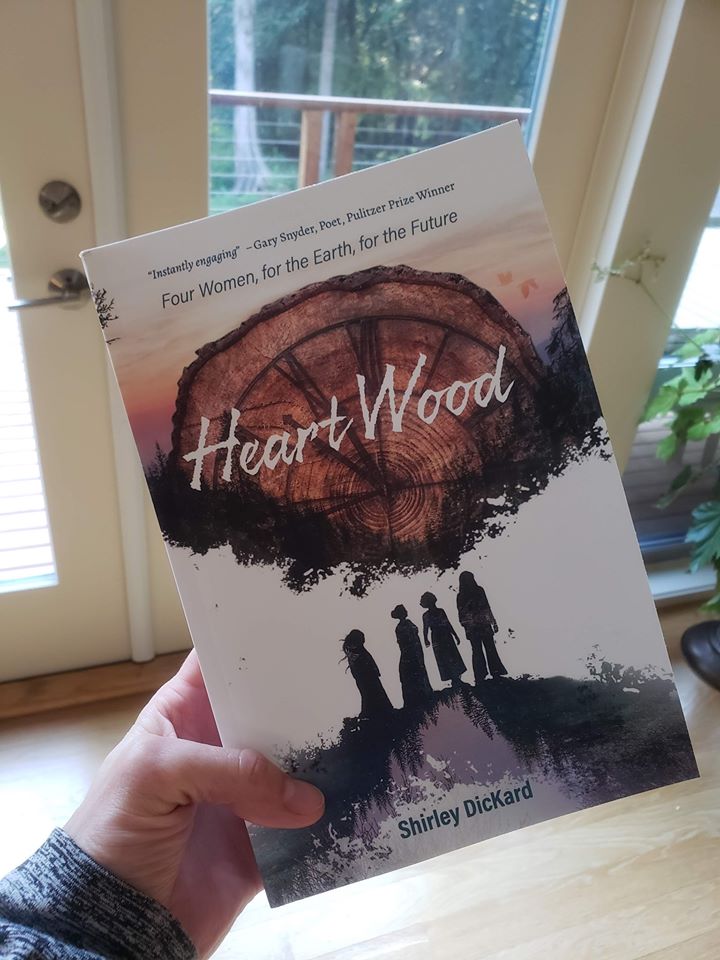
Heart Wood – Four Women, for the Earth, for the Future

Winner: In “Visionary Fiction,” National Indie Excellence Award (NIEA)

Finalist: for “Thought-provoking” Books, The Montaigne Medal, Eric Hoffer Awards

Finalist: Self-published Review Award

Recommended: US Review of Books

Purchase Heart Wood at your local bookstore (support independent bookstores!)

HERE on Amazon, and in Nevada County, California, at Harmony Books, The Book Seller, JJ Jacksons, Reflections Skin Oasis, and SPD Markets.

Please consider leaving a review on AMAZON and GOODREADS. It’s a great way to support independently published authors. Thank you!

BLOG – Sign up to follow at:  https://shirleydickard.com/blog/

WEBSITE:  https://shirleydickard.com/

Contact the author at heartwoodnovel@gmail.com

The Challenge of Zooming in the Mountains

It’s shivering cold inside the room where I’m about to take part in my first webinar panel about writing Heart Wood. If this had been old Japan during a freezing mountain winter, I might have kept warm by sitting at a table with a brazier of hot coals by my legs and a thick futon draped around the table to enclose the heat like a tent – a warming method called a kotatsu.

But it’s 2020, and without broadband internet access at home, I’m seated in our unheated Community Center in the Sierra with my own version of a kotatsu. Instead of hot coals by my feet, I have a small electric heater under the table. The wool blanket draped around the table and a wool sweater on my shoulders keep me warm so my teeth don’t chatter as I discuss writing with the other authors.

Kotatsu zooming in the mountains

My guess is that webinars and virtual zoom meetings are here to stay, so I’d better figure out how to make them work! I’m not a luddite, but I tend to embrace new technology reluctantly – just ask my husband. Without his penchant for upgrading all things techie, I’d still be getting up from the couch to change the channel at my trusty-old 1980’s-era TV set. 

Being an active participant via Zoom is easier said than done when you live in the mountains without cable, where satellite connections are fickle, and where there’s an awkward half-second lag before people hear the words you just mouthed. (BTW-most of us mountain folk still cling to our landline phones because mobile phones don’t always get good reception – a fact that’s lost on my urban friends!) But necessity is the mother of invention, so when I must be at my virtual best, I reserve a room at the local Community Center and use its high speed WiFi. 

Looking good on camera is another problem. YouTube is now filled with people offering advice: how to place your lighting so you’re not a shadowed monster; where to place your script; what colors to wear; how to sit and look natural;  background do’s and don’ts; and group conversation manners. Most sites offer at least one link to merchandise that promise to make you look professional: halo lights, tele-prompters, webcams, etc. It’s a booming business.

Before educating myself on YouTube, I didn’t realize that with my camera lens located at the bottom of the screen, it makes me look like I’m following a trail of ants across the screen instead of looking at the audience. I tried various suggestions, like elevating the laptop, but to no avail. In the end, a friend loaned me her plug-in webcam to hook on top of the screen and that did the trick.

I used to hate struggling with problems, but my attitude changed when I realized how many new brain synapses are formed in the process of problem-solving. At my 70+ age, that’s important!

How did the webinars go? The Sierra College OLLI Class on “Writing Your First Book” wasn’t recorded, but the “Friday Fiction” Panel on the Nevada County Library’s Virtual Author Showcase, 11/6/20, can be Viewed Here.

Heart Wood is the perfect gift for the holidays, whether for curling up in quarantine or as thoughtful consideration for how we can touch each other’s lives, give the earth a break to recover, empower a more feminine approach, and create a future that all forms of life can live in.

You can purchase your copy of

HEART WOOD

HERE: To support your local, independent bookstore!

Also available at The Book Seller and Harmony Books in Nevada County.

HERE: To purchase on Amazon (ebook and paperback)

If you enjoyed Heart Wood, please consider giving an honest review on Amazon or Goodreads. It’s one of the best ways to support me and all indie authors. Thank you!

Heart Wood has Arrived!

Now that social isolation has become the norm, how about curling up with a good book? The coronavirus will continue to alter our lives in unimaginable ways, but at least we can still enjoy reading! 

Heart Wood will transport you into the lives of three women of the past, present, and future as they cope with their changing worlds. No viruses, I promise! The most common reaction I do get to Heart Wood is “this gives me goose bumps!”

You can order Heart Wood on Amazon Here

The ebook version will be available online soon and Heart Wood will eventually be available in local independent bookstores. Be sure and ask for it and support your local indie bookstores!

“To my own surprise, I don’t expect new authors to be so sly or quick in engaging, holding, and enlightening their readers. Whenever I pick Heart Wood up, I always regret having to put it down. Shirley DicKard is extremely good.”
             – Gary Snyder, Pulitzer Prize-Winning Poet, essayist, environmental activist 

SYNOPSIS

Heart Wood – Four Women, for the Earth, for the Future

Deep in the heart of a small oak writing desk is a legacy that mysteriously connects three family women across centuries and generations in their fight for the future.

     Shima’a, an ancient woman with disturbing visions of the Earth’s demise, sends a message of warning, and a seed of hope, forward in time within the heart of an acorn to three family women:

     Eliza: Post Gold Rush in the Sacramento Valley, late 19th century.

     Harmony: Back-to-the-land homestead in the Sierra Nevada, late 20th century.

     Amisha: Dystopic San Francisco and the Sierra Nevada, late 21st century.    

Writing on the heartwood of the old desk, each woman is influenced by the ancient message as she views mankind’s escalating destruction of the natural world through the eyes of her time. The women learn to listen to the silence, hold the earth in their hands, gather the women, then do what must be done.

Heart Wood is a compelling family saga set in the foothills of California’s Sierra Nevada. Its characters shift from one generation to the next, as do the struggles they face in saving their homestead from the ravages of climate change, fire, and human greed. But it’s mankind that poses the most dire challenges to the land and to those who seek life upon it. Heart Wood speaks of the collective power of feminine energy to protect the Earth. If you feel you’re not doing enough or that it’s already too late to make a difference, Heart Wood may change your mind. An eco-speculative-historical-magical-feminist novel.