

A well-seasoned Hospice nurse took me aside after the staff meeting where I had shared my grief and despair after one of my first patients died. I was a new volunteer Hospice nurse back in the 1980s and had wanted to contribute something meaningful to the world.
“Sadness and grief is always going to be part of this work,” she told me with dead certainty. “The best way to survive yourself is to have something in your life that balances the heaviness – something that brings you peace or joy. Otherwise, you’ll burn out.”
Back then, I found that dabbling with watercolors took me away to a place where I let go and just enjoyed the flow of colors and forms. That, and playing with my rambunctious dog.
Although I only lasted two years with Hospice, I’ve kept this lesson close to my heart for four decades now. It’s what I call my Happy Place. It has a lot to do with our brain hemispheres.
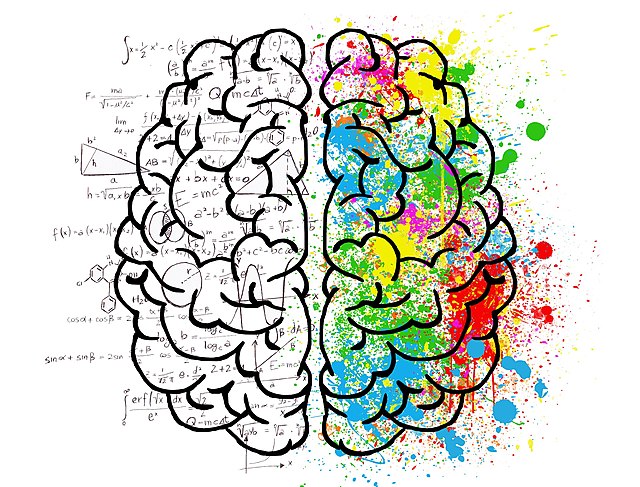
Our two brain hemispheres serve different purposes and work best when one side doesn’t overwhelm the other. The Left-side of my brain is always trying to figure things out. It likes order, reason, logic, systems, analysis, patterns, and predictability. It’s the source of “brain chatter.” The Right-side likes to get lost in time and space. It loves creativity, color, scents, music, and meditation and lives in the present moment. We need both of course.
For a fascinating example of how both sides of the brain function, I recommend “My Stroke of Insight” by Jill Bolte Taylor. At age 37, this Harvard-trained brain scientist experienced a massive stroke in the left hemisphere of her brain, destroying her ability to talk, read, write, or remember how to function in life. With only the right side fully functioning, she floated in a blissful, peaceful, euphoria. Not a bad place to be! While her medical rehabilitation focused on returning the physical functions of her left side, such as speaking and walking, it also meant inviting back into her life ego-generated thoughts and emotions. She kept wondering why? What’s good about being able to experience impatience, criticism, unkindness? Did she have a choice? That, it turns out, was her “stroke of insight.” It took eight years for her to regain full functioning, but in the process, she learned that we have control moment by moment on how we want to be in the world.
My ongoing challenge is not to get overwhelmed by the craziness of the world. Hard as I try to avoid the discouraging news of politics, erratic weather, human behavior, the recent COVID pandemic, and now, high wildfire danger, it’s always there as a stressful backdrop. So knowing I have a Happy Place where I can let the right side of my brain play, is a godsend.

When I was deep into writing my eco-novel, Heart Wood, my Happy Place was the twilight of early morning, mug of hot coffee, and hours of immersing myself into my characters and creativity. I miss that a lot.
Now I have my homestead garden. It’s really what kept me sane during COVID.
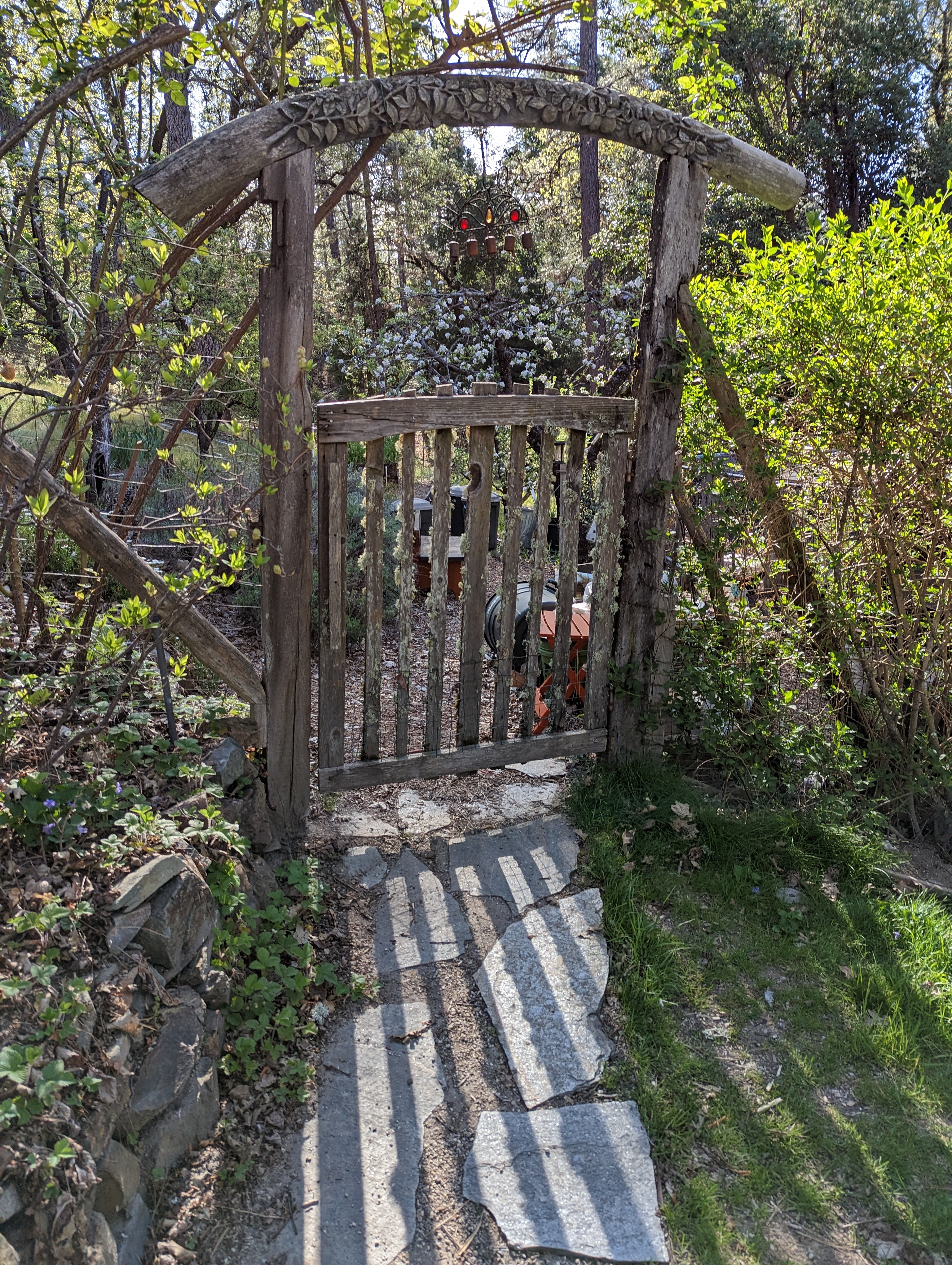
Who’d have thought that sequestering squash seeds into soil, lifting curlicue cucumber tendrils onto the trellis, or culling over-abundant carrots would soothe my spirits – but it happens every time I step into my vegetable garden.

As I walk down the rows each morning, I exchange greetings with my plants. “My how you’ve grown! Looks like you’re almost ready to share those tomatoes. What do you need? – you seem a little yellow.” Mother Earth provides the music – right now the Black headed Grosbeak fledglings are crying out “feed me, feed me!” Red shouldered Hawks call from the pine tops. Bees buzz into flowers. I always leave my garden feeling uplifted and deeply happy.

I asked a few friends about their Happy Places.
Gardens were top of the list! They also mentioned stand-up paddleboarding on a calm lake, reading in a cozy chair, attending live theater, just sitting quietly on their backyard bench, and meditating. Every moment can be that “Happy Place” if we remember to pay attention through the lens of our right hemisphere.

What are your Happy Places (or whatever you call it)? What are you doing when you just lose track of time and are in the flow? Please share by hitting “Leave a Reply.” If I get enough, I’ll share your inspirations in another blog. Thank you!

My eco-novel, Heart Wood, can be purchased at your local book store and online at Amazon





 Shirley DicKard