Into the Silence

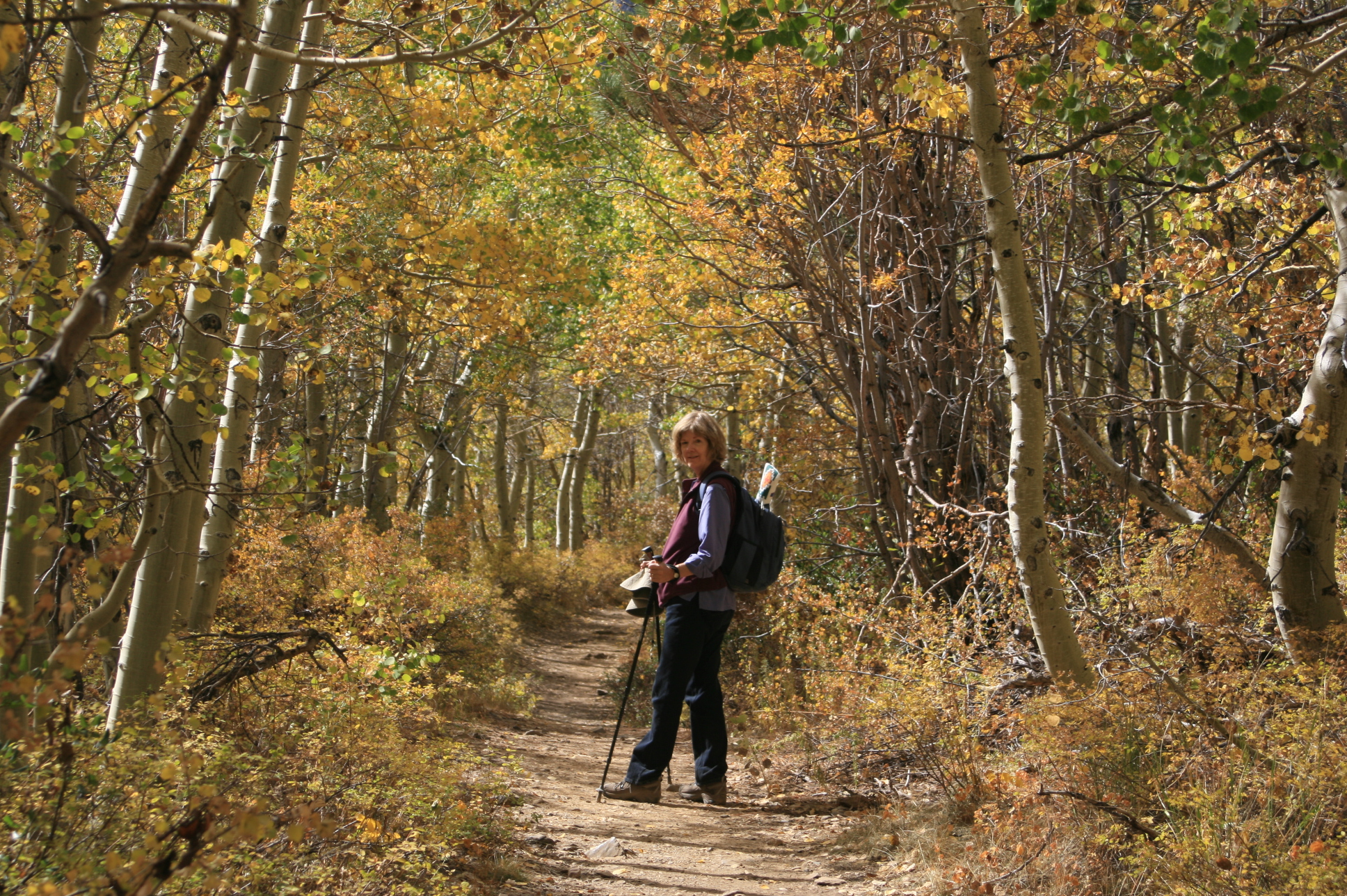
Walking alone in the woods, I’m hardly aware of the cacophony of chatter in my mind .  . .  Ah, a new wildflower . . . deer tracks . . .  clouds building to the east.  I’m also processing the day before, or day ahead, or re-visiting past emotions that disturbed or delighted me.  I’m a bubble floating within myself, while all around me, the world swirls with its own awareness and stories.

I’ve been reading Becoming Animal by David Abram. He links the interior chatter of verbal thought with the advent of silent reading – a fairly recent acquisition in man’s development. A tight neurological coupling arose in the brain between the visual focus and inner speech, he posits.

Frankly, I’ve never thought about the ability to hear the words in my head as I read them on the page. It’s only natural, right?  Yet Abram relates that before the twelfth century in Europe, the written word had to be spoken out loud to make sense of it.  Greek and Latin writing had no spaces between words and little guiding punctuation.  Semitic writing had no vowels and had to be sounded out loud to hear the meaning.  Starting in the seventh century, monks put spaces between each word as they copied texts, making it easier to read the words without having to sound them out.

I’ve thought about this in the novel I’m working on, “The Desk.”  Amisha has fled San Francisco in 2088 to find the family homestead and the desk that’s haunted generations of family women.  She has gouged out the chip implanted at birth in her neck – the only communication device humans should have or need. Her mind no longer filled with HumanaCorp’s constant messaging, she wanders in silence.  Without a cloud of inner dialogue obscuring her awareness, she is drawn into the animate and inanimate world surrounding her.  She becomes a listener.Firgure Pictograph

“Our intelligence struggles to think its way out of the mirrored labyrinth, but the actual exit is to be found only by turning aside now and then, from the churning of thought, dropping beneath the spell of inner speech to listen into the wordless silence.”  (David Abram, Becoming Animal).

Amisha Speaks: 2088

The Desk
The Desk

It wasn’t easy.  I had to materialize at my Great-Grandmother Shirley’s bedside one night to convince her to extend her novel into the future. The Desk should be more than a family history, I told her. It’s a story of women’s power to work within the larger arc of past, present and future as advocates for the earth.

I’ve been feeding her bits and pieces of my world as she writes. Since she’s going to be introducing me at the Women’s Writing Salon April 27th,  I thought I’d use her blog to tell you more about my world – some familiar, some the unchecked progress of bad ideas.

I enter the story as Dr. Amisha Hoplin, a 50 years old Pediatrician working at the University Medical Center in San Francisco. In poor health myself, I’ve just received devastating news for my patients.  I’ve also been haunted by memories of the old family homestead and whispers of an old desk . . . .

By 2088, Corporations have become a third branch of the Federal Legislature with the same vote as the Senate and House. Nothing gets through the impenetrable Corporate Coalition. Water, power, food, are controlled by HumanaCorps, and now everything’s falling apart. Medical research has stopped altogether. Forget finding cures–just find something to market that patients will need.  Like PharmFood, designed for the rampant increase of food intolerances brought on by genetic-tinkering.

No more electronic devices. Pebble-sized gel Chips, inserted behind the ear of every baby replace computers, i-phones, touch pads, GPS, televisions, etc.  Their fine micro-rootlets form neural attachments with the brain.   So much easier than carting around personal devises.  HumanaCorps monitors your interests and whereabouts to instantly inform you of consumables you should want.  In a nearly paperless world, search requests are fed to you through  Insta.Info, while transmissions of personal creativity are discouraged.

San Francisco has been re-arranged as people frantically respond to the rising sea and changing weather.  Here’s a excerpt from the novel.

As the Pedi-Cab entered Golden Gate Park at 19th Avenue though a thin perimeter of trees, a subdued silence and oily saltiness permeated the air.  Submerged structures at the end of the avenues made it hazardous to sail or row close to the shoreline, so the city had cut down a swath of trees through the park so boats could access the new city center.  The Golden Gate Channel.  Hah!  Two solar buoys marked the entrance. Amisha closed her eyes to avoid seeing the fallen trees, and drifted into a light sleep.  When the pedi-cab cyclist pulled up to her faded pink stucco house on 25th Avenue, he paused for a trembler, then nudged her shoulder and helped her up the front steps.

If you’re around on Saturday, April 27th at 4 pm, come by Tome’s Bookstore in Grass Valley for the Women’s Writing Salon.  Shirley will be reading along with Pat Miller, Sands Hall, Jan Fischler, Eleanor MacDonald and Jean Varda.


© All materials copyright Shirley DicKard, 2012 – 2013, except as otherwise noted.