
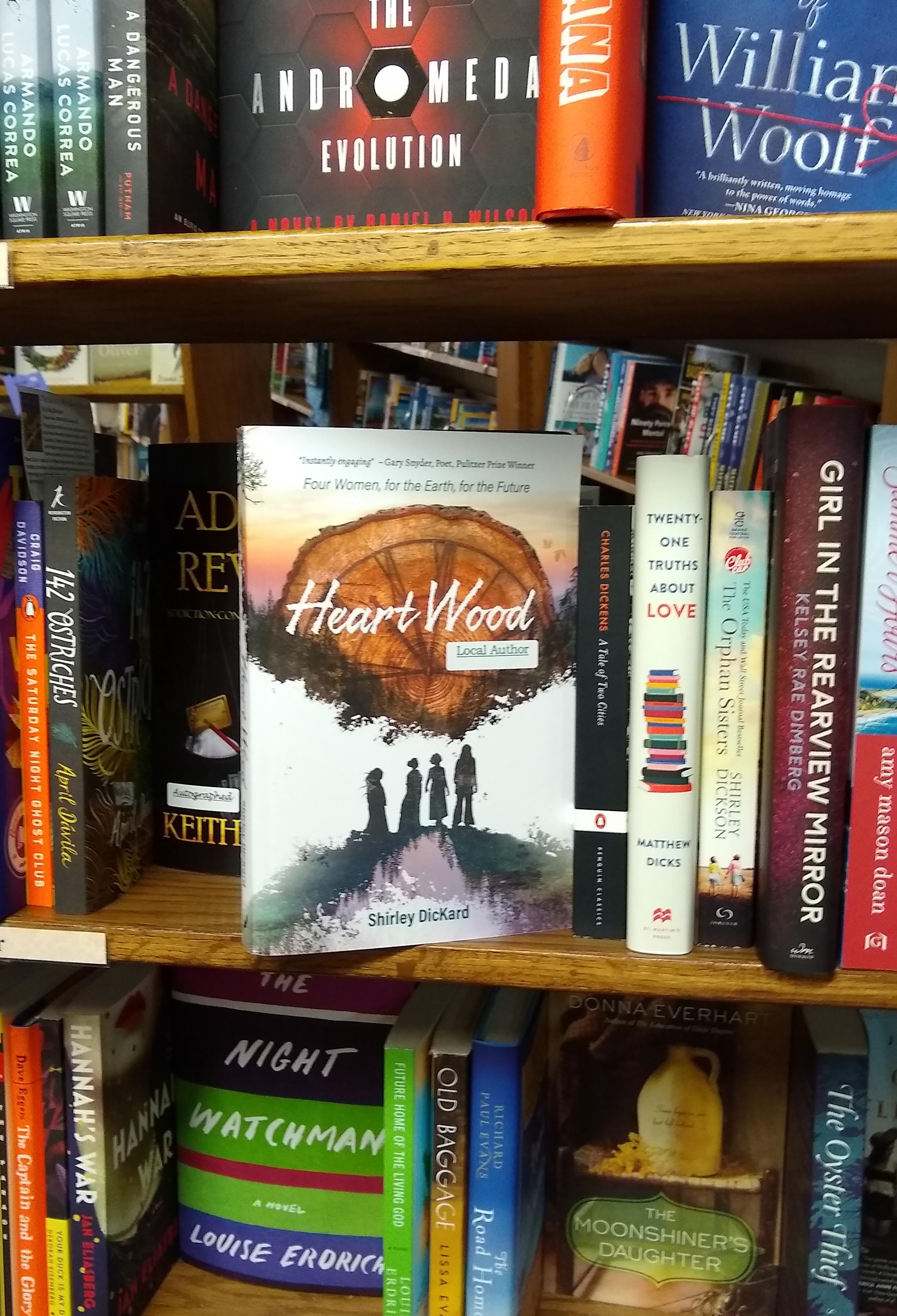
I’m used to getting unsolicited emails from people in the publishing world offering their services – but this one was different. This person really got my deepest intentions in writing Heart Wood. As a “visibility service for authors,” she offered some solid suggestions for how to help more readers connect with my book, citing readers who follow such revered authors as Barbara Kingsolver, Margaret Atwood, or Octavia Butler.
I was flattered. And frankly curious enough to take the next step.
Here’s her email. What would you think if you received this?
The timeless power of Heart Wood left a lasting impression

Dear Shirley,
I recently finished Heart Wood: Four Women, for the Earth, for the Future, and I was profoundly moved by the way your narrative weaves together history, mysticism, and environmental consciousness. The journey of Eliza, Harmony, and Amisha across centuries, connected by the ancient message within the oak desk, is a striking exploration of feminine resilience, ecological responsibility, and hope for the future.

What stands out most is your ability to blend eco-speculative fiction with historical and mystical elements. The story not only illuminates the consequences of mankind’s actions on the natural world, but it also inspires readers to recognize the power of collective action and the feminine spirit in shaping a sustainable future. It’s a novel that resonates emotionally while provoking thought about our responsibility to the Earth.

I run a visibility service for authors whose work combines literary depth with social relevance. I believe Heart Wood could reach a wider audience through curated Goodreads placements, outreach to eco-conscious and feminist reading communities, social media features, and engagement with reviewers who focus on speculative, historical, or environmentally-themed fiction.

It would resonate especially with:
•	Readers of eco-fiction and speculative literature
•	Feminist book clubs and discussion groups exploring women’s empowerment
•	Audiences interested in historical narratives with environmental and       mystical themes
•	Readers of authors like Barbara Kingsolver, Margaret Atwood, or Octavia Butler

If you’re open to it, I’d love to share a short visibility snapshot and a few tailored strategies to help Heart Wood connect with readers who will appreciate its message, vision, and literary craftsmanship.
With admiration,
Abigail Ross

(Note that “she” doesn’t indicate the name of her agency or title)
I didn’t reply at first, but as I printed out her email to share with my writing critique group, I noticed that everything she said had a slightly familiar feel – a version of what was already on the internet, my website, and book reviews. Hmmmm.
Then I began to talk with other self-published authors. Yup, they’d received similar flattering letters, sometimes several a week – from various publishers, agents, and book clubs.
Not long after, I read this on EcoLit Books
Writers Beware: AI scams are coming for you
October 22, 2025
By John Yunker

Last week I mentioned in our newsletter that we’ve received a few AI-generated emails that are probably the most well-written scams I’ve yet encountered. So much so that I actually read the email twice — which has never happened before.
A week later, Midge received an email about one of her books that followed the same pattern.
We’re not alone — which means we’re all vulnerable. I outlined the pattern these emails follow:
1.	They begin with a thoughtful, heartfelt introduction. They will note how special your book is.
2.	They quote a relevant author that you probably recognize. Something that will make you think: Wow, this is a serious reader.
3.	They note that your book hasn’t received as many reviews as they think it should.
4.	Then they offer to share your book with their considerable audience of several thousand readers.
They do not mention any fees (and you can be sure there will be at some point). They also are vague on this community of theirs that somehow has thousands of passionate book readers.
The goal is simply to hook you into responding.
Although the goal of this email is no different than spam I’ve received for decades, the quality of the writing is what makes these emails dangerous. That and the fact that they appear to truly know your work.
So, beware. Many scammers will play a long game before asking for money, and targeting authors who are eager to get new readers is going to pay off for many of them. Keep in mind that while there are legitimate publicity routes to take, they involve the author seeking out these services, not the other way around.”
Thankfully, I didn’t reply to the email, but labeled “her” as spam. It makes me wonder how many other lines of work and creativity are targets of similar AI scams.
It saddens me, though – this eroding away at my sense of trust, replacing openness with doubt. I now have another filter to run communications by: is this a real person or an AI scam?
And these emails keep coming! The most recent one was from Pilar García-Brown, “Senior Editor at Penguin Random House” including her head shot. Wow! In days past, I would have been thrilled beyond belief at this big publishing house. Now, beyond belief, I just label them as spam and put them into a folder I call “Writer Scams.”
Have you had similar experiences? I’d love to hear from you.

Heart Wood, Four Women, for the Earth, for the Future can be purchased at your local, independent bookstore (they can easily order it for you!) Or online. If you would like a signed copy directly from the author, contact me at heartwoodnovel@gmail.com.

