From Yard Sale to Escape Room: the Journey Home of an Historic Farmhouse Photo

I received an intriguing email from a “Brian” in Michigan last August:


I have a 13 x 10 inch framed picture of the Charles Hoppin house that I purchased from a yard sale in Michigan. I did a Google search based on the photo and found your website. On the back of the photo it tells who is on the porch and in the yard.


The homestead photo just had a certain vibration about it that sparked curiosity and imagination; and that is one of the reasons that drew me to it and why I searched the Internet to identify it. I just thought I would let you know that I appreciated knowing where the house was located and stories behind it
.

This unknown homestead photo just had a certain vibration about it that sparked curiosity and imagination

I wrote him back:
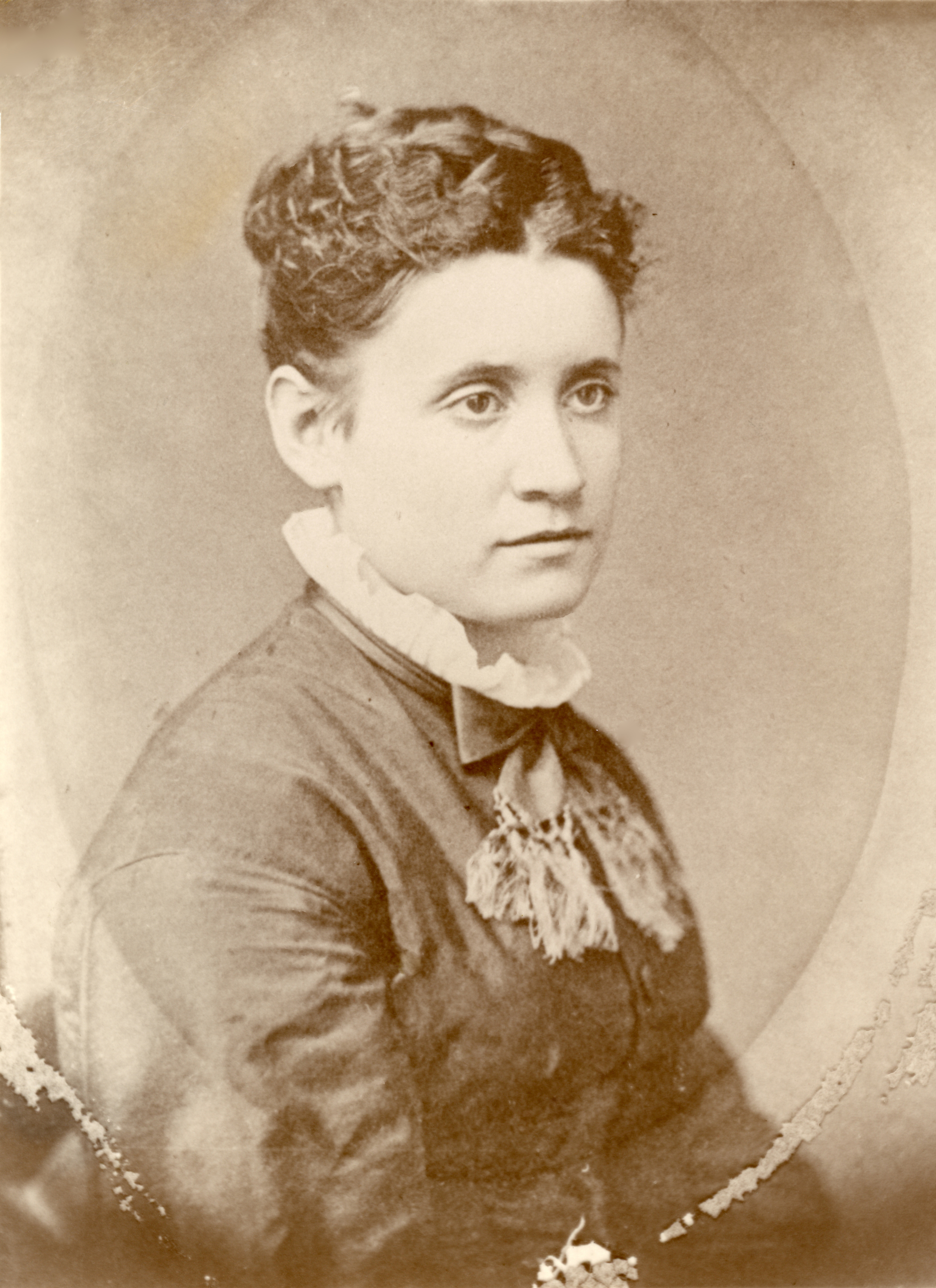
Hello Brian, What a surprise to hear that you found the family’s old California farmhouse at a Michigan yard sale! The Hoppin family was originally from Niles Michigan, and one great-granddaughter still lives in Muskegon, Michigan. You may have read on my website that this farmhouse plays a big part in my novel, “Heart Wood- Four Women, for the Earth, for the Future.” That was a fictional account inspired by family stories. Now I’m going back and writing the actual biography of my great-grandmother Emily Hoppin who was a successful farmer and women’s activist in Yolo in the Northern California Sacramento Valley in the late1800s. She is standing to the right in the photograph.

Nearly everyone in my family has a treasured copy of this historic photograph, thanks to my sister Emily and her then-husband Chris who made copies of the originals back in the late 1970s. But how in the world did this one end up in a yard sale across the country in Michigan? I wrote to my cousin Nancy who lives in Muskegon, figuring she would probably have an answer.
Nancy replied:

We have two framed photos of Emily and Charles Hoppin that my parents had hanging next to the framed photo of the Hoppin Farmhouse for years and years in California. When Mom moved to Michigan, she had them reframed and hung them together. Sometime during her many moves and downsizing, the photo of the farmhouse came up missing. We figure it must have mistakenly gotten in with the give-away stuff (many grandkids and friends trying to be helpful). I’m sure it’s the same framed photo because the label of the picture framing shop is on the back of all three framed photos .

Feeling just a tad possessive about our family’s farmhouse picture, and curious about what Brian planned to do with the photograph, I wrote him back.

His answer surprised me:

The reason that the photo came into my possession is that I bought it to use in my business. I own an Escape Room in Muskegon (Lakeshore Quest) and I purchase unique items that add a richness to my room’s design and story. This particular photo is the foundation to one of the themes I am working on.

Well, well, the old farmhouse photo is in an Escape Room – I hope it’s having fun!

Escape Rooms, for those who don’t know, are group experiences where you’re immersed in a themed room to search for and uncover hidden clues, codes, puzzles that will help you escape, usually within an hour. I could just envision Brian’s customers scouring the farmhouse picture for clues.

I asked Brian to tell me more.

The objects must fit the theme of the room and if it can be used as a puzzle, that’s even better. The best objects come from antique stores, auctions and estate sales. We especially love objects that have a history, tell a story, or just work well as “eye candy”. We want our guests to be as fully immersed in the background story of the room as possible.


The theme of this Escape Room called “Mortimer’s Mansion” was an old Victorian style house that was due to be torn down; it was rumored that the previous owner had a treasure hidden inside the house that no one had ever found. Therefore, the goal of the room is to find the treasure before the home is torn down.

“Mortimer’s Mansion” (Lakeshore Quest Escape Room)


The photo had a great deal of mystery behind it that made us both wonder who these folks were and what their lives were like; there was a little information on the back side of the photo but most of it was left to our imaginations. Over time that made me more curious, and I didn’t want to just toss it into a storage box; this mystery deserved a little more investigation.

Knowing that technology is so powerful, I took the chance that doing a Google photo search may turn up something. And Bingo, it did!! I found your website with the identical photo and a great deal more information. I contacted you and let you know that we found the Hoppin Farmhouse photo.

Hello again from California, I replied.

That farmhouse picture has been around! Nearly every family descendant has a copy; it’s posted on my website (shirleydickard.com), and included in the University of California Davis Archives and Special Collections. In fact, I’m just getting ready to post a blog about “Setting Foot on my Ancestor’s Soil” – about finding the original farmhouse property and walking it with the current almond farmer there.

I then suggested to Brian that if he’s ever finished using the photograph and would consider donating it the Yolo County Historical Archives, they would be very interested in having it.

Long story short, Brian recently contacted me that they were finished using the photo; my cousin Nancy picked it up at the Lakeshore Quest Escape Room in Muskegon Michigan, and mailed it back to its original home in Yolo County, California.

Heather Lanctot, Coordinator of the Yolo County Archives and Historical Collection now has it documented and safely stored in its vast collection of historical documents for family genealogists and future researchers to enjoy finding.

If you have family artifacts that the next generation isn’t interested in, consider donating them to an appropriate Historical Archives collection.

Heather Lanctot, Coordinator of the Yolo County Archives and Historical Collection with a photo of the historic Hoppin farmhouse, Yolo California 1885.


I am currently working on the Biography of Emily Hoppin, the Life and Times of a Yolo Pioneer and Women’s Activist (and also the inspiration for the fictional Eliza in Heart Wood). You’re welcome to sign up for my Blog and Newsletter to follow my progress on this and other topics I care about.

Heart Wood  – Four Women, for the Earth, for the Future can be purchased at your local bookstore and Online.
Setting Foot on Ancestor’s Soil

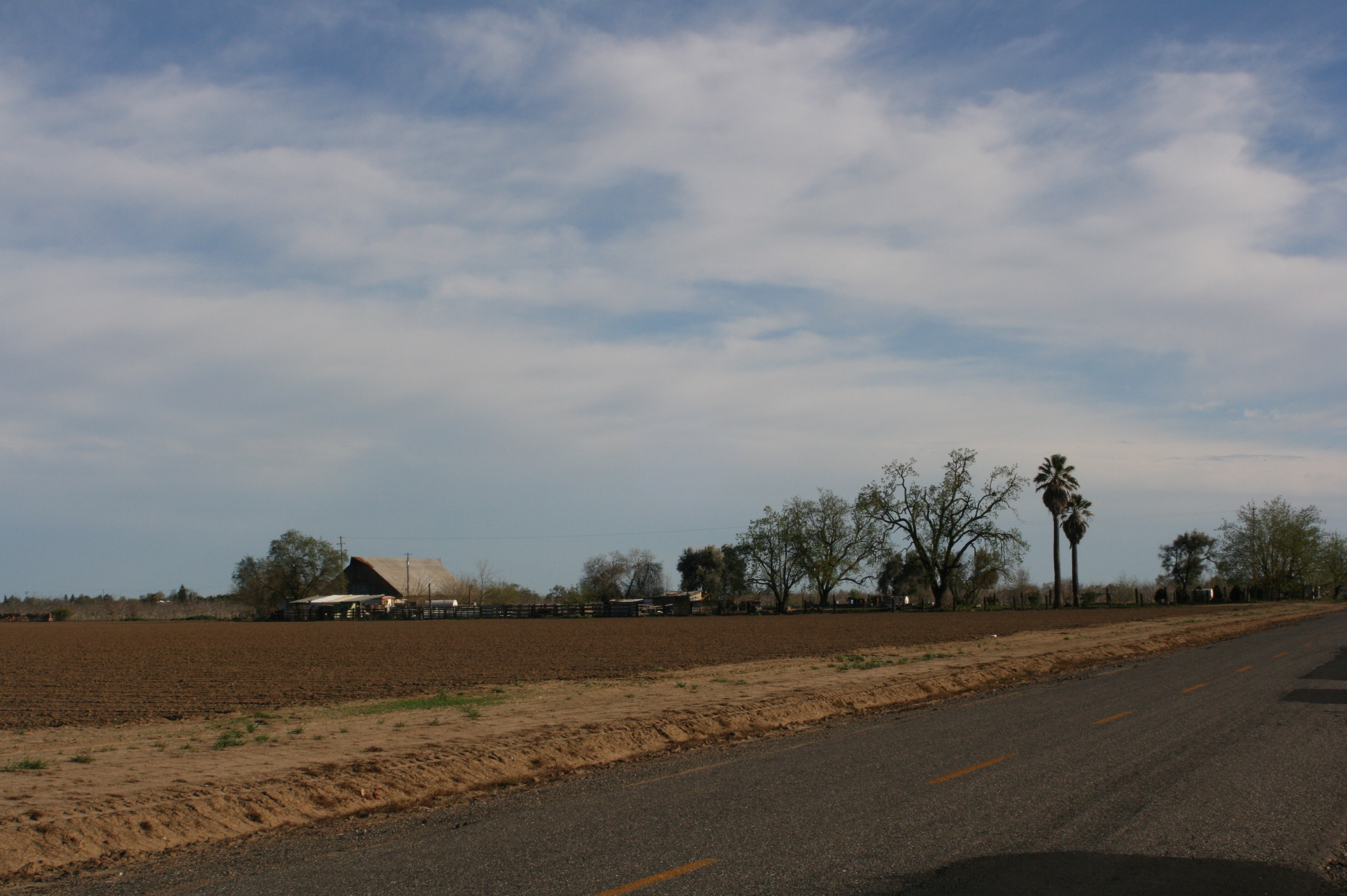
This summer I made another pilgrimage to the land where my great grandparents farmed in Yolo, California from the mid-1850s to early 1900s. In the past twenty years, I’d driven past the location several times, following the hand drawn “treasure map” my Uncle John Kergel drew for me from memory in 1980. “Look for the two tall palm trees in front of the original Hoppin house site,” he had told me. I always found the palm trees, but the house was gone. Built in 1881, the house was torn down in 1935, as I would find out later.

Each time I drove past the site in the past, I never felt comfortable entering it. Leaning out my car window, I photographed from a distance the ramshackle wooden barn, old fencing, and piles of rubble, along with the surrounding furrowed rows of bare, brown earth. Through the weedy rubble, I tried to imagine the stately two-story white Victorian house , Great-grandma Emily fanning herself on the front porch, children playing in the yard, and a herd of black and white Holstein cows in the back pasture. I wanted to touch the earth, feel for any sense of my ancestors still present.

June 2024:  At last, I was going to walk the land with the current owner – Mr. Dhillon. With a folder of old photographs and maps tucked under my arm, I waited with excited anticipation along with my husband Richard. We were joined by Meg Sheldon from the town of Yolo’s small library, who had taken an interest in my story and did the research at the Yolo County Assessor’s Office to find the current property ownership records. I had written Mr. Dhillon a letter describing my desire to visit my ancestor’s property without trespassing. He had agreed to meet me when I was in Yolo doing research in June.

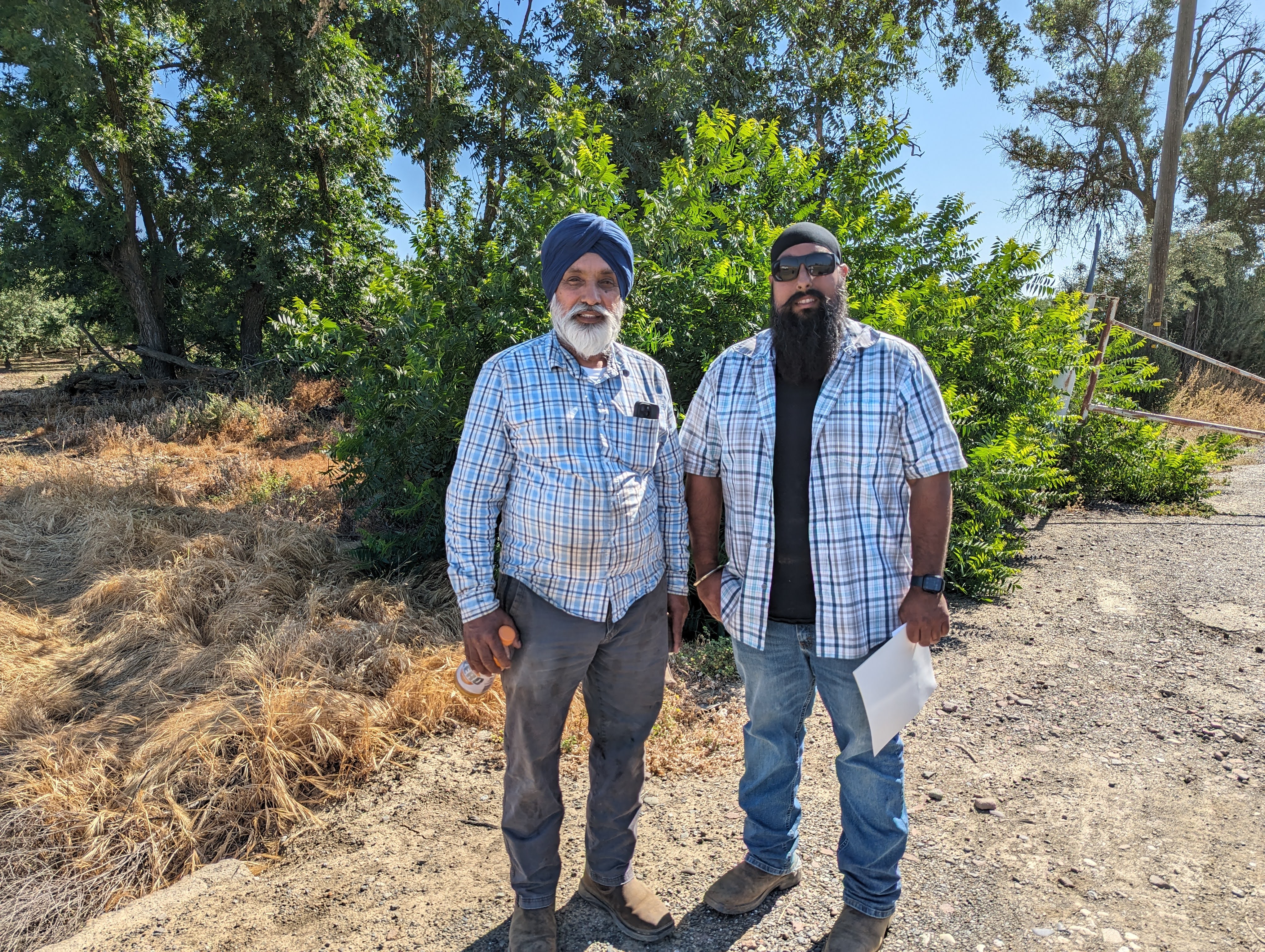
I watched as Mr. Dhillon’s white pick-up truck pulled up across the road. He and his father crossed over to greet us. His father was born in Punjab, India, and at age 17, left India for a better life to farm in America. 

They bought this parcel in 2020, with its two-year old almond orchard. All that remained today of the farmhouse was an old barn (most likely not the original), which they now rent out for storage. We talked about almond farming today, how difficult it is to grow organic, and the influx of rodents they experienced after switching from irrigation by flooding rows with water (which drowns out underground rodents), to drip irrigation which saves water and money, but gives rodents free run to dig underground burrows and damage their trees.

However, they didn’t have much to say about the original inhabitants. They may not have given any thought to the history of the land before they bought the almond orchard. I gave Mr. Dhillon the folder with photographs of my great-grandparent’s farmhouse, and for his wife, a description of Great-grandma Emily as the 1900s feminist activist who wrote speeches from her desk in the farmhouse.

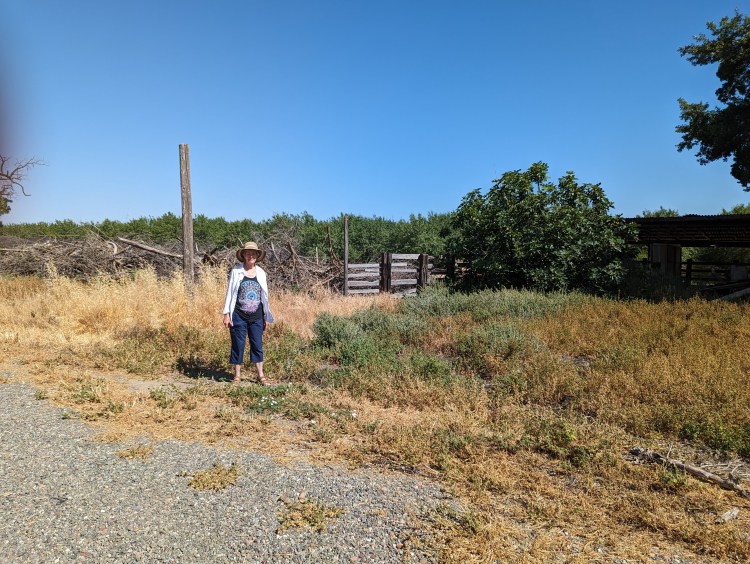
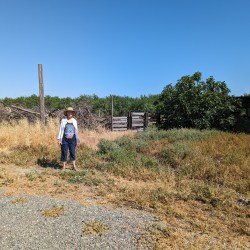
With their permission, we walked the land after they left. I tried but couldn’t figure out where the house was situated. The palm trees had been cut down. Empty cans of farming chemicals were stacked beneath a low branching tree. The barn was locked, but looking through the cracks, it was a scene of old boxes, barrels, dust and cobwebs, a reminder that time had moved on.

Shirley at possible house site

To the land, the current people are but another wave of inhabitants who walk and work its soil – from the Indigenous peoples, Spanish, Mexicans, Europeans, and now farmers with roots in India. With a sigh, I picked up a small stone from the dirt and slipped it in my pocket – my only memento of what might have been.

Hoppin Farm and Holsteins (unknown date)

Will They Remember?

Years ago, in my early days of searching for my ancestor’s land, I was moved to write these words of poetry. Although it is still a work in progress, it describes my realization that what we build will one day be a passing moment in time. As are we all.

Will They Remember?   


What will they say of us when they pass by here,
Centuries later, what will remain?
Will they remember the work of their ancestors
Whose dreams had sought roots they could water forever?

We stand on our homesteads and watch seasons pass,
Who are we now in the flow of time?
We built fences and floors, stoked flames for the future,
Will only our whispered shadows remain?

What will they say of us when they pass by here?
Will they still know of our place in the mountains
Where our pole beans climbed as high as our dreams
And children clambered in summer rivers and winter snow.

Do we remember who came here before us?
The Nisenan ground acorns to meal by these streams,
They built their shelters from gifts of the forest,
Feet danced out their stories, ‘til white man arrived.

The miners swarmed in with their pans and their shovels,
They cut down big oaks, and dammed up the streams
They scoped up the glitter, sent gold home in sacks
For families to know that the wild west was won.

The miners stayed on then to stake out possession,
Dividing the land, making tents into towns.
Did they remember the people before they
Took over their land and silenced their songs?

Where once stood a farmhouse, an old barn survives,
No trace of the farmer or furrowed golden wheat,
Or the farmwife’s fresh chickens, eggs and soft butter,
Only old photographs prove they were there.

We are but sojourners, we too shall pass away
Our streets will grow over and our fences will fall,
Deer and bear will come freely to eat of our apples,
Climbing over our steel, glass and cement walls.

What will they say of us? Will they remember?
What will remain after decades gone by?
When they walk past our place here in the mountains
What will they know of us? What will they say?

-Shirley DicKard

Shirley DicKard is currently working on the Biography of Emily Hoppin, the Life and Times of a Yolo Pioneer and Women’s Activist. Shirley’s great-grandmother Emily Hoppin, was the inspiration for the fictional Eliza in Heart Wood.

Heart Wood can be purchased at your local bookstore and Online.