From Yard Sale to Escape Room: the Journey Home of an Historic Farmhouse Photo

I received an intriguing email from a “Brian” in Michigan last August:


I have a 13 x 10 inch framed picture of the Charles Hoppin house that I purchased from a yard sale in Michigan. I did a Google search based on the photo and found your website. On the back of the photo it tells who is on the porch and in the yard.


The homestead photo just had a certain vibration about it that sparked curiosity and imagination; and that is one of the reasons that drew me to it and why I searched the Internet to identify it. I just thought I would let you know that I appreciated knowing where the house was located and stories behind it
.

This unknown homestead photo just had a certain vibration about it that sparked curiosity and imagination

I wrote him back:
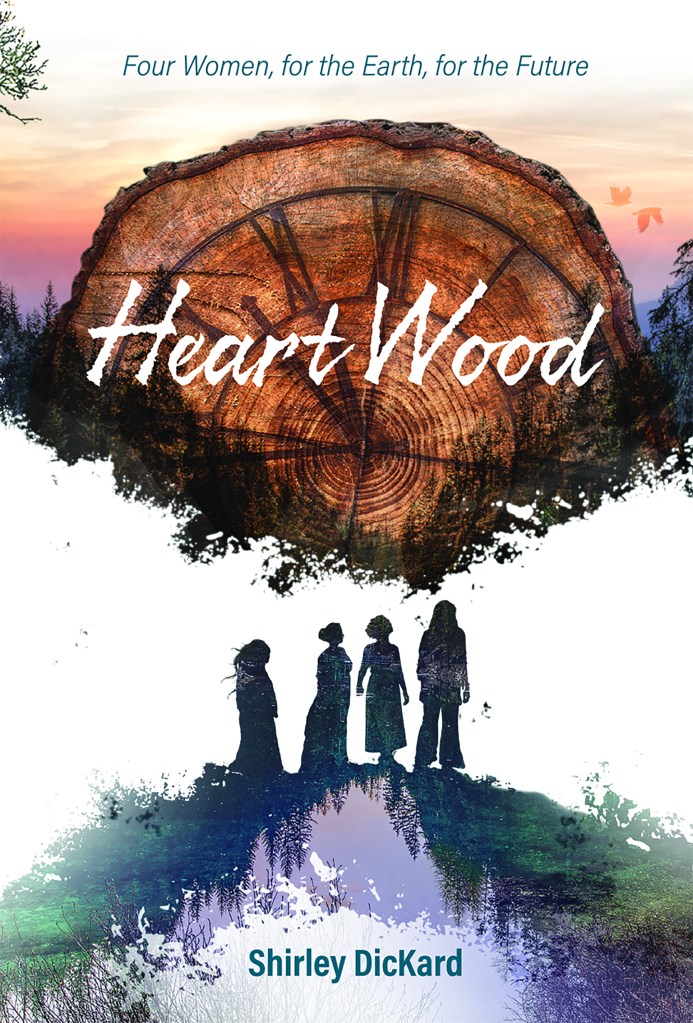
Hello Brian, What a surprise to hear that you found the family’s old California farmhouse at a Michigan yard sale! The Hoppin family was originally from Niles Michigan, and one great-granddaughter still lives in Muskegon, Michigan. You may have read on my website that this farmhouse plays a big part in my novel, “Heart Wood- Four Women, for the Earth, for the Future.” That was a fictional account inspired by family stories. Now I’m going back and writing the actual biography of my great-grandmother Emily Hoppin who was a successful farmer and women’s activist in Yolo in the Northern California Sacramento Valley in the late1800s. She is standing to the right in the photograph.

Nearly everyone in my family has a treasured copy of this historic photograph, thanks to my sister Emily and her then-husband Chris who made copies of the originals back in the late 1970s. But how in the world did this one end up in a yard sale across the country in Michigan? I wrote to my cousin Nancy who lives in Muskegon, figuring she would probably have an answer.
Nancy replied:

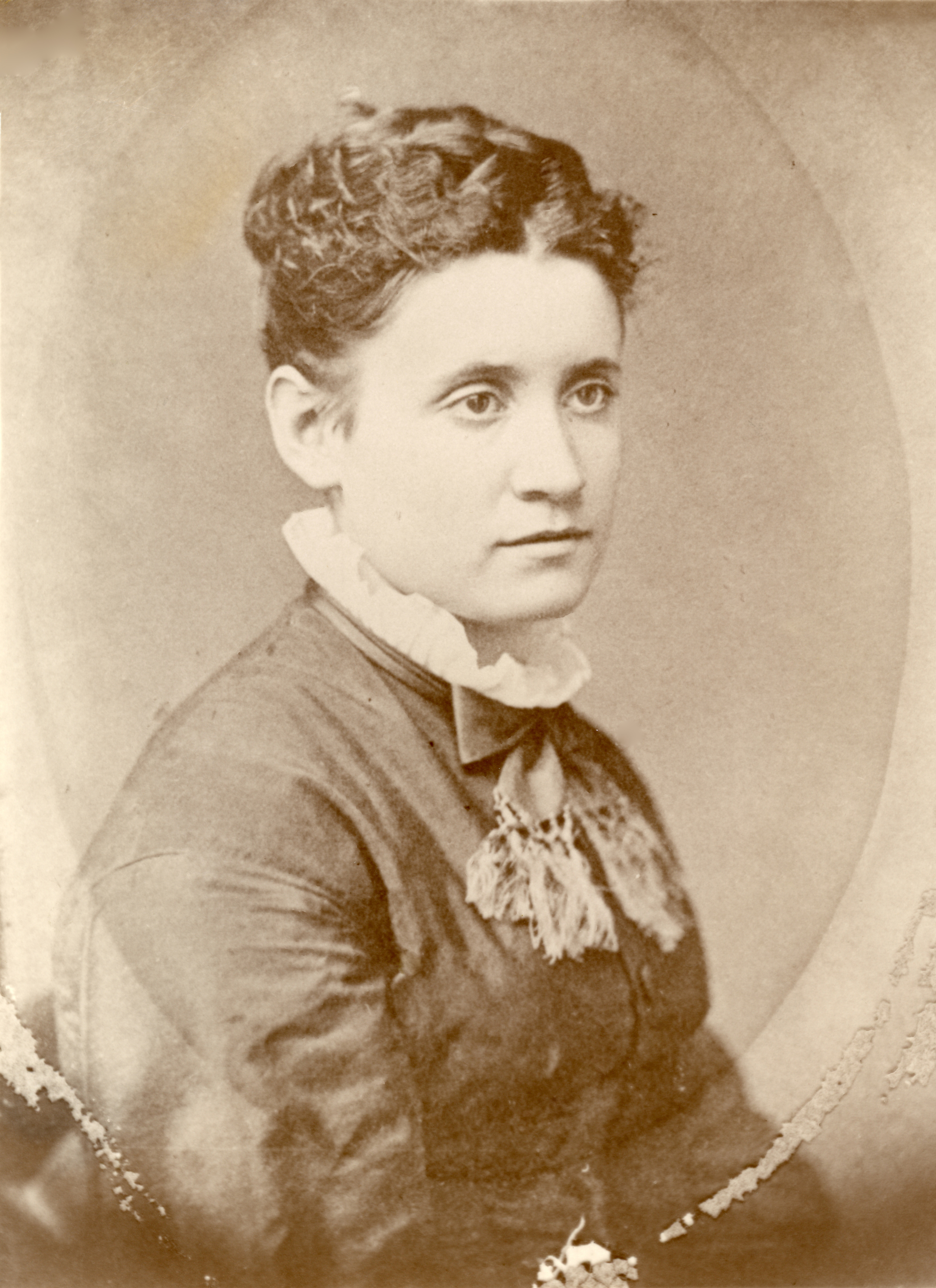
We have two framed photos of Emily and Charles Hoppin that my parents had hanging next to the framed photo of the Hoppin Farmhouse for years and years in California. When Mom moved to Michigan, she had them reframed and hung them together. Sometime during her many moves and downsizing, the photo of the farmhouse came up missing. We figure it must have mistakenly gotten in with the give-away stuff (many grandkids and friends trying to be helpful). I’m sure it’s the same framed photo because the label of the picture framing shop is on the back of all three framed photos .

Feeling just a tad possessive about our family’s farmhouse picture, and curious about what Brian planned to do with the photograph, I wrote him back.

His answer surprised me:

The reason that the photo came into my possession is that I bought it to use in my business. I own an Escape Room in Muskegon (Lakeshore Quest) and I purchase unique items that add a richness to my room’s design and story. This particular photo is the foundation to one of the themes I am working on.

Well, well, the old farmhouse photo is in an Escape Room – I hope it’s having fun!

Escape Rooms, for those who don’t know, are group experiences where you’re immersed in a themed room to search for and uncover hidden clues, codes, puzzles that will help you escape, usually within an hour. I could just envision Brian’s customers scouring the farmhouse picture for clues.

I asked Brian to tell me more.

The objects must fit the theme of the room and if it can be used as a puzzle, that’s even better. The best objects come from antique stores, auctions and estate sales. We especially love objects that have a history, tell a story, or just work well as “eye candy”. We want our guests to be as fully immersed in the background story of the room as possible.


The theme of this Escape Room called “Mortimer’s Mansion” was an old Victorian style house that was due to be torn down; it was rumored that the previous owner had a treasure hidden inside the house that no one had ever found. Therefore, the goal of the room is to find the treasure before the home is torn down.

“Mortimer’s Mansion” (Lakeshore Quest Escape Room)


The photo had a great deal of mystery behind it that made us both wonder who these folks were and what their lives were like; there was a little information on the back side of the photo but most of it was left to our imaginations. Over time that made me more curious, and I didn’t want to just toss it into a storage box; this mystery deserved a little more investigation.

Knowing that technology is so powerful, I took the chance that doing a Google photo search may turn up something. And Bingo, it did!! I found your website with the identical photo and a great deal more information. I contacted you and let you know that we found the Hoppin Farmhouse photo.

Hello again from California, I replied.

That farmhouse picture has been around! Nearly every family descendant has a copy; it’s posted on my website (shirleydickard.com), and included in the University of California Davis Archives and Special Collections. In fact, I’m just getting ready to post a blog about “Setting Foot on my Ancestor’s Soil” – about finding the original farmhouse property and walking it with the current almond farmer there.

I then suggested to Brian that if he’s ever finished using the photograph and would consider donating it the Yolo County Historical Archives, they would be very interested in having it.

Long story short, Brian recently contacted me that they were finished using the photo; my cousin Nancy picked it up at the Lakeshore Quest Escape Room in Muskegon Michigan, and mailed it back to its original home in Yolo County, California.

Heather Lanctot, Coordinator of the Yolo County Archives and Historical Collection now has it documented and safely stored in its vast collection of historical documents for family genealogists and future researchers to enjoy finding.

If you have family artifacts that the next generation isn’t interested in, consider donating them to an appropriate Historical Archives collection.

Heather Lanctot, Coordinator of the Yolo County Archives and Historical Collection with a photo of the historic Hoppin farmhouse, Yolo California 1885.


I am currently working on the Biography of Emily Hoppin, the Life and Times of a Yolo Pioneer and Women’s Activist (and also the inspiration for the fictional Eliza in Heart Wood). You’re welcome to sign up for my Blog and Newsletter to follow my progress on this and other topics I care about.

Heart Wood  – Four Women, for the Earth, for the Future can be purchased at your local bookstore and Online.

Welcome to Heart Wood!

What happened to The Desk – the epic novel I’ve been working on for nearly ten years?  It has a new title – Heart Wood and it’s very close to being published!

Coming March 2020
Coming March 2020

Heart Wood – An eco-speculative-historical-magical-feminist novel

Let me fill you in. Heart Wood was actually the original title before my working title of The Desk. After several early readers spontaneously suggested that Heart Wood would be a perfect title, I agreed and returned to the original title. Heart and Wood are themes interwoven throughout the novel.

I’ve chosen to publish independently for several reasons: time and control. I hold the rights to my novel, I control the cover and content, and I can publish it now through my local writing group’s imprint: Sierra Muses Press – not years down the line with a publishing house. The trade-off is that I’m responsible for all the work that a publisher would do for me: editing, design, proofreading, printing, etc. Luckily, I’ve had the support of many local professional women. It’s been a steep learning curve, but I’m not alone. In 2018 there was a 40% increase in independently published books.

Save these Dates!

MARCH 21st, 7 pm: Soft launch at Wordsmiths & Musicmakers at the Camptonville Community Center (camptonvillecommunitycenter.org)

MAY 3rd, 3-5 pm: Sierra Muses Press Book Launch at The Open Book, Grass Valley, featuring books by Shirley DicKard, Mila Johansen, Leslie Rivers, and Jenifer Bliss.

Endings

5 am at deskI’m often asked when my book will be finished – the novel I’ve been working on for four or five years now. “Who knows?” I shrug and sigh.  It’s become a journey unto itself.

It’s not that I don’t want it to end, for I know the last scene.  My friend Roger Rapp laid it out for me during a dinner conversation a few years ago.  He said John Irving always writes the last paragraph first, then writes toward it as if it were a piece of music he could hear.

Roger, who understood the underlying theme of my story, looked me in the eye and told me what the last paragraph of “The Desk” would be. I remember the goose bumps.  He was absolutely right on.  Roger died suddenly the next month, but his gift of the ending will endure.

(Note: “The Desk” was the former working title for “Heart Wood” before 2020)

© All materials copyright Shirley DicKard, 2012 – 2013, except as otherwise noted.

The Year 2088?

357What would your world be like if you lived in the year 2088?  As my novel goes 75-100 years into the future, I’m imagining the details of my great-granddaughter’s existence and that of the planet.  I was struck by a recent report in Nature magazine:  Approaching a State-Shift in Earth’s Biosphere. An international team of scientists concludes that our planet’s ecosystems are careening towards an imminent, irreversible collapse much sooner and much worse than currently thought.

Lots of novels and films have depicted a dystopic, future world:  Soylent Green, Day of the Triffids, Feed, Waterworld, 2012, The Day after Tomorrow, On the Beach, Logan’s Run, the Matrix, The World without Us, Wall-E, The Great Bay, Canticle for Leibowitz, Andromeda Strain, the Stand, and my favorite written in 1949, Earth Abides – to name a few. Causes vary from rogue viruses, aliens, asteroids, technology gone amuck to nuclear disaster.

Given both the positive and negative trends already underway, suppose mankind is unable to do enough to ward off an irreversible, planetary-scale tipping point.  What’s the outlook for our great-grandchildren if the corporate bottom-line continues to lead us into the future, or GMOs (Genetically Modified Organisms) continue to alter the biology of our foods and bodies?   How will man communicate or move around the planet when there’s little left to extract from the earth for energy or manufacturing? Extreme heat and rising sea levels will probably eliminate traditional ways to grow food or live.    What if man himself has tipped the earth so far that it’s no longer hospitable to humans?

I’m looking for images, ideas, imaginings. Tell me how you think a person would get through their day 75-100  years from now. I’m curious about details. With your permission, it might make it into “The Desk.”  Leave a comment here or email me at sdickard@gotsky.com.  Thanks!


© All materials copyright Shirley DicKard, 2012 – 2013, except as otherwise noted.

Used Book Magic

Do you believe there’s magic in used books?   I’ve had incredible experiences calling books to me over the years.  Today was yet another.  I’ll share some of my favorite book magic stories.  If you have some of your own, send them and I’ll post them!

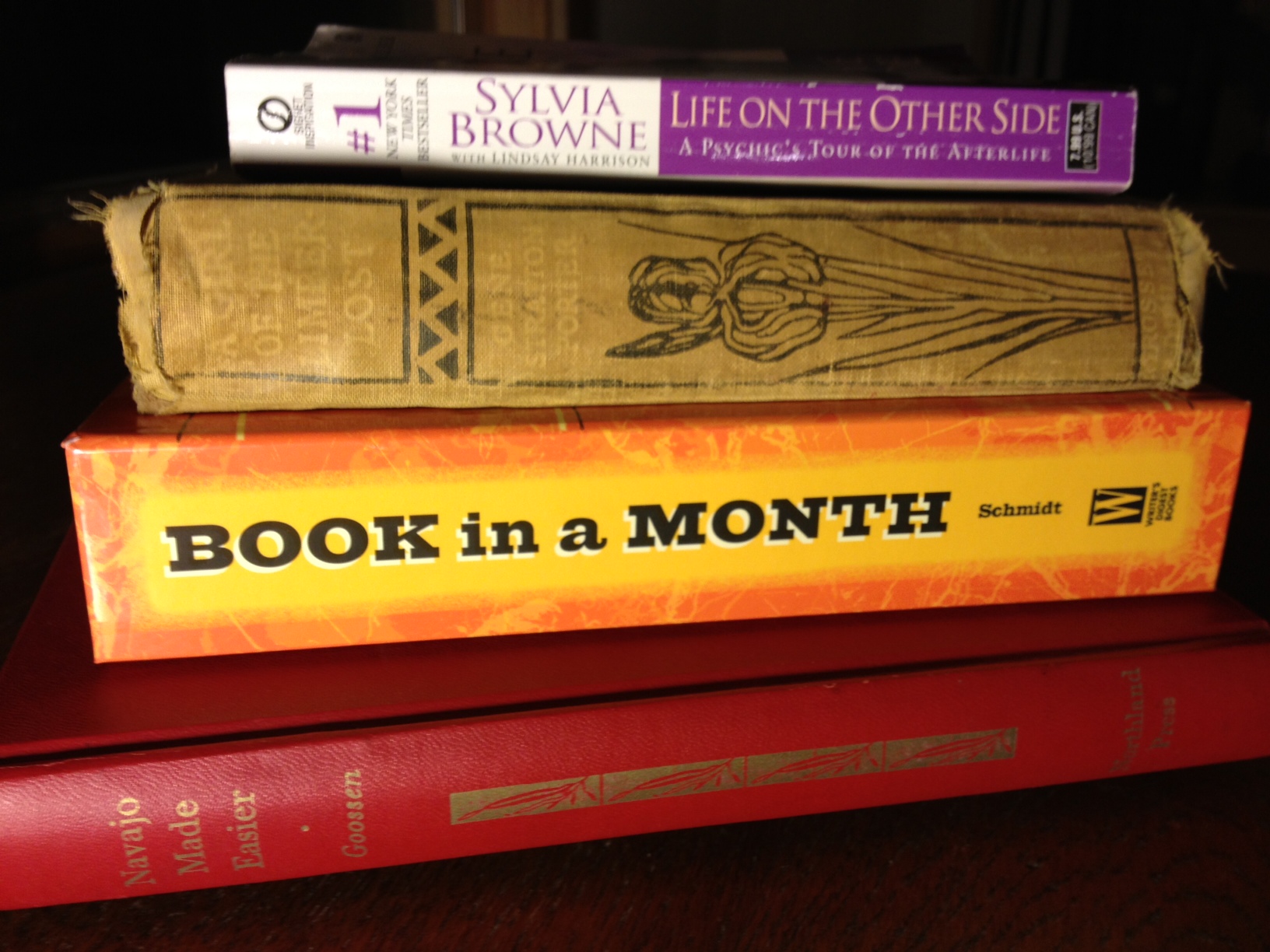
I’d always regretted giving away the Navajo Language book that Dick and I studied on the Reservation in Arizona in the 1970’s. We thought our hospital replacements would benefit from having it, but I realized too late I’d given away an irreplaceable treasure of Navajo phrases and vocabulary.  Fast forward five years to the basement of Cody’s Bookstore on Telegraph Avenue, Berkeley.  I was looking over a table of used children’s books when my eye was caught by a red book perched atop  a stack of children’s picture books.  As my hand reached for it, I knew what it was:  Navajo Made Easier by Irvy Goossen.

Then there’s the book from my childhood I wanted to read to my daughters, but couldn’t remember the title – only that it was of a young girl who collected butterflies in the woods.  I’d given up, when one day, while checking out books at the Grass Valley Children’s Library, an elderly woman set a stack of old books on the counter to donate.   Impulsively, I reached around her and turned the bindings  to see the titles, and there it was:  Girl of the Limberlost, by Gene Straton-Porter.  I had to fight the librarian for it (she collected rare old books), but a donation to the library made it mine.

Some books have been nearly thrust into my hands.  I’d just returned from my youngest sister’s memorial service in Canada and was headed toward a much-needed latte, when I made an unusual  right turn and ended up in Tome’s Books and Sierra Roasters in Grass Valley. With mug in hand, I wandered the stacks until I found a chair in a dark corner.  Mindlessly, I reached up and pulled out a paperback:  Life on the Other Side by Sylvia Browne. It was as if my sister wanted me to know…..

So today I was again at Tomes (my favorite used book store). As I waited to see what books Eric would buy from me (for credit of course), my hand reached out for an orange workbook in the Reference Section.  Book in a Month by Victoria Schmidt.  Voila!  Exactly what I needed to get my novel moving along.  It’s one thing to have a story in your head and quite another to be organized enough to move through all the steps of crafting a compelling novel.   I have thirty days to finish my first draft, starting February 1st.  Be sure and ask me how it’s going!

The Desk – Actual and Fictional

The Desk
The Desk

“Is there a real desk?” I‘m often asked. After all, it’s one of the main characters in my novel.

The answer is yes, it sits by the window in my writing studio. And yes, it’s a family heirloom, but I don’t know how far back it goes. Like other family ancestors and future descendants, it’s an inspiration.

For your enjoyment, here’s an excerpt from The Desk, where it first appears in Christie’s life – the present time narrator whose nights have been haunted ever since inheriting the desk.

(Still a draft, so your comments are welcome!)

.

2010, Sierra Nevada Homestead

I shove the comforter onto my husband’s side and slide off the edge of the bed, angry and desperate in what is now my sixth sleepless night.  Feeling my way down the dark hallway, I stop in the doorway of my studio.  A sliver of moonlight hesitating behind the shadowed curtains catches my eye.

“What is it?” I ask the darkness.

In the corner is the dim form of a small oak desk huddled beneath the weathered windowsill. It seems frail, frightened even. I step closer.

“You’ve got something to do with this. I can feel it.”

As if summoned, I pull out my old needlepoint chair with the sagging center, and sit.  I run my hands along the desktop.  It’s a simple, straightforward little desk, hardly two by three feet on top. The three vertical slats down each side are spanned by a narrow shelf beneath, a foot above the ground. It was made without nails, held together by the clasped hands of tongue and grove construction.

My sister had recently offered this odd piece of family furniture to me, releasing it from years of exile in her basement.

     “I’ll take it,” I said without hesitation.  There’d be some place for it in my already crowded home. It wasn’t a notable piece but I didn’t want it to leave the family. I rub the musty top in slow, circular motions while I think.

Beneath the desktop, I find a small drawer that slides out reluctantly.  Someone had covered the bottom of the drawer with ugly blue and white grid contact paper – a relic of the ‘60’s.  A small edge is pulled back. Along the front, the narrow tray for pens is stained with black and blue splotches.  A small heart had been carved in the front corner of the desktop, and a circular watermark marred the back left corner where a hot drink had been carelessly placed. Two of the legs have small, teeth-like gashes at the base. Although the oak grain may once have been polished into a deep gloss, along the way, dust had settled into the small grooves, leaving a feeling of tired brittleness.

“Did I forget to welcome you home?”  I exhale and look around, aware that I’m now conversing with a desk.

“This is my studio. I write here.” I point across the room to the computer table against the south window. As my eyes adjust to the darkness, I describe the stacks of reference books, the watercolor sketches of ospreys, owls and lizards taped to the curtains, the photos of husband and grandchildren tucked around the printer, boxes of upright pens and watercolor pencils, and my thirty-year-old prayer plant.

“I’m working on an article about the up-slope migration of flora and fauna in the Sierra Nevada foothills.  It’s due in two days and now the editor wants more facts to support climate change.  I know he’s being pressured, but I’m about to tell him to shove it.”

“And. . . I hardly need another desk,” I continue, feeling irritated and wishing I hadn’t been so quick to take it.  “But family’s family.”  I think about the photograph of my mother as a young wife in the 1940’s, sitting at this very desk with the mouthpiece of a heavy black telephone to her ear.  She never talked about the desk or who had it before her, even though she knew I was passionate about our family’s history.

I reach over to the bookcase that the desk is now squeezed against, and gently tap the frayed binding of my great-grandmother’s scrapbook stuffed with tattered, yellowed news clippings of her speeches. My hand brushes over the tops of faded leather editions of Emerson, Cooper, Longfellow, and Thoreau, all inherited from my grandmother’s library. A thin hand-printed book of great-grandfather’s letters home from the Gold Rush is lying face down on the shelf.  I tuck it back into place with a smile.

“You should feel right at home.  You’re surrounded by family.”

Four chimes reverberate from Grandfather clock in the hallway and I sigh. Another lost night.

“If you don’t mind,” I say, “I really need to get some sleep. I’ve mountains of work before Tuesday’s deadline.”  I push the chair back against the desk.  “Try listening to the ticking in the hallway,” I say, thinking of the wind-up alarm clock we used to put in our puppy’s bed. I give the desk a pat, then head back to curl up next my husband’s warm body.

“I mean it,” I whisper. “I desperately need some deep sleep.”

The next morning I awaken at nine, exhausted. I toss my favorite purple shawl around my shoulders and start my morning routine with toast and coffee.  I’m usually perked up by the anticipation of freshly ground French roast, but this morning even the coffee seems lifeless. I plod my way upstairs to my studio and place the plate of buttered sourdough toast and mug of black coffee on the little desk by the window.  I’m glad my husband has already left for work. On days like this I’ve learned it’s just better to stay away from people.

I’m there in time to watch the first rays of light cascade through the west facing window, illuminating a path across the top of the desk. It’s my favorite time of day and today especially, I need the reprieve before facing the work ahead.  As if on cue, Buddy sniffs me out and with tail thumping, positions himself at my side to catch the last bite of toast – a routine we’ve developed over the years that is both annoying and tender.

The morning sun moves imperceptibly across the dull brown striations of oak grain as I start my morning meditation.  But today I am distracted by the drifting light – the turning of the earth –  the turning of time, I remind myself. I struggle to focus on my breath – in and out, in and out. The hallway clock accompanies me with a steady tick, tock, tick tock, its pendulum sweeping each second into the past. Last night’s voices hover at the edge, demanding my attention.

Then, from that still space that has eluded me all week, I sense a voice of remarkable clarity.

     Now.

      The sun pauses at the edge. Dust motes are suspended in mid-air.

     It’s time.

“Don’t do this to me,” I say. “I don’t have time.”  But my hands are already reaching under the drawer to slide it open. My fingers feel along the bottom and lift out a forest green leather notebook. I watch my palms press the blank pages open against the oak desktop, then lift the black filigree pen from its tray. Though my hand trembles, the voices are calm.

I begin to write.